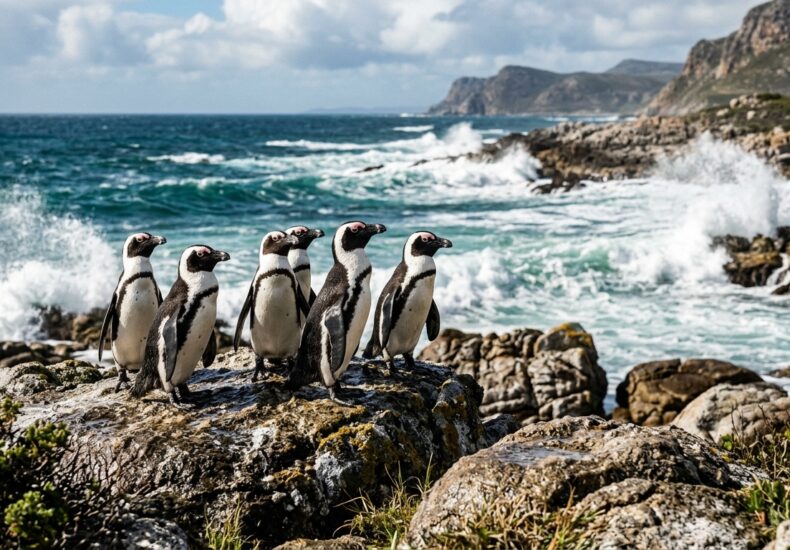
Mass sardine die-off pits survival of South Africa’s penguins against fishers’ livelihoods as reflected on by Sensei Michael Jinpa
At dawn in Harborview Point, the tide pulls back. It leaves kelp, smooth stones, and the sharp tang of salt. Down at the docks, day boat diesel engines idle before sunrise. This familiar hum has sustained harbor families for generations. News of the massive **sardine die-off** along two thousand miles of African coastline brings quiet grief. We feel the tremor in our bones when the ocean shudders. Those living by the water understand this deeply.
The South African situation exposes a painful knot of interdependent existence. Sardines, small and silver, pulse with marine energy. They sustain African penguins, gannets, and countless apex predators. However, these fish also sustain families who draw their living directly from the sea. Their nets feed local economies and put food on kitchen tables. Closing fisheries risks human livelihood and dignity. Yet, continued netting as stocks collapse risks driving an entire ancient species into silence. We want clean answers, but nature rarely offers painless choices when we push systems to the brink.
Dependent Origination and the Sardine Die-Off
In Zen practice, we constantly return to pratityasamutpada. This is the truth of dependent origination; nothing stands alone. The starving penguin on the gravel beach, the trawler skipper checking his balance sheet, and the warming ocean currents are threads of a single cloth. Our social and economic models often treat the living world as an inexhaustible resource. This creates a fracture. The suffering of the bird and the anxiety of the fisher spring from the exact same misunderstanding. Therefore, we must see our world as our extended body.
I sat with many people facing impermanence as a hospice chaplain. When an organ fails, the body does not debate fault; it bears the shock together. Our global biosphere shows signs of multi-system distress right now. Millions of fish wash up dead across vast stretches of sand. The earth offers a direct, unvarnished teaching. The ocean is not punishing us. Instead, it simply reflects the consequences of imbalance. True contemplation requires we do not look away from this reflection. We must not numb ourselves to its discomfort.
Holding Both Sorrows: Compassion and Stewardship
Compassion that chooses sides is incomplete. If we care only for charismatic wildlife, we dismiss working families whose homes depend on the sea. This practices a comfortable, detached idealism. If we defend human industry at the total expense of ecological collapse, we consume tomorrow’s breath to warm today’s fire. Genuine Buddhist ethics asks us to hold both sorrows at once. We acknowledge the hunger of the chick in the nest. We also feel the dread of the parent facing an empty bank account. Only from that quiet, non-reactive space can real collective care begin.
Holding both realities means society must bear the cost of healing together. Conservation demands fishing grounds rest so life can recover. Justice insists human communities are not cast aside to starve in the name of purity. True stewardship shares the economic burden across the whole community. It compensates and retrains workers while the waters replenish. Protecting life cannot be a luxury tax levied solely upon those who haul the nets with calloused hands. Ultimately, we must act together.
Tonight, fog rolls past the lighthouse. It settles into the cedar trees around our sanctuary. We sit on our cushions and listen to waves break on the shore. Each inhalation is an offering from the sea. Each exhalation returns our breath to the sky. May we cultivate the courage to live within our limits. May we care for our fellow creatures without abandoning our neighbors. Furthermore, may we remember that whatever we do to the web of life, we ultimately do to ourselves.
Leave a Reply