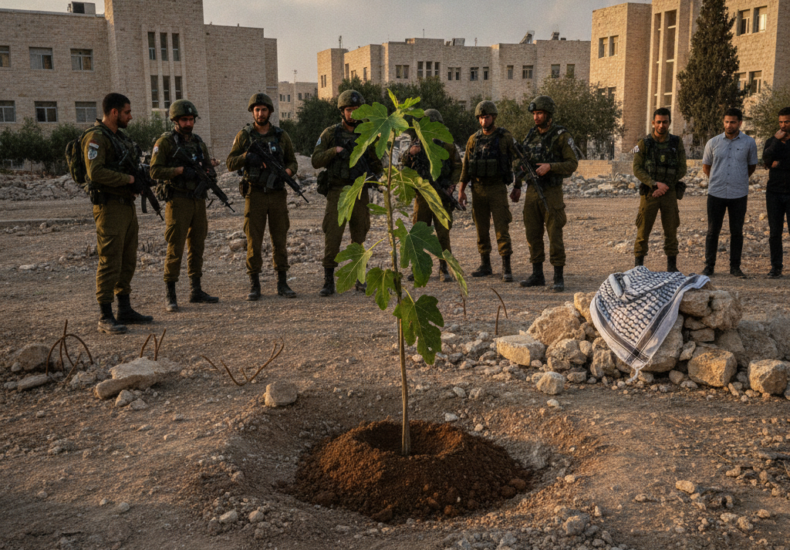
Birzeit University memorial destruction aims to crush Palestinian memory as reflected on by Swamini Ananda Saraswati
In the quiet morning hours at Ganga Mandir Sanctuary, mist rises from the river. It settles into the cedar groves. We remember that grief is not merely an emotion, however. Grief serves as a sacred duty of remembrance. It acknowledges the unrepeatable divine spark within every departed soul. News reached our foothills: a stone monument at Birzeit University was dismantled. It honored fallen students and alumni. They replaced it with a planted sapling. Consequently, the heart feels the severe weight of human estrangement. To deliberately raze a marker erected by a grieving community is not an act of statecraft. It is a calculated violation of smriti, the sacred capacity to honor and preserve memory. This act represents a clear attempt at Palestinian memory destruction.
Our Advaita Vedanta tradition teaches non-duality. We recognize the same undivided consciousness, the Atman, behind every name and form. Yet, our lived reality, vyavahara, depends on dharma. This means righteousness, compassion, and fundamental dignity. We owe dignity to the living and the dead alike. Memory provides the ground for accountability and mutual recognition. When one group attempts to erase communal memorials, it denies another’s grief. Ultimately, it denies their very existence as shared bearers of consciousness. Such actions express deep spiritual delusion. This egoic falsehood claims dominance over physical space can extinguish another people’s suffering.
The Spiritual Perversion of Nature and Palestinian Memory Destruction
An unsettling irony emerges when they replace an obliterated monument with a living fig tree. Our sanctuary gardens revere every growing tree. We see each one as a silent altar of life. Trees offer shade and sustenance without distinction. To use a living plant as a tool of erasure, however, perverts nature’s spiritual innocence. A sapling planted to conceal an unhealed wound cannot bestow peace. The earth cannot become an accomplice to denial. True sacredness does not overwrite history. Instead, it bears witness to truth with humility and unflinching honesty.
Ahimsa means non-harm. This principle is never confined to refraining from physical violence alone. Ahimsa encompasses the mind, speech, and the preservation of psychic and cultural sanctuary. To systematically strip away a bereaved community’s markers for their dead is an act of spiritual harm. It inflicts violence upon the interior life of parents, teachers, and peers. They look to those inscribed stones not for vengeance, but for solace and witness. Where ahimsa is forgotten, the oppressor’s soul becomes impoverished. It becomes entangled in fear, just as the external landscape becomes scarred.
The Indestructible Nature of Remembrance
Those who seek to govern through erasure fail to understand remembrance’s indestructible nature. Machines can fracture stone. Soil can be overturned. However, memory rooted in genuine love cannot be unmade by decree. The Upanishads declare that weapons cannot pierce the innermost reality. Fire cannot burn it. Likewise, a community’s enduring testament of love for its lost children survives the fall of monuments. It relocates into song. It moves into oral recounting. It lives in the quiet gaze shared between generations.
From these mountain sanctuaries, we sit in contemplation beside the enduring Ganga. Our prayer turns toward those whose sorrow has been met with callous dismissal. We must pray for conscience to awaken among those who command destruction. May they recognize their own kinship with the ones they dispossess. Lasting peace cannot take root in soil where memory has been forcibly buried. It begins only when every community is permitted to weep openly. It starts when they can speak the names of their dead. Furthermore, they must be met with the reverence due to all life.

Leave a Reply