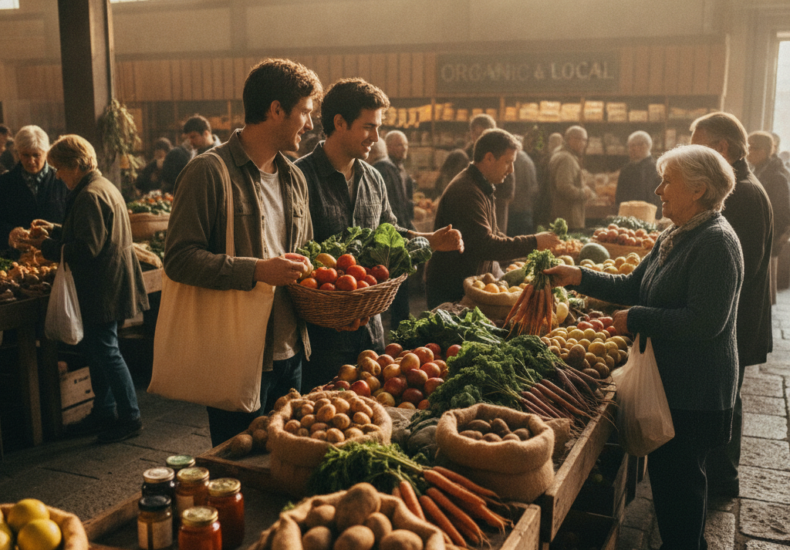
‘Quality really matters’: why the organic food market is booming again as reflected on by Acharya Jinendra Muni
The news reports a significant organic food market boom, even amidst economic challenges. Consumers increasingly prioritize quality and trust in their food choices. This growing awareness signals a positive shift in collective consciousness. People seek healthier, more responsibly produced options for their families. However, we must deepen our understanding of “quality” and “ethics” in consumption.
Rethinking Ethical Consumption
Many people now recognize the interconnectedness of diet and well-being. They wisely question the source and process of their food. This growing discernment shows progress. Yet, the report also highlights a “massive” increase in organic meat sales. We must carefully consider this trend. While “organic” often implies better conditions for animals, it does not negate the fundamental act of violence. True ethical consumption minimizes harm to all living beings.
Jain philosophy teaches us absolute Ahimsa, non-violence towards all life forms. This principle guides our every action, including our dietary choices. We recognize that animals, like humans, possess consciousness and feel pain. Therefore, consuming organic meat, despite its higher price, still involves causing suffering and taking a life. We encourage a shift towards a plant-based diet, aligning our actions with profound compassion.
The True Cost of Choices
Consumers willingly pay a premium for organic products. They believe these products offer superior quality. However, this financial investment could instead support truly non-violent, plant-based alternatives. Our choices reflect our values. We possess the power to choose options that nourish our bodies without harming others. Furthermore, a plant-based diet offers immense health benefits and reduces our ecological footprint significantly. It represents a truly ethical and sustainable path forward for all.
Ultimately, the organic food market boom presents an opportunity. It allows us to reflect deeply on our consumption patterns. We can choose to move beyond merely “better” violence towards complete non-violence. Let us embrace Aparigraha, non-possessiveness, in our desires and consumption. We must also apply Anekantavada, multiplicity of perspectives, to understand the full impact of our food choices. Our spiritual journey compels us to seek the highest good for ourselves and for the entire living world.
Read the original news coverage on The Guardian (Environment).

Leave a Reply