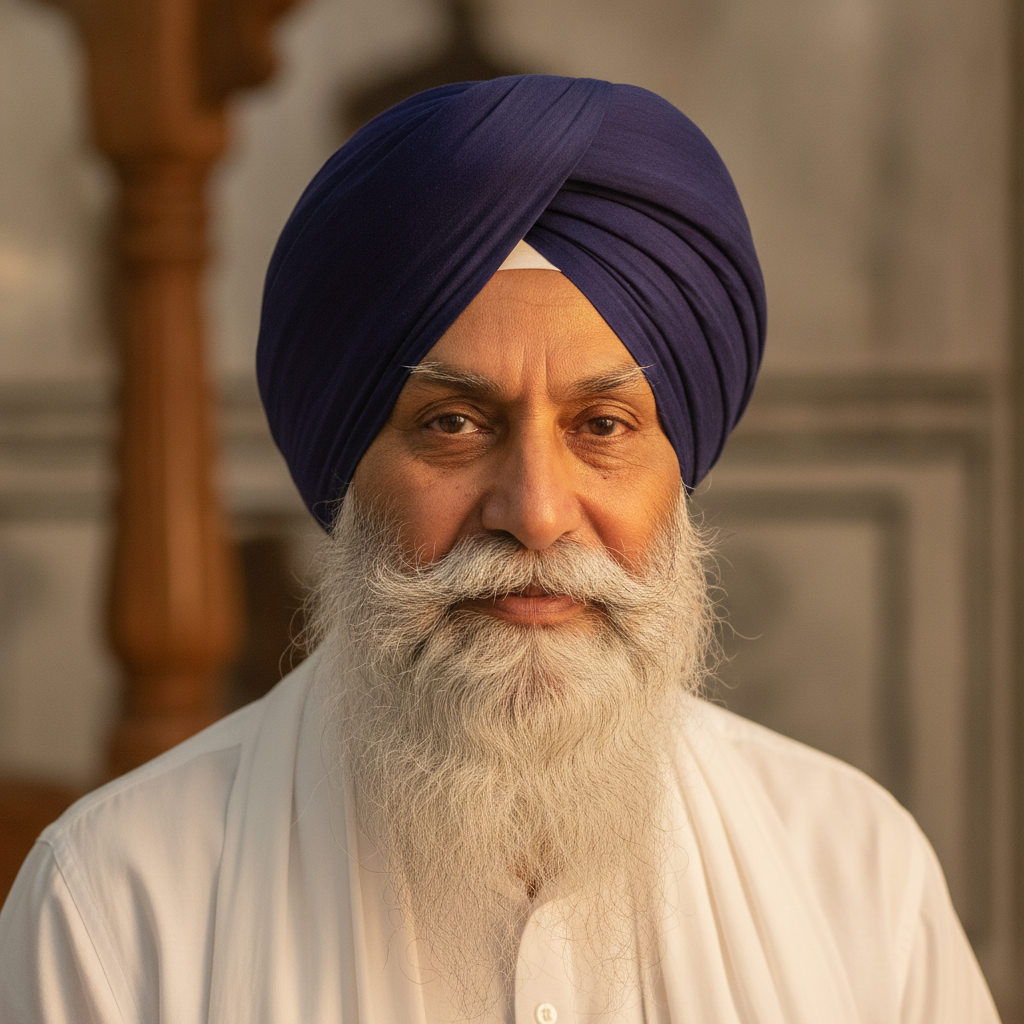
Green party votes to adopt policy that equates Zionism with racism as reflected on by Giani Harpreet Singh
Here at Gurdwara Sahib Dasvandh, diesel engines idle constantly on the bypass. Day and night, long-haul drivers pull their rigs into our freight corridor. They step out of their cabs, often exhausted. Drivers walk into the Gurdwara to wash their hands. Then they sit down for hot dhal and fresh roti. Our Langar hall has no reserved benches, nor separate tables. A Punjabi driver sits beside an English warehouse loader. That loader sits beside a Somali mechanic. For centuries, the Guru established the simple practice of Pangat. People sit together on the floor in a straight row. This breaks the stubborn human illusion. No lineage, creed, or tribe holds a higher claim to human dignity than another. Therefore, when news reaches our community notice board that a political party has voted on resolutions defining Zionism and racism, our community listens carefully.
Equating Zionism and Racism: A Crossroads Perspective
Worldly politics often reduces agony into neat ideological slogans. In party conference halls, delegates raise voting cards. They craft fierce motions and draw rigid lines. However, out here on the loading docks, men and women must live and work alongside diverse people. They often do not understand each other’s backgrounds. We know how dangerous words become when they flatten the living human spirit. Words can turn into weapons, reducing people to mere abstractions. Sikhi began in a land deeply scarred by competing sectarian claims and imperial domination. Guru Nanak looked upon an era of bitter religious chauvinism. He spoke plainly, stating: “Recognize the whole human race as of one single caste.”
Any ideology, whether rooted in state power or nationalist pride, can treat human worth as conditional. This conditionality might depend on bloodline, ethnos, or territorial dominance. Such thinking plants seeds of injustice. The Gurus stood firmly against any doctrine that subjugated one people to elevate another. We must name oppression. We must never silence or brush aside the cry of those enduring displacement, violence, and daily indignity. Yet, our tradition also warns against the spiritual trap of mutual erasure. Justice does not replace one people’s vulnerability with another’s annihilation. We must consider the painful complexities surrounding Zionism and racism.
Beyond Ideology: Seeking True Sovereignty and Peace
The historical yearning of Jewish people for safety, memory, and sanctuary is real. They desire freedom from pogroms and extermination. This forms a profound human reality. Likewise, the agony, dispossession, and desperate thirst of Palestinian families for freedom are equally real. They seek self-determination and land of their own. When distant political manifestos pass sweeping decrees, they treat complex existence as a zero-sum contest. Often, these actions harden hearts rather than heal wounds. True sovereignty, what our Gurus called Miri and Piri, demands temporal power. This power must remain anchored in spiritual humility and genuine moral responsibility. It calls upon leaders not to posture for applause among partisans. Instead, they must bear the difficult weight of reconciliation.
When political bodies adopt resolutions, they can trigger deep terror in one community. They can also create false triumph in another. Such bodies mistake ideological fervor for righteousness. Righteousness does not erase the neighbor. It creates conditions where both can exist without fear. Nobody dominates and nobody is dominated. In the kitchen this evening, the cauldrons are simmering. Hungry drivers will walk through the door. They hold entirely opposing views on the world. They will remove their boots, cover their heads, and eat the same bread. They will not ask one another for political pledges before passing the water pitcher. Our world must move beyond cycles of grief and reciprocal vengeance. Our political imagination must learn something from the humble floor of the Langar. We never build peace by declaring your neighbor has no right to a home. We build peace by recognizing the divine light that burns within every single soul.
Leave a Reply