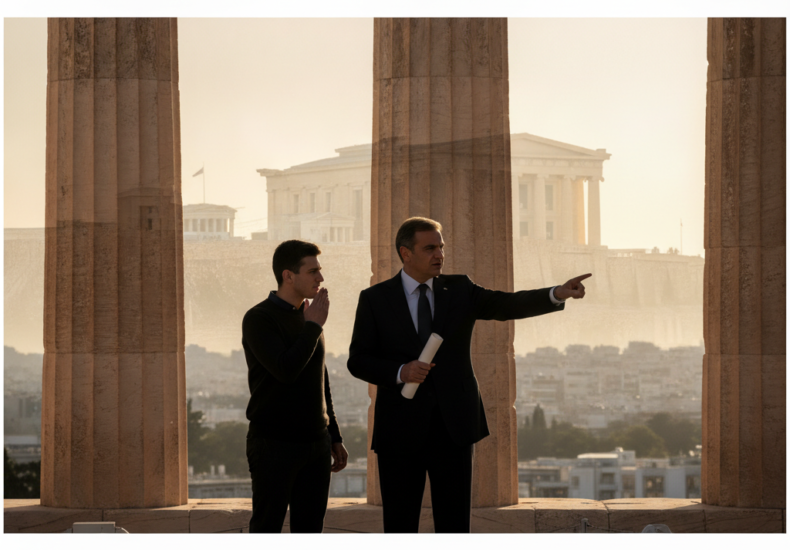
Greek prime minister vows to ‘ramp up’ efforts to regain Parthenon marbles as reflected on by Acharya Jinendra Muni
Here in our bustling financial district, we view ownership as an absolute right. Deeds are recorded, assets are vaulted, and contracts are fiercely defended. Yet from the quiet Mahavira Center, Jina teachings remind us of our transient passage. We observe the ongoing dispute over the Parthenon marbles with a different eye. Two sovereign nations and two storied capitals now contest ancient stones. This echoes an instinct as old as empire itself. Many believe identity and prestige depend upon physical possession.
Beyond Possessiveness: A Jain Perspective on the Parthenon Marbles
The Jain tradition teaches Aparigraha, non-attachment and non-possessiveness. We learn that the craving to hoard and control causes spiritual bondage. Lord Elgin removed these artifacts from Athens two centuries ago. This act was born of imperial grasping. Colonial logic justified this extraction of heritage. Holding onto artifacts taken under unequal power perpetuates that original grasping. The refusal to yield often uses rhetoric of universal preservation. This reflects parigraha: an inner knot of possessiveness. It fears diminution if an acquisition is surrendered.
At the same time, we must honestly examine restitution. The Greek demand to bring the marble friezes back to the Acropolis is entirely understandable. It speaks the language of human justice, cultural restoration, and historical healing. Yet even this righteous plea for repatriation holds a subtle danger. It risks deepening nationalistic clinging. When stone and marble become instruments of geopolitical pride, they bind collective consciousness. They attach it to past injuries and material symbols. This prevents ethical magnanimity from flourishing.
Shared Custodianship through Multifaceted Truth
Our doctrine of Anekantavada, multifaceted truth, offers a constructive path. This principle guides us through diplomatic deadlock. Modern ownership insists on a binary outcome. One party wins exclusive possession; the other suffers loss. Anekantavada teaches that no single view captures total reality. The Parthenon sculptures carry an indelible history tied to Athenian light. However, they have also spent centuries educating visitors from every continent in London. Both these facets belong to their human journey. Leaders must move beyond legalism and title deeds. They need mutual respect and shared custodianship to resolve their future.
True renunciation shows immense strength, not weakness. Britain could return these treasures freely, without transactional conditions. This would not diminish the nation or its museums. Rather, it would demonstrate profound moral maturity. It would acknowledge that historical custody rooted in domination lacks spiritual legitimacy. In our merchant halls, we often remind traders: shedding an unjust gain cleanses the ledger of conscience. This cleanses far more than retaining an ill-gotten asset ever enriches it.
Stone endures long after empires, governments, and custodians turn to dust. Craftsmen carved the sculptures of the Parthenon. They understood harmony, balance, and devotion. Modern stewards of this heritage must rise above territorial ego. They must honor that craft. Nations must learn to release what was taken. They must receive what is returned with humility, not triumphalism. Then, art fulfills its true purpose: to liberate the human spirit from possessiveness and guide it toward peace.
Leave a Reply