What to know about nationwide protests in India over voter list changes as reflected on by Acharya Jinendra Muni
From the Mahavira Center, we often view civic commotion as distant. We translate it into market fluctuations or regulatory risks. However, recent reports of nationwide demonstrations across India regarding voter list changes demand deeper consideration. These India voter list protests cannot simply reflect political expediency or economic stability. A citizen’s franchise offers more than an administrative designation. In a secular democracy, it represents voice, civic recognition, and social dignity. When authorities abruptly question that recognition, unrest inevitably follows. Society cannot function healthily when large segments feel invisible. We must remember this truth.
Understanding India Voter List Protests and Jain Values
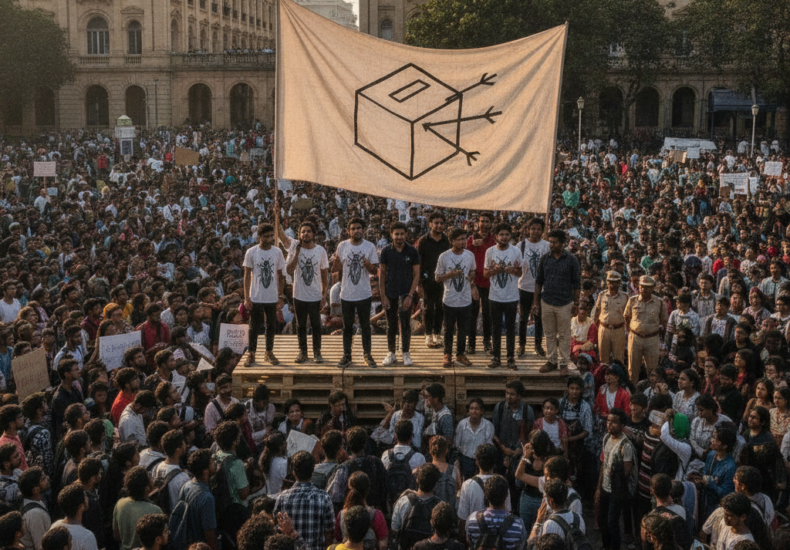
The youth movement leading these protests calls itself “the cockroach.” People commonly loathe, step upon, and drive this creature into the dark. In Jain philosophy, every living being possesses a jiva. This innate conscious life principle holds the right to exist unmolested, from humble insects to human beings. By adopting a scorned creature’s name, these young people highlight a painful moral reality. They feel discarded, disenfranchised, and treated as vermin beneath institutional power’s feet. Their chosen symbol forces society to confront a hard truth: authority readily reduces living souls to mere inconveniences.
True Ahimsa, the foundation of our spiritual path, means more than avoiding physical injury. It extends to governance structures, commerce, and civic administration. When bureaucratic processes systematically disempower or exclude vulnerable communities, authorities commit violence. This violence takes subtle, institutional forms. Depriving a human being of their civic agency inflicts spiritual harm. It denies their inherent standing in the collective welfare. Therefore, righteous governance must protect the weakest. It should never erase them from the register.
Principles for Peaceful Resolution
At the same time, we must evaluate resistance through absolute non-violence. The youth show impressive organization and demand accountability. However, protest methods require constant vigilance. Agitation often begins with righteous indignation. Yet it easily slides into anger, property destruction, and mutual hatred. History teaches us a vital lesson: ends cannot detach from means. If one seeks justice against institutional disregard, the struggle itself must remain grounded in disciplined, peaceful conviction. The cockroach’s strength lies in quiet endurance and resilience, not in retaliatory aggression.
Here in the financial district, we frequently witness Aparigraha being forgotten. Institutional leaders and political administrations cling tightly to control. They treat authority as personal possession, not sacred stewardship. Greed for dominance blinds administrators to common people’s lived realities. When power refuses to let go of unilateral decision-making, it creates friction. This friction destabilizes entire nations. True leadership requires restraint, transparency, and humility. Leaders must acknowledge when administrative reforms cause unwarranted distress.
The principle of Anekantavada, recognizing manifold perspectives, offers the only sustainable resolution. A government listening only to its own legalistic rationale will remain blind. It will miss citizens’ legitimate fears. Conversely, protestors must ensure their critique remains open to genuine dialogue and civic repair. Truth rarely emerges from coercive edicts or barricaded streets. It emerges when both parties sit together, acknowledge partial truths, and work toward mutual restoration. For merchants, civic leaders, and citizens alike, this moment serves as a clear mirror. A society that dismisses its smallest voices erodes its own moral foundation. As these India voter list protests unfold, our prayer must be for an awakening of conscience among the powerful, patience and restraint among the young, and a renewed commitment to a civic life where no human soul is treated as disposable.
Leave a Reply