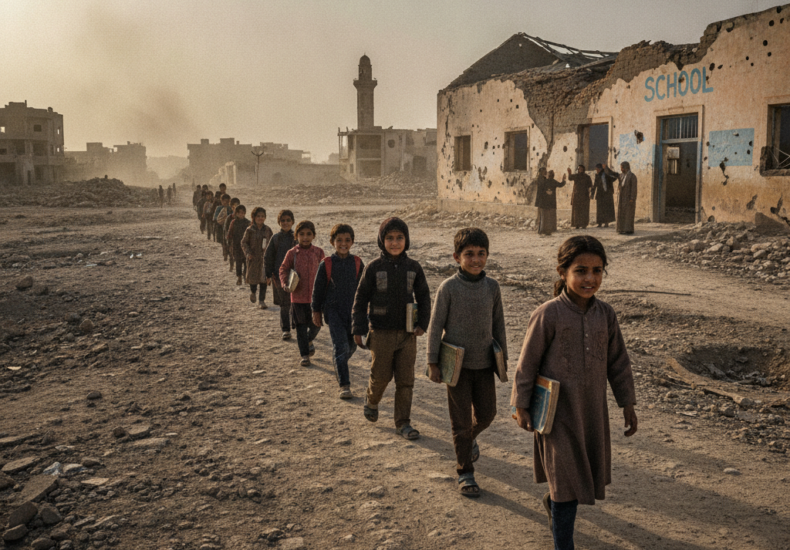
Children brave snipers and mortars to go to school near Yemen front line as reflected on by Sister Maria Teresa Morales
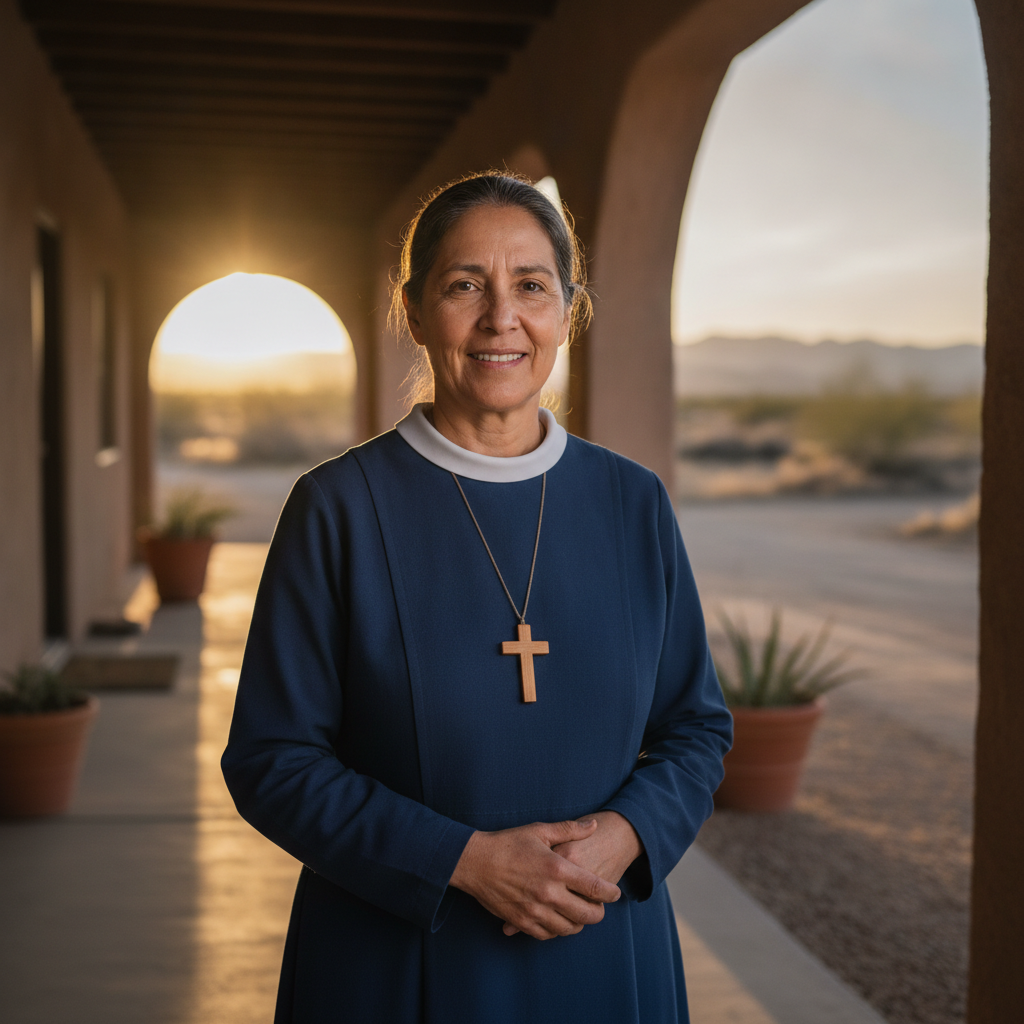
Every morning before dawn, our borderlands hospitality house fills with the quiet sounds of children preparing for their day. Some clutch small notebooks in worn canvas backpacks. Their mothers smooth down hair with wet palms while the desert air remains bitterly cold. I recently read about young boys and girls in Taiz, Yemen, who must dodge sniper alleys and listen for mortar fire just to reach a chalkboard. My heart recognized that same sacred stubbornness. Across oceans and borders, children brave snipers and insist on learning. They pursue education even when adults around them have surrendered the world to violence.
Our Catholic tradition professes that every person is fashioned in God’s image. Therefore, each individual possesses a dignity no siege, missile, or armed checkpoint can erase. Education is not a luxury; furthermore, it is not a mere civic pastime. Instead, it acts as hope in the divine gift of human reason and potential. When a ten-year-old child chooses to walk past armed men to practice arithmetic, that child performs an act of moral resistance. They assert that their future belongs to life, not to the instruments of death arrayed along their town’s perimeter.
Children Brave Snipers: A Mother’s Anguish
Here along the international line, we treat mothers whose feet are shredded by gravel. We also care for children who startle at the drone of border patrol helicopters. Trauma leaves deep physical tracks in a developing body. When the report describes the persistent fear of Yemeni mothers, I think of the women in our clinic waiting room. These mothers hold their breath until the school day ends. The anguish of a mother forced to weigh her child’s mental starvation against physical peril indicts our collective conscience. War forces parents into impossible sacrifices; truly, no family should ever have to make them.
The tragedy of frontline cities like Taiz reveals the brutal reality of indifference. The Gospel asks us plainly where we see the Lord. Christ answers that He is present in the hungry, the naked, the stranger, and the imprisoned. Today, Christ walks between pulverized concrete walls in Yemen. He holds a pencil with trembling fingers. To normalize a world where children must dash through sniper fire just to read a book means participating in what Pope Francis names the globalization of indifference. We turn away because the rubble is far from our sight.
Teachers Preserve Hope When Children Brave Snipers
The teachers who remain in those damaged classrooms are living martyrs of mercy. They often work without pay. They shelter students under desks when artillery rattles the foundation. These dedicated individuals preserve civilization’s fragile light. Their ministry mirrors the work of all who stand watch at the margins. They refuse to abandon the vulnerable when institutions collapse. They teach the alphabet not because circumstances are safe. Instead, they teach because abandoning the classroom would allow brutality to claim the final victory over the young mind.
As Sisters of Mercy, we accompany those whom the powerful treat as expendable collateral. The children of Yemen are not statistical casualties of geopolitical rivalry. They are precious sons and daughters whose tears God counts. Our spiritual duty extends beyond private grief. We must demand peace, an immediate silencing of weapons, and accountability for those who target civilian life. A faith that ignores the terrorized child on the road to school has lost its salt and purpose. Tonight, as the desert stars come out, my prayers go across the earth to the dark streets of Taiz. May the Holy Spirit shield those tiny footsteps tomorrow morning. May the international community wake from its comfortable slumber. Whenever a schoolchild must dodge a bullet to learn, the entire human family stands wounded and ashamed before God.
Leave a Reply