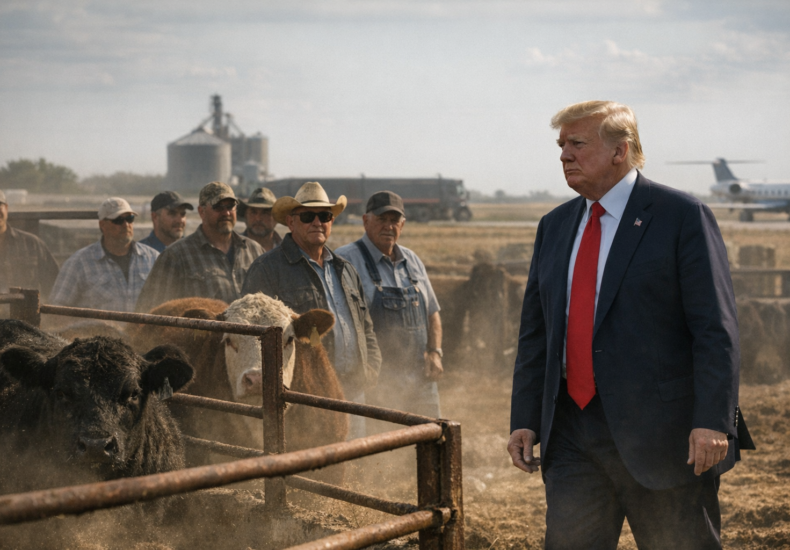
Trump heads to Nebraska as supreme court hears first oral arguments of new term – US politics live as reflected on by Imam Tariq Al-Mansoor
Between the morning Fajr prayer and Grand Avenue’s delivery vans, our neighborhood reveals its vulnerabilities. In Cedar Heights, life is measured by tangible things. We consider the price of halal ground beef at Brother Yusuf’s. We notice the rasp in a child’s lungs when summer humidity traps truck exhaust. Will this week’s wages cover both rent and winter heating? News reports discuss presidential travel through Nebraska farm country. They also cover high-stakes legal arguments before the Supreme Court regarding climate accountability. These issues might seem like distant spectacles. However, they touch the very core of how we live, eat, and breathe together. Our duty as believers is to remain steadfast in the work of **civic repair**.
Stewardship and Economic Justice
The news speaks of political friction over foreign agricultural imports. It also details corporate resistance to municipal lawsuits demanding payment for ecological harm. To our urban congregation, largely working families, day laborers, and elderly retirees, these national disputes reveal an old spiritual affliction. This affliction is the separation of power from stewardship. In the Islamic tradition, God did not grant humanity dominion over the earth for unlimited exploitation. Instead, God entrusted us with it as khulafa, or trustees. We must balance every privilege with rigorous accountability before the Creator.
Consider the cattle ranchers in the Plains. Sudden shifts in global market policy destabilize their livelihoods. Likewise, our neighborhood bodega owners watch margins vanish overnight. Dignified labor is not merely an economic input for political expediency. Prophet Muhammad, peace and blessings be upon him, taught us to pay the worker their wage before their sweat dries. That principle extends beyond an employer’s transaction. It encompasses an economic system that honors the hands cultivating the soil and harvesting our sustenance. Policy often treats food merely as an instrument of leverage. However, it is a divine provision requiring fair dealing. Everyone suffers this imbalance, from the Nebraska rancher to the urban shopper.
Accountability for Environmental Harm and Civic Repair
Equally pressing is the contest now unfolding before the high court in Washington. Local municipalities like Boulder attempt to hold fossil fuel conglomerates legally liable for environmental destruction. They are attempting to restore a basic moral equation: those who cause harm must repair it. Judges may own the legal doctrine of jurisdiction. Yet, the underlying ethic belongs to universal conscience. The Prophet warned against causing harm or returning harm with harm. He laid down the fundamental Islamic legal maxim of la darar wa la dirar. Corporations pour toxins into the atmosphere for decades, reaping historic profits. Then they claim legal immunity from local communities facing flooding, heat domes, and crumbling infrastructure. This is a profound evasion of moral liability.
Here in our concrete streets, we understand environmental degradation not as an abstract statistic. We experience it as a lived reality. Asphalt absorbs heat and holds it through the night. Asthma rates climb among our youth. Basements flood whenever heavy cloudbursts overwhelm city drains. Corporate attorneys argue that local communities have no standing to seek redress. They are attempting to silence the cries of the most vulnerable. True civic order cannot endure if the powerful privatize their windfalls while socializing the devastation they leave behind. We need consistent **civic repair**.
Spiritual discipline does not exist in isolation from these worldly struggles. Our prayers lose their vitality if they do not instill within us a fierce commitment to public justice and truth. Caring for creation is not a recreational pastime. It is an obligatory act of worship. Whether one stands in the quiet rows of our mosque or sits at an interfaith organizing table planning neighborhood food distribution, the mandate remains identical. We must defend the integrity of the soil that feeds us and the air that sustains our children. We pray for leaders whose hearts humility restrains. We pray they see wealth and power as temporary trials, not permanent entitlements. True security will never be secured through clever litigation or unbridled commercial gain. It will come through the patient, enduring practice of justice that preserves the earth and honors every soul who walks upon it.
Leave a Reply