
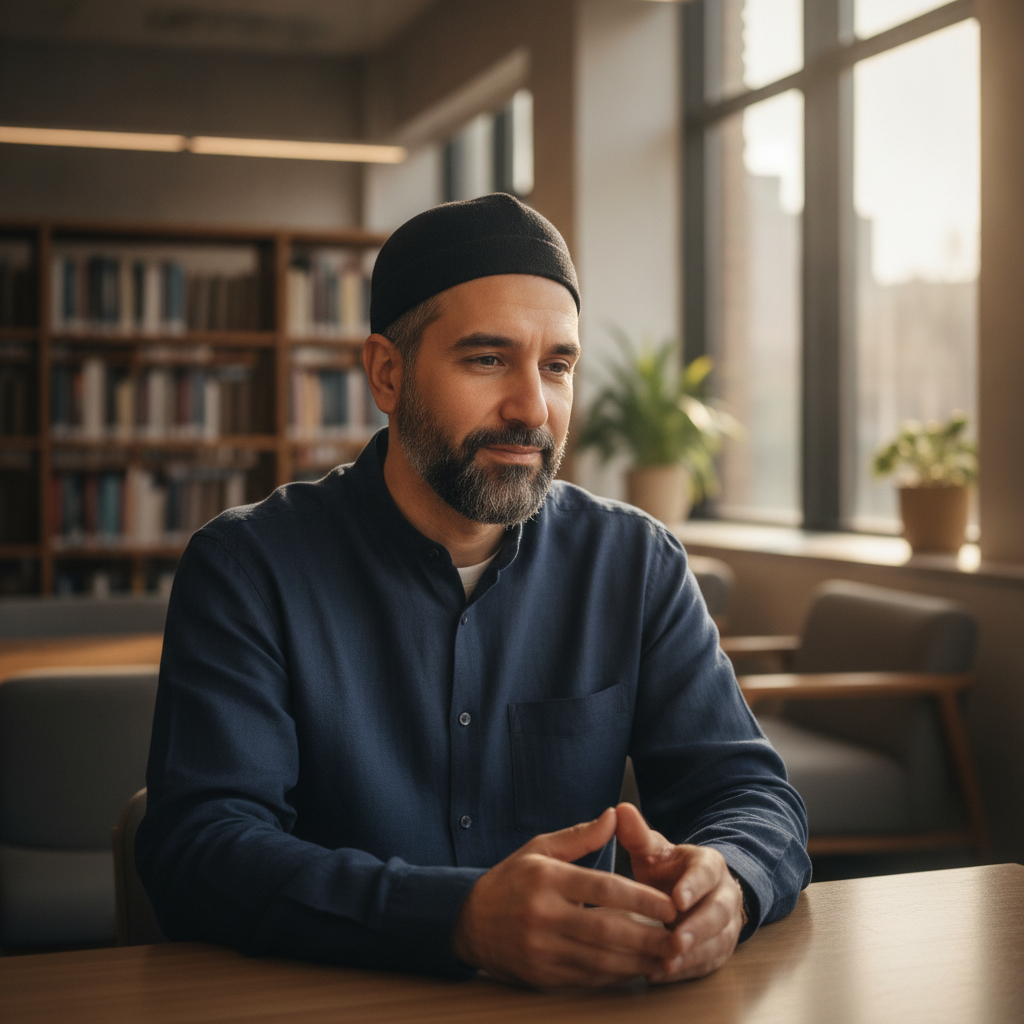
Nobel Prize awarded for revealing inner workings of the brain as reflected on by Imam Tariq Al-Mansoor
In our modest prayer hall at Al-Fajr, located above the noise of 4th Avenue, we often gather after dawn prayer. We recite the Quran, finding peace in its verses. One powerful reminder comes from Surah Fussilat: “We will show them Our signs in the horizons and within themselves, until it becomes clear to them that it is the truth.” Historically, this meant examining conscience, battling pride, and embracing charity. Today, science offers a new lens. The Nobel Prize awarded to Karl Deisseroth, Peter Hegemann, and Georg Nagel has literally illuminated the **brain’s inner workings** using light. This remarkable achievement reveals the delicate machinery of our minds.
Illuminating neural pathways with light beams truly stands as a remarkable scientific achievement. In Islam, we consider the intellect, or aql, a sacred trust. It represents a divine gift bestowed upon humanity. This gift helps us discern truth from falsehood, justice from tyranny, and mercy from cruelty. The Quran consistently urges us to reflect, observe, and ponder the cosmos’ intricate design and the human vessel. When scientists unlock thought’s cellular circuits, they create nothing new. They simply read the Creator’s signs, inscribed into our very biology.
Science, Faith, and Community Needs
In Cedar Heights, however, scientific headlines often meet harsh realities. Working-class families endure back-to-back shifts in warehouses and hospital laundry rooms. They carry invisible burdens of chronic anxiety and quiet exhaustion. In our youth mentorship circles, teenagers face algorithmic distraction, economic precarity, and creeping despair from poverty. Therefore, when we hear science can trace depression, trauma, and compulsion within the brain, we pray. We hope such knowledge translates into affordable, compassionate healing for the forgotten, not exclusive luxuries for the wealthy.
Indeed, with great knowledge comes heavy moral accountability. Our tradition calls this amanah. The capacity to map, influence, and potentially manipulate neurological levers of memory and mood raises urgent ethical dilemmas. If we can manipulate the circuits of choice, what then becomes of human moral agency? Prophetic ethics teach us a vital lesson: technical capability must always tether to moral discipline. The power to alter mental states cannot substitute for dismantling social conditions that break spirits. A medication or technical intervention must not replace fair wages, dignified housing, and human companionship.
Furthermore, we must carefully avoid reducing the profound mystery of the soul, the ruh, to mere chemical firing and electrical voltage. While the brain is our biological vessel for earthly life, the human being is fundamentally an ethical creature. We are called to transcend mere material instinct. Empathy, for instance, is not just a stimulated circuit in the prefrontal cortex. It is an active spiritual commitment to bear witness to another’s suffering. Forgiveness is not merely an inhibition of aggression; it is an intentional act of devotion, modeled on divine mercy.
Guiding the Brain’s Inner Workings with Mercy
Every Friday, our congregation gathers from dozens of homelands. We stand shoulder to shoulder on worn carpets, bowing our foreheads to the floor. In this physical posture of prostration, the highest organ of human intelligence lowers in humility before the Lord of all creation. It reminds us: no matter how much we decipher the skull’s mechanics, true wisdom begins with recognizing our dependence on a higher truth. It also highlights our profound obligation to one another.
We welcome this breakthrough as a victory for human curiosity. It stands as a testament to God’s wondrous design and reveals more about the **brain’s inner workings**. However, as researchers receive accolades in distant capitals, our duty here in Cedar Heights remains steady. We must insist that this expanding knowledge of the mind is guided by mercy. It must be made accessible to the vulnerable, not used to master or commodify human nature. Instead, we must use it to heal the brokenhearted and restore dignity to the afflicted.
Leave a Reply