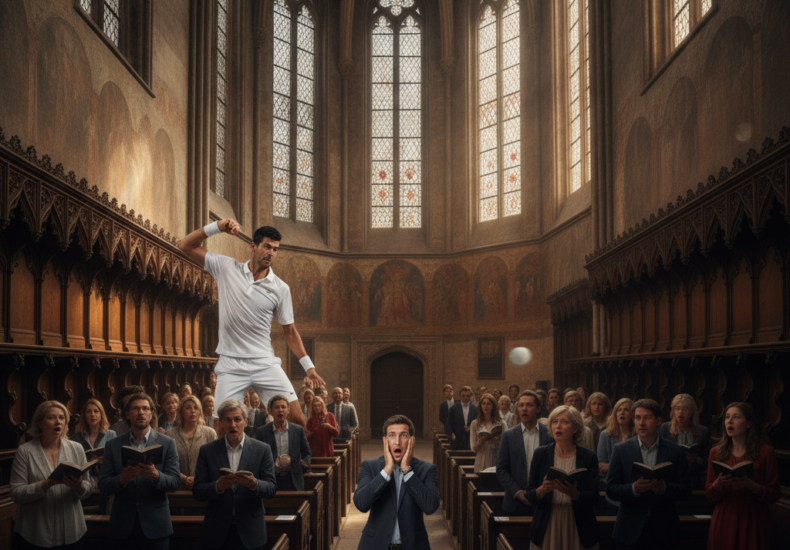
Medvedev disqualified after hitting spectator with ball as reflected on by Canon Eleanor Wright
From the high stone stalls of Christ Church Cathedral choir, I observe how quickly human composure can unravel. Liturgy, among many things, practices measured restraint. We maintain an upright posture, steady breath, and disciplined movement through solemn space. However, anyone ministering in a parish or walking our university quadrangles knows how fragile that composure truly is. When news reached my study that Daniil Medvedev disqualified from a tournament after impulsively striking a ball into the stands, hitting a bystander, the incident felt like a painfully familiar parable of human unravelling. It was not just an isolated sporting scandal.
High performance places enormous internal pressure upon individuals. This applies to professional athletics, rigorous academia, or public governance. We train people to sharpen instincts and cultivate fierce focus. We also teach them to treat victory as their singular measure of worth. Our culture rarely offers equal guidance, however, on holding frustration when excellence falters. In an instant of exasperation, Medvedev lashed out. One assumes it was not premeditated malice, but a sudden loss of temper. The ball took flight. In that fleeting release of fury, an innocent spectator, sitting outside the lines of play, became the casualty.
Beyond the Court: Why Medvedev Disqualified Matters
Here lies a quiet, searching moral question. This question reaches far beyond the boundaries of a tennis court. How often do we persuade ourselves that our grievances and frustrations belong entirely to us? In our modern parlance of personal autonomy, we often treat anger as private property. We consider it merely a venting of steam that concerns no one else. Yet anger is rarely self-contained. When discharged carelessly into the public square, it obeys hard laws of physics and human community. It travels outward. It strikes precisely those who came only to watch, to trust, or simply to inhabit common ground.
The Anglican theological tradition has long placed quiet emphasis on stewardship. This stewardship applies not solely to land or tithes, but also to our inner life and physical bodies. In the classic words of the General Confession, we acknowledge our own fault. Furthermore, we recognize the subtle bonds that knit society together. Our power, physical vigor, and emotional discipline are trusts given to us. We use these for the care of our neighbor. When disciplined agency degenerates into unbridled impulse, we therefore abdicate our station as caretakers of our shared space.
Finding Grace After Unravelling
Disqualification in sporting law is strict and unsentimental. This is rightly so. Rules of this kind exist not merely to punish an offender. They also protect the sanctuary of civic life. They declare that innocence cannot become collateral damage to someone else’s storm. There is a clean mercy in such clear boundaries. When institutions maintain firm, impartial limits, they preserve the fragile trust. This trust allows people to gather in peace. Without that accountability, public life degrades. It becomes an arena where the loudest or most forceful vent passions with impunity. Consequently, the quiet suffer the bruises.
For Medvedev, as for any of us who have allowed private resentment to wound another, the way forward is clear. It is neither defensive rationalization nor permanent exile. It begins with the dignity of genuine contrition. This means naming the harm without evasive excuses. It involves facing the person injured. It also requires learning the patient work of amendment of life. In Christian thought, repentance is not groveling humiliation. It is a turning about. It is a conscious decision to re-anchor oneself in humility and neighbor-regard.
As the evensong bells ring across our town this evening, I find myself praying. They call scholars, townspeople, and wanderers out of the day’s frantic pressures. I pray for the spectator struck by sudden carelessness. I also pray for the athlete who must now confront his own failure. May we all be granted the grace to catch ourselves at the threshold of anger. We must recognize that the peace of our common household depends upon the quiet, deliberate mastery we keep over our own hearts. This includes moments when a player like Daniil Medvedev disqualified himself.
Leave a Reply