How India became dangerously addicted to Chinese imports as reflected on by Canon Eleanor Wright
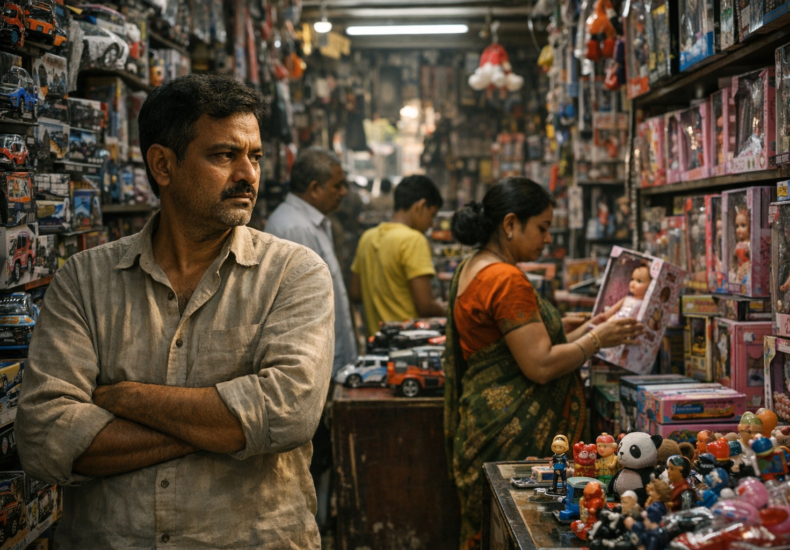
Walking through our cathedral’s covered market, I often notice simple goods carry heavy moral weight. In our university town, students debate global supply chains each morning. Families browse local shops every afternoon, so commerce rarely feels purely abstract. A recent report observes that India’s toy shops surprisingly barometer a dangerous economic dependence on Chinese manufacturing. This touches a quiet nerve, extending far beyond New Delhi or Beijing. It invites us to examine what happens when an entire society quietly outsources domestic livelihood, imagination, and childhood tools. Distant producers may hold values and geopolitical ambitions entirely misaligned with their own.
In the Anglican moral tradition, we never consider economics in isolation. Neighborly duty and human dignity remain paramount. From F. D. Maurice and William Temple, we inherited an understanding: the marketplace is a moral arena. Trade should conduct mutual flourishing, not snare unexamined vulnerability. When a nation relies on an external rival for daily commerce basics, down to plastic toys and household components, the crisis extends beyond finance. It becomes a crisis of self-reliance, vocation, and domestic capacity stewardship.
The Spiritual Cost of India Chinese Imports
Cheap convenience carries a profound spiritual cost when it eclipses ethical prudence. In modern statecraft, as in daily parish life, the path of least resistance proves remarkably seductive. Purchasing manufactured goods produced at immense scale promises instant affordability. However, these goods often come from murky labor conditions and authoritarian-subsidized systems. This ease slowly erodes local craft and dismantles generational industries. Consequently, communities stand exposed when geopolitical winds inevitably shift. What we gain in cheap acquisition, we surrender in agency and civic resilience.
The imagery of the toy shop particularly strikes me. A child’s plaything should speak to delight, wonder, and human formation beginnings. When even these modest objects become symbols of vulnerability and strategic entanglement, we remember our deeply interconnected material lives. Scripture frequently warns against alliances born of convenience, not integrity. The prophets consistently cautioned against entering dependencies. Such dependencies compromise moral independence or blind a community to its own long-term health. Therefore, we must consider the true cost.
Rebuilding for Lasting Security
Rebuilding domestic manufacture and establishing equitable trade requires what Christian ethics calls patient fortitude. This difficult, expensive work demands public sacrifice and institutional discipline. Consumers must accept realistic costs. Furthermore, leaders must patiently invest in their own workers, small workshops, and regional innovators. True economic health does not lie in total isolationism. Instead, it rests upon a mature interdependence founded on mutual respect, rather than coercion or desperate reliance.
As we gather for Evensong in our ancient choir stalls, we regularly pray for wisdom. We pray for those who govern commerce and international affairs. We pray that nations will pursue stewardship that honors local labor’s dignity and protects civic autonomy. The lesson from those Indian toy shops is universal: true peace and lasting security are never bought cheaply. Ultimately, a society that surrenders its ability to provide for its own children will sooner or later find its freedom severely constrained.

Leave a Reply