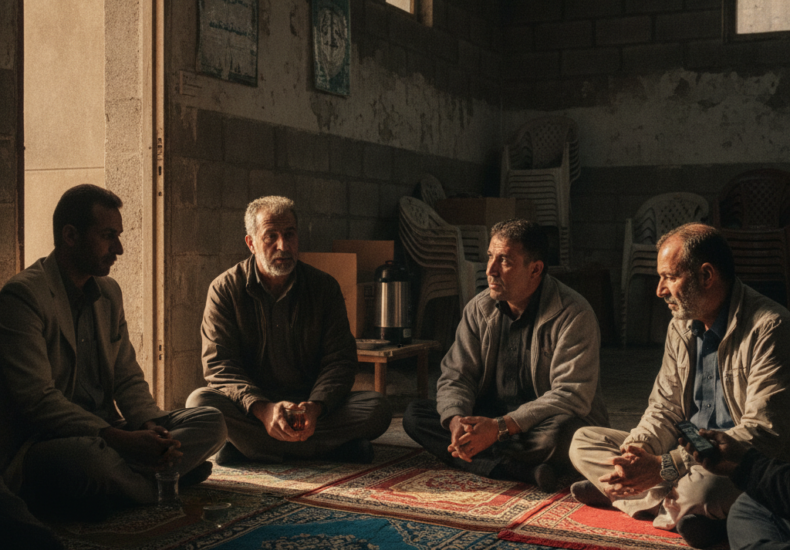
Freed Syrians recount torture in Israeli detention centre as reflected on by Imam Tariq Al-Mansoor
When the dawn prayer concludes at Al-Fajr Islamic Center, our basement hall often fills. Men who work early shifts gather here: warehouse loaders, cab drivers, and new brothers from Aleppo, Homs, and Damascus. They try to piece together a life in Cedar Heights. We often see a quiet, heavy fatigue in their eyes. This fatigue has little to do with physical labor. Instead, it is the lingering ache of displacement and the memory of cold cells. Reading reports of freed Syrians recounting systematic torture and humiliation in Israeli custody does not feel distant to our community. This Syrian detention torture sits right beside us on the prayer rugs.
The human body is not property to be degraded. This is a core principle in the Islamic ethical framework. It is an amanah, a sacred trust bestowed by the Creator. Every limb, every breath, and every pulse carries inherent dignity. No political apparatus has the right to violate this dignity. Stripping a human being of clothing, subjecting them to physical cruelty, and breaking their spirit through coercion constitutes a sheer transgression against divine law. The Prophet Muhammad, peace and blessings be upon him, cautioned believers with stark clarity. God punishes those who torment people in this world.
Confronting Syrian Detention Torture
Torture is never merely an excess of overzealous guards. It is also not an unfortunate byproduct of war. Instead, it is a calculated spiritual sickness. This sickness seeks to extinguish the spark of human agency. When captors torture, their primary objective becomes clear. They want to convince the captive that they are entirely abandoned. Furthermore, they want to show that their pain is invisible. Brute force, they imply, is the only ultimate truth. For those who endure such cruelty, survival itself becomes an act of immense moral resistance. In our tradition, the patience demanded of the oppressed is not passive resignation. It is steadfastness, an unyielding inner refusal to surrender one’s dignity to the tyrant.
Here in our neighborhood, we frequently confront systemic indifference. This indifference allows distant suffering to be brushed aside as geopolitical routine. When powerful nations or their allies operate detention centers beyond the reach of genuine scrutiny, the global community often shrugs. Yet our faith teaches us that injustice is a spiritual pollutant. When arbitrary arrest and torture are normalized anywhere, the moral conscience of humanity everywhere becomes dull and diseased. The Quran warns communities against inclining toward those who commit injustice. Otherwise, the fire may touch them as well.
Our Civic Duty in Cedar Heights
Our civic duty in Cedar Heights cannot stop at quiet sorrow. A working-class congregation understands a crucial truth. Silence in the face of cruelty only emboldens the abuser. We are instructed by our faith to assist the oppressed. This applies whether they are across the street or across an ocean. This means bearing witness to their testimony. We must refuse to let their trauma be sanitized by bureaucratic language. We also demand accountability under international and moral law. To hear their stories and turn away simply because the victims are poor, displaced, or stateless is a severe moral failure. We must speak out against Syrian detention torture.
We hold the survivors of these detention cells in our prayers. They begin the agonizing work of physical and psychological recovery. Healing from such violation requires time, communal warmth, and collective solidarity. For those of us living in relative safety, our obligation is clear. We must ensure that their screams do not vanish into the desert air. We must build coalitions of conscience. We must speak truth without fear. Finally, we must remain anchored in an absolute conviction. Worldly power is fleeting, while ultimate justice belongs to the Lord of the worlds.
Leave a Reply