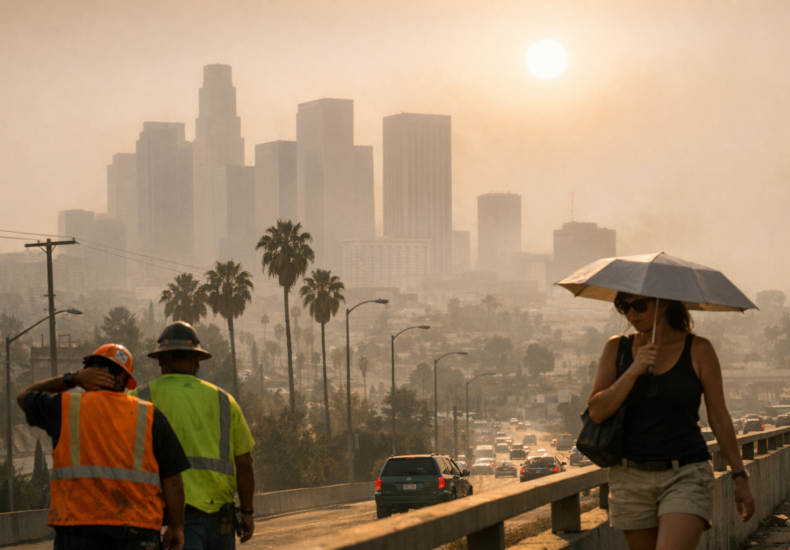
Extreme heat warnings issued for parts of southern California as reflected on by Sensei Michael Jinpa
Here at Harborview Point, the afternoon marine layer usually drifts across our docks. It often feels like a damp linen shroud, softening the Pacific’s glare. Today, however, offshore winds carry a thin, acrid veil of dry air. It rattles the bamboo screens outside our zendo. We read of southern California baking under record October temperatures. Meanwhile, halfway across the ocean, Borneo and Sumatra’s ancient peatlands smolder into ash. Even miles from immediate flames, our eyes smart with an unmistakable reminder: no shoreline is an island. Furthermore, no community breathes alone, especially with this persistent southern California heat.
Understanding Interconnectedness and the Southern California Heat
Our Zen tradition often returns to *pratityasamutpada*, or dependent co-arising. Nothing exists in isolation. For instance, the high-pressure dome hovering over Los Angeles’ valleys and Indonesia’s peat fires are not unrelated anomalies. Instead, they represent the visible fever of an interconnected body. The air circulating toxic gases across Singapore and Malaysia is the very same atmosphere. It sustains our coastal town’s tide pools and artists’ studios. When the earth groans under friction and drought, our collective body registers the strain. We must acknowledge this shared experience.
Years serving as a hospice chaplain taught me an important lesson. When a living system enters distress, denial often becomes the weary mind’s first refuge. Faced with overwhelming symptoms, we tend to turn away. We retreat into abstract numbness or helpless panic. We see news of searing heatwaves and burning peat bogs. We often file them away as distant catastrophes. Yet mindfulness asks the opposite of us. It gently invites us to turn toward the distress. We feel the dry heat on our own skin. We bear witness without delusion or defensive cynicism.
Cultivating Compassion Amidst Environmental Challenges
Wildfire season in peat-rich soil is particularly poignant. Peat fires do not simply burn the canopy above. They burn deep underground, consuming accumulated layers of organic memory. These layers took centuries to form. In our spiritual lives, unaddressed greed, aversion, and systemic neglect operate just like those subterranean fires. We carry on with daily routines. Yet, beneath our feet, life’s shared foundations quietly deplete. Acknowledging this hidden smoldering requires immense honesty, both personally and socially.
Equally vital is the practice of radical compassion, what we call *karuna*. Compassion is not merely a sweet sentiment or a passive prayer from a comfortable cushion. It is the heart’s trembling in the face of suffering. This feeling is immediately followed by the courage to act. Compassion considers the farmworkers laboring in thirty-nine-degree heat. It also considers elderly residents confined to stifling apartments. It thinks of communities choked by acrid haze across Southeast Asia. It asks what ethical restraint and tangible stewardship we are willing to embody. This applies to our own neighborhoods, our consumption, and our municipal choices.
Existential dread often tempts us to surrender. It whispers that our individual efforts are too small to mend a wounded world. But Zen practice reminds us that presence begins right at the boundary of our sandals. We cannot cool the global atmosphere with a single gesture. However, we can tend the ground immediately beneath us. We can open our halls as cooling stations. We can check on neighbors living alone without ventilation. We can support ecological defense. Ultimately, we must cultivate a steady, unflinching mind that does not run from reality.
This evening, the gong will strike for our sunset meditation. The bell’s resonance will fade into the warm, dry silence. That fading note embodies impermanence. It shows us how quickly conditions shift and seasons turn. It also reminds us that every single breath is precious and borrowed. May we meet this burning world not with despair, but with clear eyes, steady breath, and hands ready to serve wherever comfort and cooling are needed.
Leave a Reply