
AI glasses face their first major government crackdown as reflected on by Pandit Rajesh Sharma
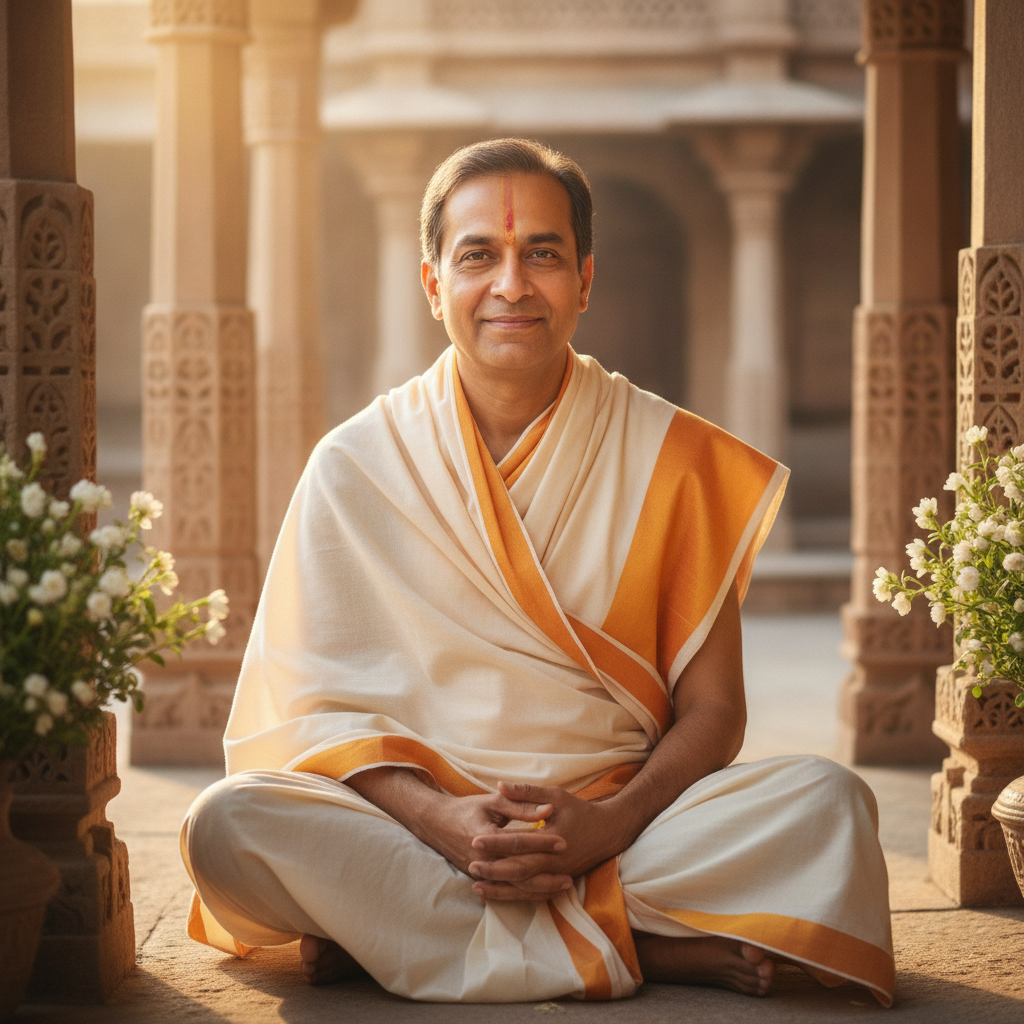
Each weekend, our prayer hall at Sri Venkateswara Cultural Society fills with families. These families spend their working hours writing software, training models, and designing semiconductors. Our Silicon Hills corridor hums with their innovation. On Sunday mornings, they remove their shoes at the threshold. They sit quietly upon woven carpets, seeking stillness before the sacred flame. Recently, however, a quiet disquiet has entered our courtyard conversations. Parents and young professionals now discuss wearable cameras and connected frames. These devices seamlessly integrate recording lenses into everyday eyewear. News of the **AI glasses crackdown** in Norway touches a deep nerve. Regulators there halted the unchecked spread of recording glasses. They aim to establish permanent safeguards for bystanders, a concern shared deeply by our community and spiritual heritage.
Drishti: Sacred Sight vs. Unilateral Capture
Vedic philosophy never understands sight as a passive or neutral instrument. The ancient Upanishads teach us this truth. Surya, the cosmic principle of illumination, truth, and discernment, presides over the eye. Seeing involves an intentional exchange between the seer and the seen. Our liturgical tradition calls this drishti. For example, when we visit a temple, we do not merely observe the deity. Instead, we seek darshan. Darshan is an act of sacred mutual beholding. Both parties are present, conscious, and spiritually open. When human vision is mediated by hidden sensors that record without clear awareness, this sacred reciprocity shatters. Consequently, an encounter between neighbors ceases to be an authentic human meeting. It becomes, instead, an act of unilateral data extraction.
The impulse to capture every waking moment stems from an illusion. Vedanta identifies this as attachment to prakriti, the fleeting forms of the physical realm. Modern culture shows an anxious hunger. It seeks to archive, preserve, and commodify every interaction. We photograph our meals. We track our steps. Now, we seek to digitize the faces of strangers who share a sidewalk with us. This behavior often hides a fear of impermanence. We mistakenly believe an experience lacks reality or worth if not digitally preserved. In truth, genuine presence requires us to inhabit the present moment fully. We must honor its transience with reverent attention, rather than seeking to own it through digital capture.
Dharma and the Dignity of Presence
From the standpoint of dharma, our cosmic duty, we must foster righteousness and social harmony. Living in community requires mutual trust. It also demands respect for our neighbors’ personal dignity. Our scriptures emphasize ahimsa, non-harming. This principle encompasses subtle forms of trespass just as much as physical violence. To observe another person without their consent is wrong. Capturing their gait, laughter, or private grief at a bus stop violates the basic ethical sanctuary every soul deserves. A society where everyone suspects continuous observation inevitably becomes guarded and suspicious. It grows spiritually weary. Furthermore, the natural warmth of neighborliness withers when public space feels like a testing ground for automated surveillance.
Norway’s decision to pause and reflect before technology outpaces human wisdom mirrors our tradition’s honor for viveka. Viveka means spiritual discrimination. It is the capacity to pause between impulse and action. Viveka distinguishes between what is merely technically possible and what truly serves the spirit’s long-term well-being. Innovation without viveka resembles a powerful chariot driven without reins. In our technology corridors, the prevailing creed often dictates releasing tools immediately and measuring consequences later. Therefore, it is both sensible and noble when civic leaders recognize human dignity and communal peace. These values must guide technological design, not submit to it. The **AI glasses crackdown** shows this wisdom.
Karmic Responsibility in the Digital Age
Many engineers who worship at our temple care deeply about building tools. They aim to uplift, not diminish, humanity. They know technology is not inherently contrary to spiritual growth. When creators build tools with reverence, humility, and clear ethical boundaries, these tools can alleviate suffering. They can also deepen human connection. True progress, however, must never come at the expense of our neighbors’ freedom. We must allow them to walk unburdened through the world. As these devices enter our markets and homes, those who build them carry a heavy karmic responsibility. They must ensure privacy, consent, and mutual honor are woven into the very architecture of their systems.
Walking through our temple gardens as the evening lamps are lit, I watch children play by the fountain. Their grandparents chant peaceful shlokas nearby. Their innocence and safety depend upon an unspoken covenant of goodwill among all who gather here. As our physical and digital lives converge, we must preserve that same goodwill in the public square. Pausing to write just rules for intrusive technology is not a rejection of modern achievement. It is, in fact, an act of spiritual maturity. It affirms that the quiet dignity of a human being will always remain far more sacred than the cleverness of any lens.
Leave a Reply