Opinion: A Hawk is not the same as a Hawkeye as reflected on by Sensei Michael Jinpa
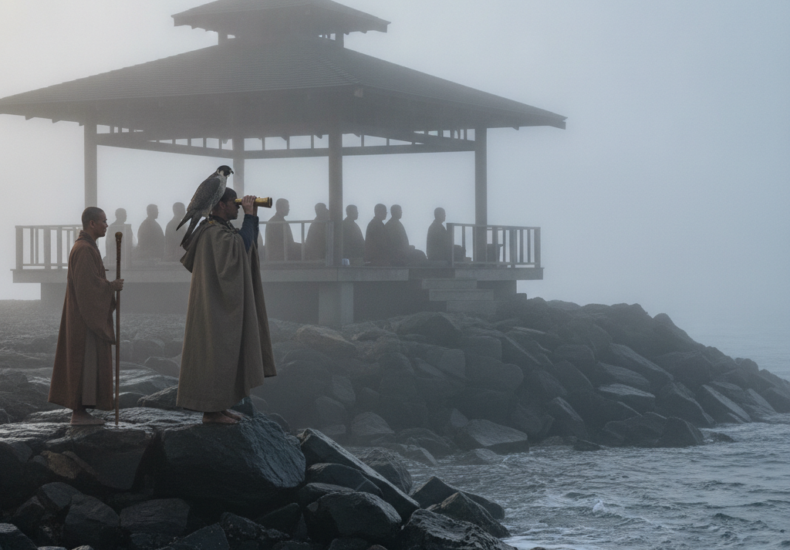
During morning zazen at Clear Mind Zen Sanctuary, heavy fog often blankets Harborview Point. This blurs the distinction between our rocky breakwater and the tidal swells. From the cushion, one quickly learns a lesson: the eye often rushes ahead of the senses. It mistakes a resting cormorant for a jagged slate outcrop. Then the mind creates a world of its own fabrication. We react to what we imagine, not what is actually present. A quiet amusement rippled through our tea gathering this morning. Someone recounted a recent Senate hearing where lawmakers tangled themselves in knots. They debated whether a Hawk is not the same as a Hawkeye.
At first glance, mixing collegiate athletic mascots and professional basketball teams seems like an innocent slip. It provides an easy laugh for the evening news. Also, it offers a momentary reprieve from heavier political anxieties. Yet, in Zen practice, we pay careful attention to these small moments of mislabeling. They reveal how easily our awareness drifts into autopilot. We rely on stale mental shorthand instead of direct perception. This habit, in fact, obscures reality.
Distinguishing a Hawk vs Hawkeye: Conceptual Grasping
In the Mahayana tradition, we often speak of conceptual grasping. Our minds relentlessly catalog reality. They take complex, living realities and paste tidy verbal labels over them. Consequently, we do not have to look too closely. When we are hurried, distracted, or caught up in the theater of authority, we cease to see the actual thing. A Hawk becomes a Hawkeye. Furthermore, a unique human being sitting across from us becomes merely a political opponent, a demographic statistic, or an obstacle to our personal agenda. This intellectual laziness creates suffering.
During my years as a hospice chaplain, I saw much suffering arise from this exact habit of abstraction. Grieving families often struggled. They related to preconceived ideas of death, legacy, or each other. They did not sit with the raw, tender reality of the breathing person in the bed. True compassionate care begins only when we set down our rehearsed scripts. We must look with radical presence at what is here right now, unadorned and unmistakable. This simple act opens the heart.
Cultivating Beginner’s Mind for Clear Perception
The legislative hearing room, filled with television cameras, briefing binders, and performative posturing, acts as the ultimate crucible of conceptual distraction. Those charged with stewarding millions cannot pause long enough to distinguish basic terms. This points to a deeper spiritual exhaustion. Indeed, the noise of modern civic life has grown so loud. Its tempo has become so frantic. Clear observation is routinely sacrificed for the sake of moving quickly to the next soundbite. We lose our footing in reality.
Here along the harbor, our fishermen know a truth. You cannot navigate a narrow channel by casually glancing at an outdated chart. You must not ignore the actual water beneath your hull. The rocks do not care what you intended to call them. To steer safely, you must cultivate what we call beginner’s mind. This means an open, humble posture. It assumes nothing. It examines everything directly. It refuses to let comfortable assumptions replace careful attention. This practice keeps us present.
Recognizing that a Hawk is not a Hawkeye ultimately invites us to wake up. It calls us to see the specifics of our shared world. When we slow our breathing, we step back from the rush of our opinions. We look closely at the names and natures of things. Then we begin to restore sanity to our discourse. Right relationship with reality requires nothing less than this quiet, disciplined willingness. We must see things precisely as they are. This brings peace.
Leave a Reply