All hail electrification. But let’s talk about the hard part. as reflected on by Sensei Michael Jinpa
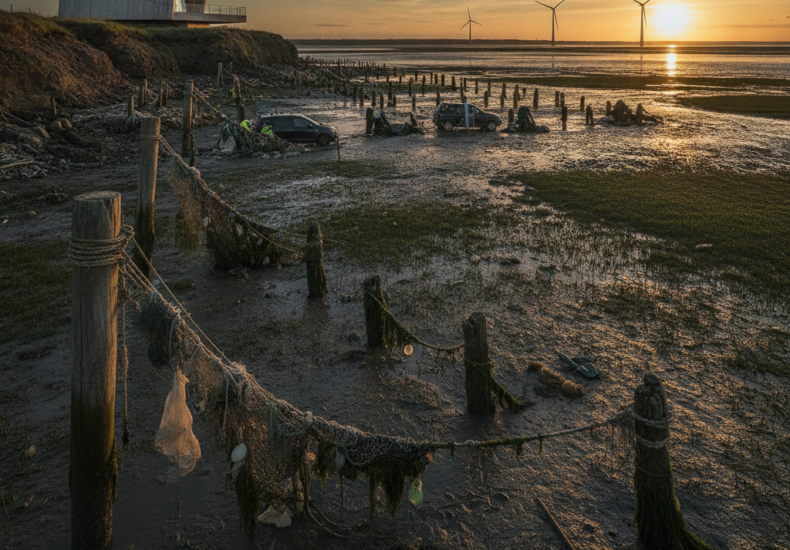
From the bluff outside Clear Mind Zen Sanctuary, you can watch the tide recede across Harborview Point’s salt flats. It uncovers eelgrass, weathered pilings, and tangled debris. Nothing in this marshland moves without cost. Nothing shifts its course overnight. When I read the latest international calls for an all-electric global economy, I am reminded of our tendency. We too easily reach for technical absolutes when faced with collective dread. We hope a clean switch can deliver us from the messy reckoning of our own appetites, leading us toward an electrified future.
In Buddhist practice, we speak of dependent origination. This truth means no phenomenon exists in isolation. Electrification is necessary, rational, and urgently overdue. However, policy declarations often celebrate high-voltage grids and battery reserves. They fail to confront the extraction beneath them. This practices a subtle form of spiritual bypass. Copper, lithium, and rare minerals do not materialize from pure benevolence. Instead, we tear them from distant soils. This often incurs devastating human and ecological costs. These communities remain far removed from coastal art enclaves and metropolitan boardrooms.
The Hidden Cost of an Electrified Future
During my years as a hospice chaplain, families frequently asked for quick medical adjustments. They wished to bypass the agony of watching a body fail. Seeking an intervention that avoids the quiet, interior labor of letting go is a profoundly human impulse. Our civilizational dilemma is not dissimilar. We wish to maintain the pace, throughput, and relentless expansion of late modern living. We simply change the current coursing through the wires. We want the continuation of endless consumption, merely sanitized of visible exhaust. We must consider the true cost of an electrified future.
Here in our harbor, local boatwrights and fishermen understand this deeply. Replacing a diesel engine with an electric inboard requires far more than rewiring. It alters the boat’s balance. It limits its range. It demands deeper mindfulness of weather and ballast. You cannot handle an electric vessel with the careless disregard of a machine that burns fuel whenever haste dictates. Electrification asks us to adapt our behavior to the limits of stored energy. We must stop demanding infinite bounty from a wounded biosphere.
The hard part of this transition is not merely erecting transmission corridors. It is not just permitting substations or financing grid battery banks. The genuine difficulty lies in cultivating restraint. In our zendo, we sit quietly and practice stopping. We notice the restless desire to continually reach for more sensation, more novelty, and more control. Until our economic vision includes the courage to embrace sufficiency, any energy transition will remain incomplete. It merely shifts the burden of pollution from our lungs to the strip mines of another hemisphere.
Cultivating Restraint for a Sustainable Future
True care for the living world requires holding both practical expedience and profound moral clarity in the same breath. We must build clean infrastructure swiftly. Yet, we must do so with grief and humility, rather than uncritical triumph. This means honoring the land and the vulnerable workers bearing the extraction load. Meanwhile, we must intentionally learn to consume less power in our daily communal lives. We must embrace a truly sustainable electrified future.
As the bell sounds for evening sitting over the quiet harbor, the streetlamps flicker awake along the pier. Power flows quietly into our rooms. We often leave it unseen and largely unthanked. If we are to step into an electrified future with genuine integrity, we must enter it awake. We must recognize the reciprocal cost of every watt. We must be ready to alter not just our fuel, but our hearts.

Leave a Reply