Thousands of Glasgow council workers face pay cuts in one of UK’s biggest fire-and-rehire plans as reflected on by Giani Harpreet Singh
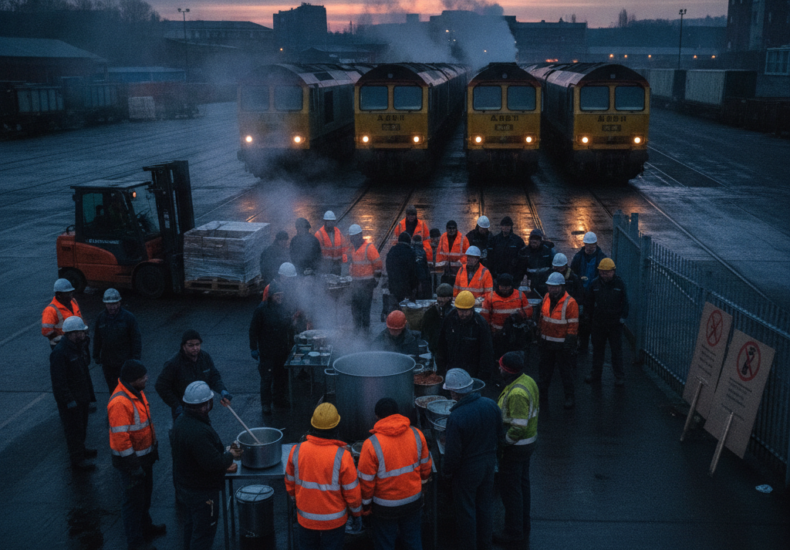
Before dawn breaks over our freight yards, the cauldrons in our Langar kitchen already simmer. Diesel engines idle around us. Forklifts haul pallets across cold concrete. The men and women who stop at the Gurdwara for hot daal and fresh rotis know the weight of honest toil. They work long hours. They keep goods moving, clean depots, and maintain civic roads. Guru Nanak’s tradition holds the principle of Kirat Karo sacred. Kirat means honest labor, earned through sweat and dignity. It is never extracted through exploitation or broken trust. However, news from Glasgow about the Glasgow pay cuts strikes at this core principle.
Glasgow Pay Cuts and Our Sacred Principles
Over twenty thousand municipal workers face a fire-and-rehire scheme in Glasgow. These are non-teaching staff: street sweepers, refuse collectors, caretakers, and administrative hands. They sustain the civic fabric of their city. Management tells thousands of workers their livelihood can be summarily cancelled. They offer it back on degraded terms. This is not mere administrative reorganization. It profoundly violates the compact between managers and those whose bodily labor keeps institutions standing. Furthermore, a bitter irony exists. This exercise arises from efforts to settle historical pay equality disputes.
In Sikhi, equality is not an accounting sleight of hand. Guru Amar Das established the institution of Langar. He mandated that king and laborer sit side by side. They partook of identical nourishment on the floor. That was radical equality. It lifted the vulnerable to a common standard of human honor. True justice does not balance past underpayment. It avoids clawing back the security of other low-paid workers. Pitting worker against worker under the guise of equity merely shifts hardship. It moves it from one tired shoulder to another. Therefore, this scheme undermines true equality.
Upholding Dignity Amidst Coercion
In our freight corridor, we often meet drivers and logistics workers. They have seen similar corporate maneuvers hollow out their rights. Management holds the unilateral threat of dismissal over a worker’s family. Consent becomes an illusion in such cases. The Guru Granth Sahib reminds us: wealth amassed by crushing the poor carries no spiritual merit. True honor lies in protecting the vulnerable. Coercive tactics like fire-and-rehire treat human beings as lines on a spreadsheet. They view them as disposable assets. Their quiet dedication can be traded away to balance municipal ledgers. Ultimately, this approach devalues human worth.
Yet, in the face of such institutional callousness, the spirit of Chardi Kala calls us. It urges us to maintain irrepressible resilience and moral courage. Chardi Kala is not passive acceptance of injustice. It is resolute, eternal optimism. It rises to resist indignity without succumbing to despair. Trade unionists and civic workers refuse to ballot on terms that would deliberately impoverish their colleagues. They act out of mutual solidarity. They declare that an injury to one worker’s household injures the entire civic body. This demonstrates true community spirit.
Those who govern Glasgow, and those who oversee public treasuries anywhere, must remember something vital. A city is not built of stone, roads, or budgets alone. Ordinary people hold it together. Their daily, often invisible devotion sustains it. They sweep its paths, care for its facilities, and serve its citizens. Denying them fair wages and secure contracts erodes the moral foundation of public service. Kirat requires mutual respect. If a community expects honest labor from its workers, it must guarantee them an honest and secure living. As the night shift departs and the next convoy of lorries rolls past our gates, our prayer remains steady. We pray for Sarbat da Bhala, the welfare and flourishing of all creation. We pray that those in authority find humility. They must turn back from coercive edicts. They should return to the table in good faith. They must honor the people whose faithful labor sustains the daily life of Glasgow.
Leave a Reply