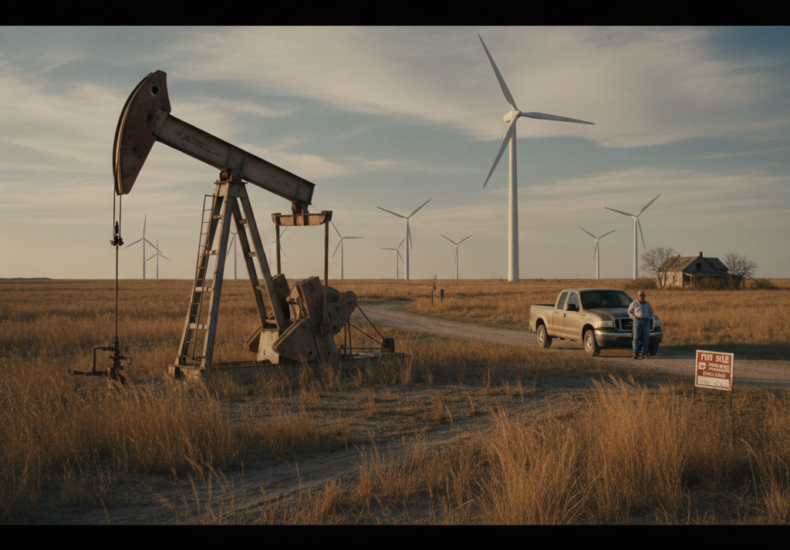
The 2008 economic crisis changed the US’s relationship with energy as reflected on by Rabbi Miriam Levin
In our tradition, we often speak of moments when the ground gives way beneath our feet. In late 2008, the financial collapse rippled across the country. Our sanctuary at Kol Shalom felt that tremor acutely. Living in an outer suburb like Highland Woods, many families suddenly faced shuttered businesses, lost pensions, and agonizing career interruptions. We gathered in study halls and living rooms to counsel one another through deep uncertainty. We prayed for stability, wondering what would survive the ruin. At the time, all we could perceive was contraction, fear, and loss. However, this crisis also changed our nation’s energy relationship changed forever.
Yet historians and energy analysts now observe something remarkable born of that painful season. It marked the quiet uncoupling of American economic growth from carbon emissions. For over a century, prosperity had demanded an equivalent toll from the earth. The prevailing assumption was that to build, feed, employ, and thrive, humanity had no choice but to burn more coal, oil, and gas. The fracture of 2008 severed that fatalistic equation. While our eyes fixed on the immediate disaster, an invisible shift began. It proved human vitality need not forever deplete the soil and the skies.
How the Energy Relationship Changed: A Moral Milestone
This revelation brings to mind an enduring rabbinic teaching from Midrash Ecclesiastes Rabbah. When the Holy One created the first human beings, God led them around all the trees of the Garden of Eden. God said: “Look at My works, how beautiful and praiseworthy they are. Be mindful not to spoil and destroy My world, for if you spoil it, there is no one after you to repair it.” Covenantal ethics has never demanded that we renounce labor, innovation, or livelihood. Rather, it insists that genuine stewardship, shomrei adamah, requires aligning our creativity with the preservation of creation.
For generations, an idol of inevitability captivated us. We convinced ourselves that human progress was inextricably bound to ecological degradation. Breaking that link is not merely an achievement of technological efficiency or shifting natural gas markets. It is a profound moral milestone. It reminds us that our social and economic arrangements are not immutable laws of nature. They are human constructs, shaped by human choices. Therefore, we can entirely redeem and redirect them toward life rather than destruction.
Ongoing Work: A Sober Warning and Sacred Care
At the same time, this historical shift carries a sober warning about human awareness. The turning point arrived masked as catastrophe, largely unnoticed by those of us living through it. How often do we fail to recognize the quiet, tectonic movements of moral consequence while consumed by urgent panic? We frequently measure reality only through balance sheets and immediate distress. We remain blind to the slow dawn of renewal. It takes humble contemplation to discern where repair, tikkun olam, quietly takes root beneath the debris of our broken expectations.
Moreover, uncoupling growth from carbon is only an opening chapter, not a completed redemption. As suburban neighbors, we still wrestle with car commutes, sprawling developments, and energy grids that demand ongoing reform. The covenant is intergenerational. Our obligation is not fulfilled simply because emissions peaked. Instead, we must ensure our children and grandchildren inherit air they can breathe, water they can drink, and a moral inheritance that values life above reckless consumption. We are taught in Pirkei Avot that it is not our duty to finish the work, but neither are we free to desist from it. The lesson of 2008 is clear: human imagination can indeed loosen the grip of destructive habits. If a broken economic moment could accidentally spark the decoupling of growth from pollution, consider what we might achieve through deliberate intention, communal discipline, and sacred care for the world entrusted to our hands. This is how our energy relationship changed, and how we must continue to change it.

Leave a Reply