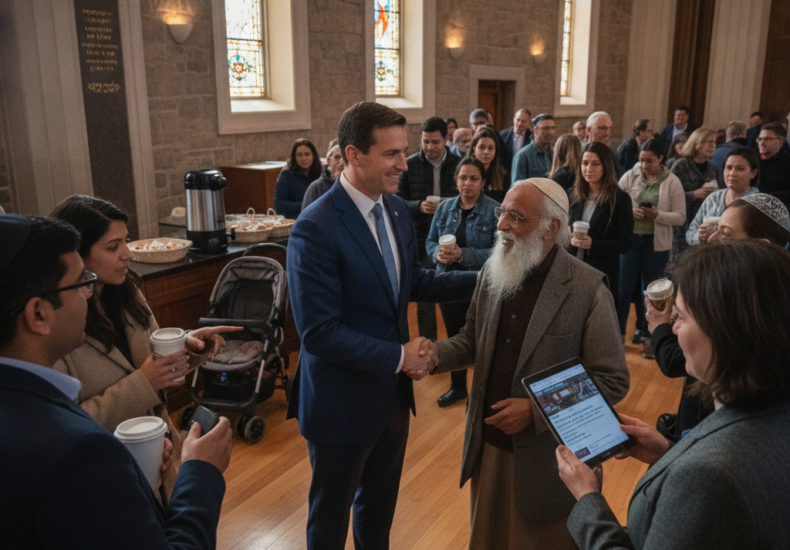
JD Vance flexing Maha connections as he eyes 2028 election as reflected on by Rabbi Miriam Levin
Our synagogue lobby in Highland Woods becomes a crossroads of anxious conversation on Tuesday mornings. Parents dropping off preschoolers linger near the coffee urn. They debate food additives and pediatric care with quiet urgency. These parents feel modern institutions have failed them. Across the hall, adult children attend our caregiver support group. They worry aloud about soaring prescription costs. Loneliness also erodes their elderly parents’ vitality. The yearning for genuine wellness is neither trivial nor partisan; it is an intimate plea for care. Our society often feels cold and fractured, especially regarding health and politics.
National political figures like Vice President JD Vance move to co-opt movements like “Make America Healthy Again.” They seek future electoral advantage. Therefore, our moral antennae should twitch. In Jewish tradition, the body is not private real estate. Nor is it a branding vehicle for a political campaign. Our sages taught in the Talmud that caring for the body is an act of holiness. It reflects being fashioned in the divine image, b’tzelem Elohim. Guarding life and health, pikuach nefesh, is a sacred obligation. It supersedes almost all ritual law. When health advocacy shifts from genuine public concern to political leverage, we risk subordinating human dignity. We risk it to the appetite for power.
Navigating Health and Politics in Our Community
Reported tension within the movement illustrates an ancient hazard. Grassroots desire for cleaner food and uncorrupted science often collides with corporate lobbying and political calculation. In Pirkei Avot, the Ethics of the Fathers, Rabban Gamliel warns: “Be cautious with the ruling authorities, for they do not draw a person near except for their own purpose. They appear as friends when it is to their advantage, but they do not stand by a person in their time of need.” When movements arise from genuine civic vulnerability, they risk absorption by state power. Consequently, their founding moral clarity almost always dilutes.
Here in our suburban congregation, we see daily how vulnerable families become. Public trust often breaks down. People grasp at alternative promises because established channels have grown bureaucratic, expensive, and distant. Yet, politicians adopt the rhetoric of wellness to rebuild popularity. This happens amid foreign conflict and economic inflation. They offer a hollow substitute for systemic justice. Health is not secured through slogans or political pacts. It requires clean water, affordable medicine, and accountable stewardship of the earth. Furthermore, it demands an honest dedication to empirical truth.
Covenantal Care and True Healing
Biblical covenant demands truth in the inward parts, emet ba-tuchot. In Jewish bioethics, healing is not an individual luxury. It is not an elite lifestyle choice. Instead, it expresses covenantal community. We are responsible one for another, arivim zeh bazeh. A truly healthy nation does not pit personal wellness against public welfare. Nor does it instrumentalize people’s fears about chronic illness. It does not assemble a winning coalition for an election years down the road. It measures its health by how it shields the impoverished, the infirm, and the forgotten.
As citizens and people of faith, we must cultivate discernment. We can affirm the legitimate desire of ordinary parents and workers. They wish to free their families from commercial poisons. However, we must not endorse the political theater that seeks to commodify that yearning. Our task, rooted in the enduring work of Tikkun Olam, repairing our fractured world, is clear. We must build communities of care. These communities must ground themselves in truth, humility, and authentic mutual responsibility. True healing will never descend from the campaign trail. Ultimately, it is cultivated patiently from the ground up, in covenant with one another and with God.
Leave a Reply