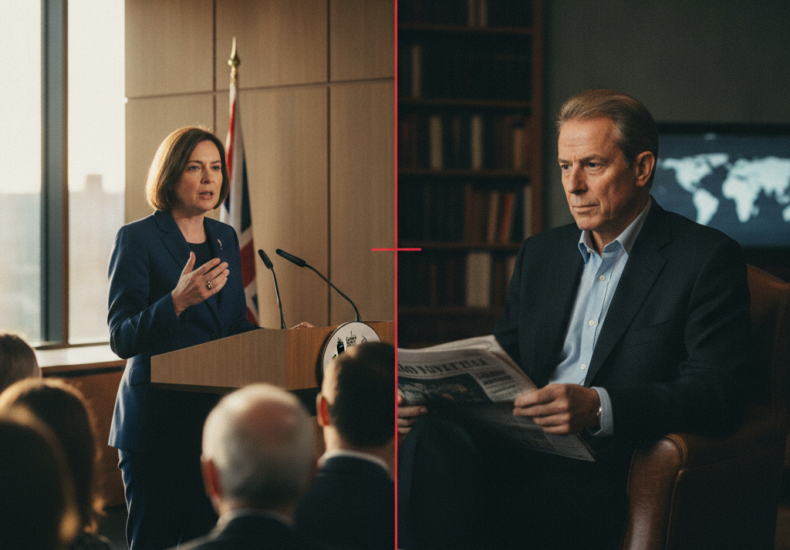
Cooper rejects Blair’s call for UK to have backed Trump’s strikes on Iran as reflected on by Acharya Jinendra Muni
The recent discussion regarding the UK’s potential involvement in past UK Iran strikes offers a crucial moment for reflection. Former Prime Minister Tony Blair advocates for supporting allies unconditionally, even in military actions. However, Foreign Secretary Yvette Cooper wisely recalls the painful lessons of the Iraq war. This exchange highlights a fundamental tension: the pursuit of geopolitical alignment versus the profound imperative of non-violence.
Embracing Ahimsa in Global Affairs
Our Jain tradition teaches Ahimsa, absolute non-violence to all life, as the highest dharma. Therefore, any call for military action, or even the support of it, demands careful scrutiny. We must consider the suffering it inflicts. War devastates human lives, destroys communities, and harms the natural world. Furthermore, it perpetuates cycles of retaliation and animosity. Leaders must prioritize peace. They should seek diplomatic solutions above all else.
Consequently, Cooper’s stance resonates deeply with Jain principles. She acknowledges the tragic outcomes of past military interventions. Learning from history is essential. We avoid repeating grave errors when we remember the consequences. True strength lies in restraint and compassion, not in the readiness to engage in conflict. This applies to nations just as it applies to individuals. We advocate for policies that foster harmony and mutual respect.
Anekantavada and International Relations
Blair’s assertion, that an ally “had better show up when they want you to,” presents a singular, absolute perspective. In contrast, our principle of Anekantavada, or multiplicity of perspectives, guides us differently. It reminds us that no single viewpoint holds absolute truth. Complex international situations possess many facets. Therefore, leaders must consider all angles. They should understand the roots of conflict and the diverse experiences of all parties involved.
Furthermore, an uncritical commitment to an ally, particularly one advocating military force, overlooks the broader ethical implications. Each nation, each leader, carries the immense responsibility for their actions. This responsibility extends to the impact on global peace and human welfare. Ultimately, we must cultivate intellectual tolerance. We must seek common ground through dialogue, not through the assertion of power. This approach builds lasting peace. It upholds universal values.
Read the original news coverage on The Guardian (World).

Leave a Reply