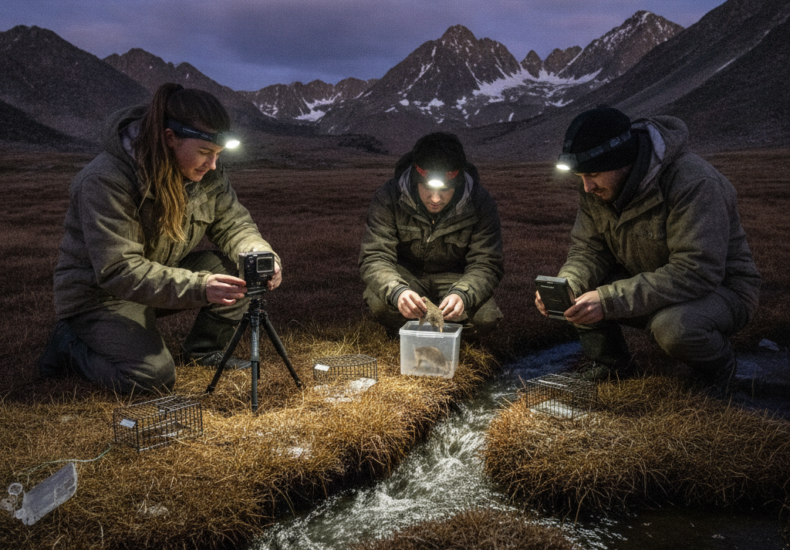
The framing of the shrew: California students photograph mammal never caught on film as reflected on by Dr. Farida Nur-Eldin
The recent news of students successfully photographing the elusive Mount Lyell shrew offers a profound lesson. These young scientists dedicated themselves to observing a creature often overlooked, existing at the very edge of our perception. Their tireless effort, working in harsh conditions and sleeping little, reminds us of the divine call to bear witness to creation’s intricate beauty. Indeed, this pursuit reflects a deeper spiritual commitment.
In Islamic tradition, we understand every created being as an ‘Ayat’ a sign from God. The smallest shrew, with its incredibly fast metabolism and fragile existence, carries divine wisdom. Its struggle for survival, its place in the ecosystem, and its unique design all speak to the Creator’s artistry and power. Therefore, our recognition of such life forms extends beyond mere scientific curiosity; it becomes an act of worship, a form of contemplative engagement with the Divine.
The Sanctity of Every Breath
The narrative emphasizes the shrew’s delicate life, noting its quick demise in traps. This detail resonates deeply with the Islamic principle of the sanctity of breath, nafas. We believe that God breathes life into every creature. Consequently, we hold a profound responsibility to protect and respect all living beings. The students’ careful, vigilant approach, checking traps every two hours, reflects this compassionate stewardship. They understood the fragility of this unique Mount Lyell shrew and acted accordingly.
Our faith calls us to be stewards, not masters, of the earth. This role encompasses both human and non-human life. Furthermore, a truly compassionate medicine and ethics extends its embrace to all of creation. We find resonance in the Quranic verse, “There is not an animal on the earth nor a bird that flies with its two wings but are communities like yourselves.” (6:38). Ultimately, this verse teaches us interconnectedness and mutual respect.
Compassionate Pursuit and Divine Signs
The dedication of these students, enduring cold and sleepless nights, illustrates a beautiful form of devotion. They pursued knowledge with humility and perseverance. This echoes the Sufi path, where seekers dedicate themselves to understanding the divine through both inner reflection and outer observation. Furthermore, their goal to conserve the shrew aligns with Islamic bioethical principles, which prioritize the preservation of species and ecological balance.
At Al-Hikma Institute, we often discuss how scientific inquiry, when pursued with an ethical compass, can illuminate divine signs. The successful capture of the Mount Lyell shrew on film is not just a scientific achievement. It also serves as a poignant reminder of our collective duty to protect the vulnerable, to marvel at the diversity of life, and to recognize God’s presence in every corner of creation. This discovery truly invites contemplation.
Read the original news coverage on The Guardian (World).

Leave a Reply