South Korea’s second impeachment in two weeks is latest twist in political saga as reflected on by Acharya Jinendra Muni
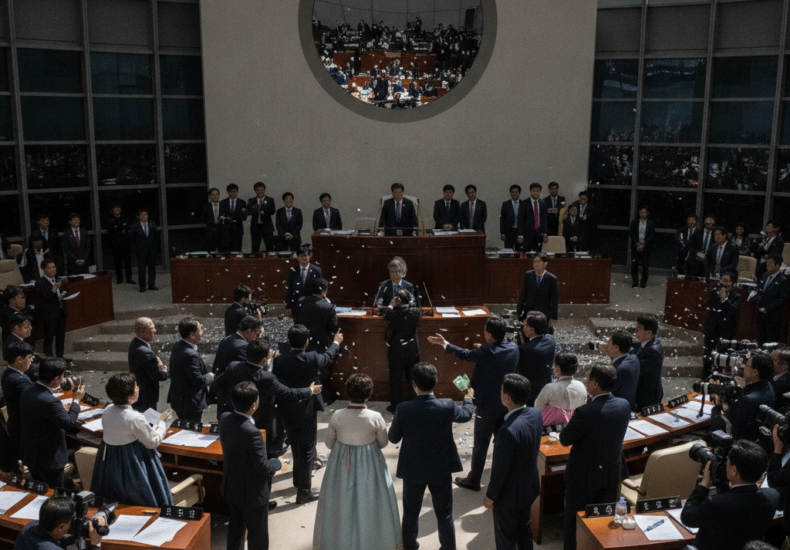
The recent news from South Korea, detailing a second impeachment in two weeks and a rancorous
South Korea impeachment battle
, offers a potent reflection point for us at the Mahavira Center. We observe political struggles globally, understanding that such events are not mere power plays. Instead, they reveal the deep karmic threads woven through human actions and intentions. The intense friction witnessed in the National Assembly demonstrates a profound lack of equanimity. Furthermore, it highlights the dangers of attachment to power and rigid viewpoints. Leaders must remember their sacred duty to serve, not to dominate. Therefore, we advocate for a return to fundamental ethical principles in all governance.
Cultivating Ahimsa in Political Discourse
The Guardian report speaks of a “rancorous battle,” a phrase that immediately brings to mind the urgent need for Ahimsa, non-violence. Ahimsa extends beyond physical harm; it encompasses non-violence in thought, speech, and action. Political discourse often becomes a battleground of words. Consequently, this verbal violence can escalate into societal division and strife. We must ask: are leaders speaking with compassion? Are they truly seeking solutions or merely asserting dominance? Moreover, true democracy thrives on respectful engagement, not on forceful imposition. Ultimately, peace emerges from a heart committed to the well-being of all, even those with differing views. This principle applies to nations as much as to individuals.
Anekantavada and the Path Forward
This ongoing
South Korea impeachment battle
underscores the critical importance of Anekantavada, the multiplicity of perspectives. No single viewpoint holds absolute truth. Different factions hold different understandings of the nation’s constitutional future. However, a wise leader embraces this complexity. They listen with an open mind, seeking synthesis rather than outright victory. This requires immense Aparigraha, non-possessiveness, not only of material wealth but also of one’s own ideas and opinions. True progress in governance comes from a collective, humble search for the common good. We encourage all involved to step back from the brink of conflict. Instead, they should embrace dialogue, understanding, and a shared commitment to a future built on ethical principles. This path alone ensures lasting stability and genuine freedom for all citizens.
Read the original news coverage on The Guardian (World).
Leave a Reply