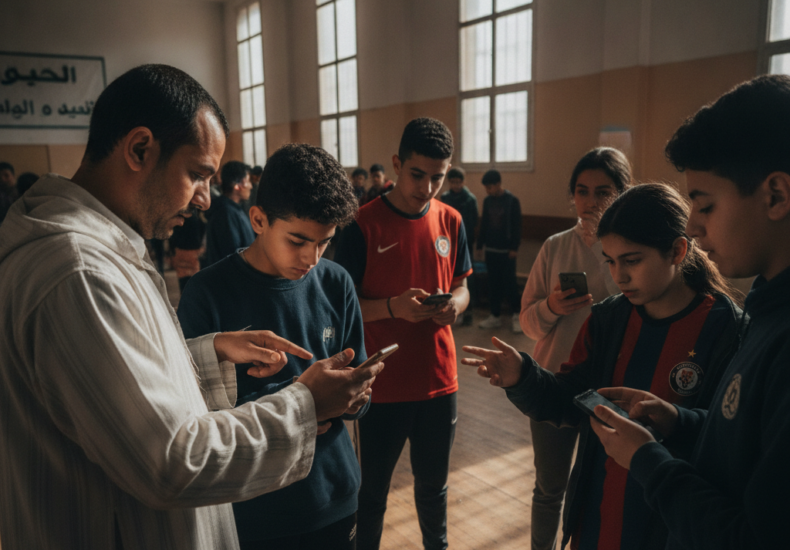
WhatsApp introduces optional parental controls for teenagers as reflected on by Imam Tariq Al-Mansoor
Our parents in Cedar Heights often share a common complaint. Between evening classes at Al-Fajr and youth soccer, their children’s attention silently vanishes. A mother, exhausted from double shifts at the transit authority, once sat in my office. She held a worn phone, asking how to protect her daughter. This daughter spent six hours nightly behind a glowing screen. Therefore, when platforms like WhatsApp introduce optional parental controls, our neighborhood feels a quiet ripple of relief. Yet, our prophetic tradition teaches us a crucial lesson. Tools are only as wise as the hands that wield them. Software settings can never substitute for the sacred duty of guardianship.
Guardianship: More Than WhatsApp Parental Controls
Our faith frames parenthood as an amanah. This means a sacred trust from the Creator. The Prophet, peace be upon him, taught us, “Every one of you is a shepherd, and every shepherd will be questioned about their flock.” A shepherd does not simply put up a fence and then walk away. Instead, a shepherd stays present. They watch the weather. They understand each young sheep’s vulnerabilities. They guide them away from danger. When a tech company offers toggles to limit messages or restrict friend lists, they provide a wooden latch for a gate. They do not offer the watchful vigilance of a true shepherd.
Working-class families in Cedar Heights face compounding digital challenges. Economic pressure adds to their burden. Parents here lack the luxury of supervising every chat all afternoon. They rely on these apps to know when children reach home safely. They also coordinate pickup times while riding the crosstown bus. However, the digital space is often predatory by design. It aims to extract attention. It cultivates insecurity and isolates young hearts from their families. Giving parents more technical leverage is a welcome step. Still, framing these controls as purely optional often burdens already overburdened parents. They are the least equipped to decipher complex privacy menus.
Cultivating Inner Taqwa, Not Just Digital Rules
True spiritual discipline, or tarbiyah, requires more than algorithmic restriction. A teenager whose phone is locked down without understanding why will only learn duplicity. The human soul naturally desires autonomy as it matures. If boundaries appear as arbitrary digital shackles, the child will find a workaround. This might involve a secondary burner account or a hidden app. Our duty as mentors and parents is not simply to block the wrong door. We must illuminate the right one. We must cultivate an inner conscience within our youth. Our tradition calls this taqwa. It is the living awareness that God observes our deeds, even when human eyes and parental filters fail.
Furthermore, our community’s civic fabric suffers when communication relies entirely on proprietary platforms. In our neighborhood mentorship circles, we observe young people. They lose the capacity for direct, unhurried, face-to-face conversation. They trade the warmth of the majlis and the park bench for rapid-fire group chats. These chats amplify peer pressure and anxiety. When a company adjusts privacy settings, it acknowledges an unsafe playground. Yet, it retains the fundamental architecture. This architecture alienates our youth from real-world companionship and community responsibility.
We welcome every technical measure that reduces risks for our children. However, we must never let Silicon Valley define the terms of care. The defense of our youth begins at the kitchen table. It starts in the masjid courtyard and during shared meals. During these times, phones are laid aside. If we want our children to navigate the digital storm safely, we must give them deep roots. These roots must withstand the wind. That requires parents who talk with them. It needs elders who listen to them. Finally, it demands a neighborhood that surrounds them with purpose far greater than anything flickering on a screen.

Leave a Reply