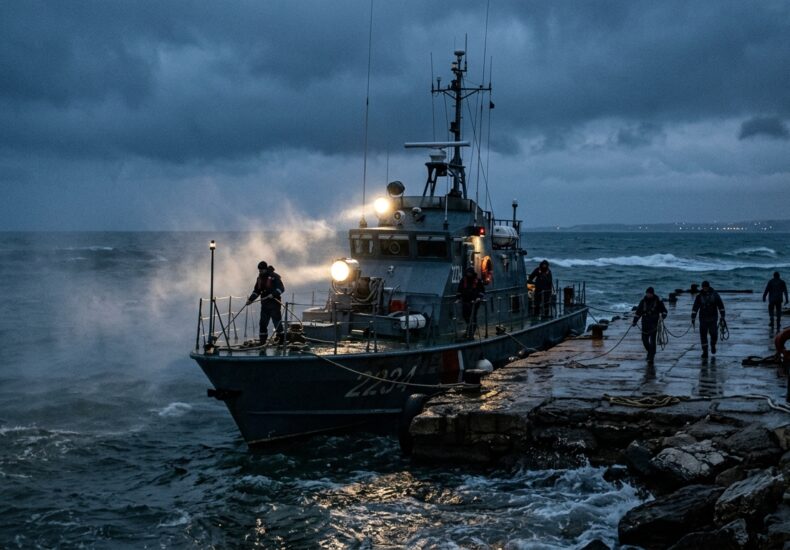
Two dead after ship sinks off Romania following fire as reflected on by Rabbi Miriam Levin
The Black Sea report arrived in our quiet synagogue. It came between morning minyan and a community outreach meeting. A cargo vessel caught fire. Then, it succumbed to the cold water off the Romanian coast. The ship sinks Romania tragedy took two human lives. Initially, this news can feel remote in a suburban study, surrounded by ancient commentaries. However, my tradition forbids distance from becoming an excuse for detachment. In Judaism, the sea is never merely scenery. It is the primal, churning expanse where the Divine breath hovered at creation’s dawn. The sea perpetually reminds humanity of our smallness and profound vulnerability.
Our sacred texts speak with deep empathy for those on treacherous waters. Psalm 107 famously describes sailors. They go down to the sea in ships. They conduct business in great waters. These individuals witness both the deep’s wonders and the storm’s terrifying fury. The seafaring laborer remains one of the most vulnerable figures in our global economy. Long before modern logistics, our sages recognized their distinct hazards. They established special blessings of gratitude for those returning safely from ocean crossings. Indeed, surviving the open water is nothing short of deliverance.
Two Lives Lost: The Human Cost When a Ship Sinks Romania
Today, our comfortable suburban lifestyles in Highland Woods depend on hidden maritime labor networks. The clothes we wear, our table grains, and our household technologies all travel across immense, unpredictable waves. Steel hulls carry these goods, manned by crews whose names we never know. When a vessel catches fire and sinks, the tragedy shatters our illusion of seamless consumer ease. Two individuals went to work to sustain their families. Perhaps they were thousands of miles from their homes. They met an agonizing end between fire and water. To receive such news merely as a footnote fails our basic moral obligation. We must see our fellow human beings.
Talmudic ethics constantly emphasizes an individual life’s infinite value. Mishnah Sanhedrin teaches that destroying one life is like destroying an entire world. Conversely, preserving one life preserves a whole universe. Two complete universes extinguished off the coast of Romania. Each mariner had parents, dreams, private sorrows, and loved ones. These families now receive the devastating knock on the door or the unbearable telephone call. In our community, we encircle families struck by sudden loss. We offer physical presence, shared meals, and communal Kaddish recitation. For these two sailors, grieving families across the globe confront an abyss of absence.
Maritime Safety and Tikkun Olam
This catastrophe also demands we confront ethical dimensions of maritime safety and labor rights. The commandment of Ma’akeh requires a parapet around a roof. This prevents someone from falling. It establishes an unwavering principle: safety is a fundamental moral imperative, not an optional expense. In our industrialized world, this covenant extends to ship maintenance. It covers adequate fire suppression systems. It demands fair treatment for crews operating under grueling, dangerous conditions. When cost-cutting, negligence, or indifferent regulations contribute to tragedies at sea, it represents a failure of societal guardianship. A ship sinks Romania should prompt deep reflection.
In our synagogue, we often speak of Tikkun Olam. This is our sacred duty to repair our fractured world. Repair does not happen solely through grand gestures or local charity drives. It begins with an awakened moral conscience. This conscience refuses to look away from the invisible workers who keep civilization moving. It means advocating for stringent labor safeguards. It means fair compensation. It means international standards that honor maritime laborers’ dignity and safety. We must act.
Tonight, as the sun sets over our town’s quiet streets, we hold those two fallen workers’ souls in our prayers. We pray for comfort for their mourning kin. We pray for swift healing for the survivors who escaped the flames and freezing tide. May their memory spur us toward greater vigilance. Ultimately, our reliance on global labor must be matched by an unyielding reverence for every working life’s precious sanctity.

Leave a Reply