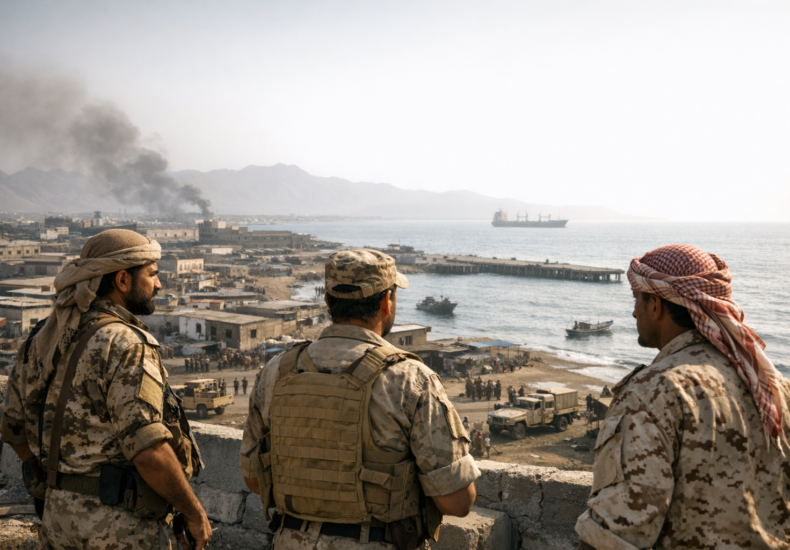
Yemeni military says it has retaken Mokha and ‘secured’ Red Sea waterway as reflected on by Sensei Michael Jinpa
Early morning at Harborview Point brings a relentless salt mist. It clings to our zendo’s cedar shingles. From the porch, where we begin walking meditation, the tide works ceaselessly. It rearranges stones and smooths broken glass against the harbor breakwater. Water yields to every shape, yet cuts through granite over time. News arrived quietly here. Digital screens reported military forces had retaken the ancient port city of Mokha. They claimed a secured Red Sea waterway. Fishing boats were slipping out into the dawn chop. I notice a sharp contrast. The quiet hum of water differs greatly from humanity’s obsession with dominating it.
Mokha carries a storied name in global memory. It was once renowned as a fragrant center of coffee trade. It linked continents through shared cups and communal conversation. Today, it figures in headlines as a strategic choke point. This narrow throat of water, the Bab al-Mandab Strait, sees global commerce meet the machinery of war. Armies proclaim a waterway has been secured. However, Zen invites us to look closely at what that word actually conceals. What does it truly mean to secure an expanse of ocean? Water cannot be owned, held, or permanently barricaded. Therefore, the claim of securing a sea is simply an assertion of lethal leverage over human passage.
The Illusion of a Secured Red Sea Waterway
In my years as a hospice chaplain, I sat with many people. Their grip on life gradually softened into necessity. In those quiet rooms, one learns a profound truth. Our most agonizing suffering stems not from change itself. Rather, it comes from our desperate attempts to grasp what is inherently ungraspable. The drive to conquer territory, seize ports, and dictate navigation routes stems from this same existential delusion. Nations behave like anxious individuals. They convince themselves that safety lies in controlling every perimeter and subduing every rival. Yet, every conquest carries within it the seed of the next counter-offensive. This binds everyone involved to the wheel of mutual destruction.
From the perspective of Buddhist ethics, control purchased through artillery and bombardment is an illusion. It exacts an immediate, terrible price on ordinary life. When a city becomes a prize of war, the fishermen cannot mend their nets. Markets empty of grain. Families huddle beneath corrugated roofs, waiting for artillery shells to stop falling. We speak smoothly in geopolitical terms about shipping lanes and strategic waterways. Beneath that abstract language, however, lies the raw reality of hungry children and terrified elders. Radical compassion requires us to strip away the sanitizing rhetoric of military communiques. We must witness the flesh and blood consequences endured by our fellow beings.
Cultivating True Security and Peace
Zen teachings return us constantly to the law of dependent origination. Nothing exists in isolation. Every action ripples across the entire web of life. The conflicts playing out in the southern Red Sea do not belong to a distant, detached reality. They touch the price of fuel that powers our small coastal town. They affect the cost of medicine delivered across oceans. They also challenge the moral conscience of every person who consumes goods transported through those embattled straits. When violence erupts at the Gate of Tears, as that ancient waterway is called, the sorrow belongs to the whole human family. To pretend detachment is merely another form of spiritual blindness.
True security cannot be hammered out with weapons. It cannot be established by stationing gunboats at a harbor entrance. The Buddha taught that hatred does not cease by hatred at any time. It ceases only by non-hatred and understanding. Real peace arrives only when communities recognize their mutual vulnerability. They must address the roots of fear, poverty, and greed that fuel such endless cycles of vengeance. Until leaders cultivate the courage to sit across tables without demanding subjugation, the securing of a port is only a temporary pause between fires. This temporary “security” does not equate to lasting peace.
As the bell sounds for our evening sit, the fog settles deep into the harbor basin. It blurs the distinction between land, sky, and sea. We bow toward our cushions and settle into stillness. We do not seek to escape the troubled world. Instead, we cultivate a steady, open heart that can hold its suffering without turning away. May we find the clarity to see through the false promises of domination. Furthermore, may those whose lives are cast into turmoil in Mokha and across that troubled coast find genuine refuge, dignity, and enduring peace.
Leave a Reply