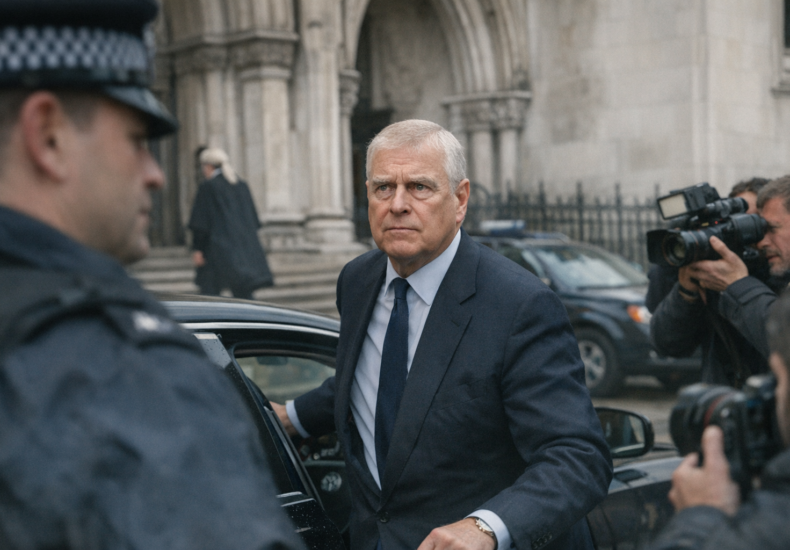
Former Prince Andrew files legal action to quash warrants that led to residence searches as reflected on by Imam Tariq Al-Mansoor
In our modest Al-Fajr Islamic Center office, paperwork is a daily reality. Working-class families, asylum seekers, and low-wage laborers often arrive with court notices. They clutch eviction threats or immigration summonses. For Cedar Heights residents, the law is not an abstract debate. It is not a flexible instrument for negotiation. When the state knocks on an apartment door, compliance becomes immediate and absolute. We have no retainers on standby. There are no emergency appeals to quash warrants or intrusive inquiries. Our private dwellings are certainly not sacred beyond authority’s reach.
Headlines recently reported a former prince’s legal action. He wants to nullify search warrants executed against his properties. This prince, stripped of official titles, still enjoys imperial privilege. Our congregation immediately recognizes this familiar pattern. It is the perennial spectacle of earthly nobility. They attempt to rewrite accountability’s boundaries. High-status individuals often treat accountability as an indignity. They view it as an administrative overreach. Consequently, they try to dissolve it through specialized legal maneuvers. For everyone else, however, accountability remains a heavy, unrelenting burden.
Justice and Accountability: No Immunity for Rank
In the Islamic tradition, justice is neither an aesthetic ideal nor a selective privilege. It does not solely apply to those of noble lineage. Prophet Muhammad, peace and blessings be upon him, set an uncompromising standard. He addressed a situation where people sought leniency. An aristocratic woman had committed a crime. The Prophet declared with utmost clarity that prior nations faced ruin. They left influential transgressors alone. Yet, they applied the full penalty to weak individuals. He swore that even his own beloved daughter would face the law without deviation. Therefore, rank does not confer immunity in the prophetic ethic. Indeed, it heightens moral liability.
The pursuit of judicial remedies is a legitimate legal right. However, spiritual discernment compels us to examine what lies beneath the procedural veneer. When power expends massive resources to bar transparency, it reveals a profound spiritual malady. This is the illusion that humans can remain above scrutiny. The Quran continually warns mankind against arrogance. It cautions against the deceitful assurance that wealth or ancestry can shield a soul from truth. Earthly jurisdictions may face hindrance from technicalities. They might use sealed records and protracted motions. Nevertheless, moral reckoning is an inescapable divine law. It operates independently of human courtrooms. This principle guides our community.
Civic Trust and Spiritual Integrity
Here in our urban enclave, we teach our young people. Genuine honor is rooted in integrity. It comes from humility and courage. One must stand open before both God and community. Civic trust cannot survive a bifurcated reality. The public witnesses swift, unsparing scrutiny for the vulnerable. Meanwhile, the powerful receive tailored, deferential caution. Every time an elite figure exploits systemic advantages to suppress an investigation, the civic fabric frays further. This breeds cynicism among ordinary men and women. They wonder why their small lives face constant policing. Yet, high society corridors remain fortress-like and opaque. We pray for a society where all must submit.
True spiritual discipline requires welcoming light into dark corners of conduct. Spending energy to evade inquiry means remaining captive to fear and pride. As an imam, I serve people facing daily unbuffered hardships. My prayers are not for preserving dynasties or reputations. Instead, they aim for genuine fairness. We pray for a society where truth is pursued without fear or favoritism. We also pray for the powerful to finally learn to submit. They must adhere to the very standards of justice they so readily impose upon the rest of humanity. This includes those who seek to quash warrants without just cause.
Leave a Reply