North Korea launches ballistic missile after Seoul demands apology over wounded soldiers as reflected on by Sensei Michael Jinpa
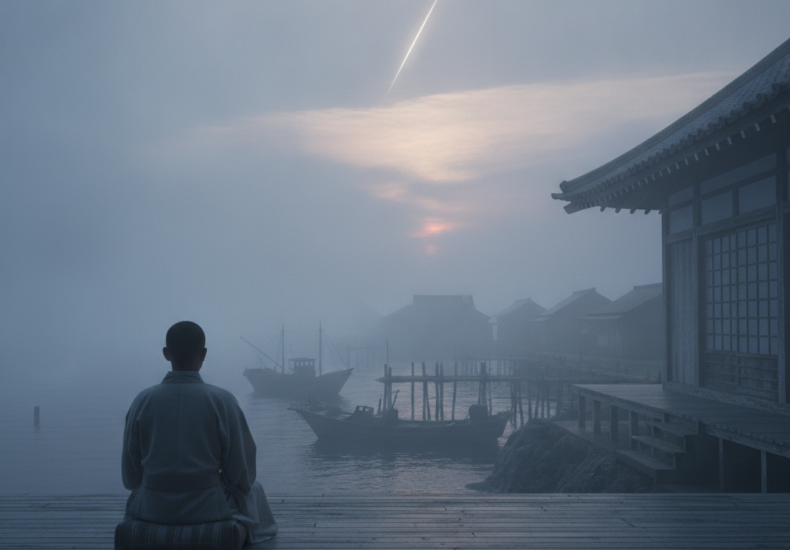
At dawn in Harborview Point, coastal fog clings heavily to the fishing wharves. It also blankets the salt-bleached wooden siding of our zendo. Sitting on my meditation cushion before first light, I hear only the rhythmic wash of Pacific swells. The mournful horn of an early outbound trawler occasionally punctuates this sound. In the silence of zazen, one learns to listen. We observe the breath as it arrives and departs without resistance. Yet, the morning news often breaks into this quiet. Today, the reality of our shared planetary vulnerability arrived. Another North Korea ballistic missile arced from the Korean peninsula. It blazed hundreds of kilometers across the sky before crashing into the dark sea.
The immediate provocation involved a landmine dispute in the Demilitarized Zone. Demands for an apology followed. Then came fiery diplomatic insults. Finally, a thunderous weapon launch occurred. From a distance, statecraft often appears as grand strategy. However, Buddhist psychology offers a different view. It reveals the tragic amplification of everyday human clinging. When pain or embarrassment arises, the untamed mind reacts with fear. This fear swiftly converts into anger, posturing, and violence. What happened over the Sea of Japan is merely a macrocosm of an ancient pattern. A wounded ego asserts its dominance through force. It simply cannot bear its own fragility.
The Illusion of Strength: A Zen Perspective on Conflict
During my years as a hospice chaplain, I sat at many bedsides. I witnessed individuals facing the dissolution of their earthly lives. In those intimate final chambers, all personal armor inevitably falls away. Not once did a dying person wish they had struck back harder at a rival. No one wanted fortified borders with greater pride. What lingered at the end was always tender regret. It was an aching desire for reconciliation. People quietly realized their grievances were built on illusions. Nations, like individuals, often believe an uncompromising defense of pride ensures survival. In truth, it only ensures perpetual anxiety. Ultimately, this cycle harms everyone.
The Buddha taught the doctrine of pratityasamutpada, or dependent co-arising. Nothing exists in isolation. Every action, word, and missile launch ripples across an unbroken web of causes and conditions. When a projectile is hurled into the ocean as a threat, it does more than alter military charts. It poisons the atmosphere of trust required for human flourishing. Furthermore, it frightens coastal communities. These communities rely on common waters for their livelihood. It also consumes vital resources. These resources could otherwise alleviate human hunger and environmental degradation. To fire into the sea in anger is to fire into our own collective body. Such actions carry far-reaching consequences.
Cultivating Peace Amidst Global Instability
Here in our arts enclave and harbor town, several local painters joined our midday sitting. Retired fishermen also attended. They felt troubled by the persistent drumbeat of global instability. Existential dread is an understandable response. Leaders play with apocalyptic fire, after all. Yet, in Zen practice, we do not retreat into indifference. Nor do we succumb to nihilism. Instead, we allow the world’s precariousness to break our hearts open. This leads to radical compassion. Fear tells us to harden our shells. It encourages us to demonize the other. Mindfulness, however, asks us to pause. We feel the tremors of our unease without panicking. Then we respond with steady clarity. This inner strength guides our actions.
True strength is never demonstrated by a rocket’s velocity. It is not shown by a loud political threat. The most courageous act available to human beings has always been simple. It is the willingness to put down the weapon. It means sitting across the table from one’s adversary. We must acknowledge mutual suffering. Until leaders on both sides of the DMZ recognize this truth, the cycle will continue. Their neighbor’s security is inseparable from their own. The cycle of grievance will spin, feeding the hungry ghosts of mutual suspicion. This perpetuates conflict. The North Korea ballistic missile launch reminds us of this. We must seek common ground.
As the afternoon fog lifts from Harborview Point, the tide turns. The ocean absorbs the harbor wake without keeping a scar. The natural world continuously demonstrates the law of impermanence. Empires rise and crumble. Weapons rust. Postures fade into memory. Our task today is not to surrender to despair. Instead, we cultivate a quiet, unshakeable peace. We do this right where our feet touch the earth. In every gentle word, in every mindful breath, and in our refusal to succumb to retaliatory hatred, we cast a different kind of vote. We vote for the future of our fragile world. This is our path forward.
Leave a Reply