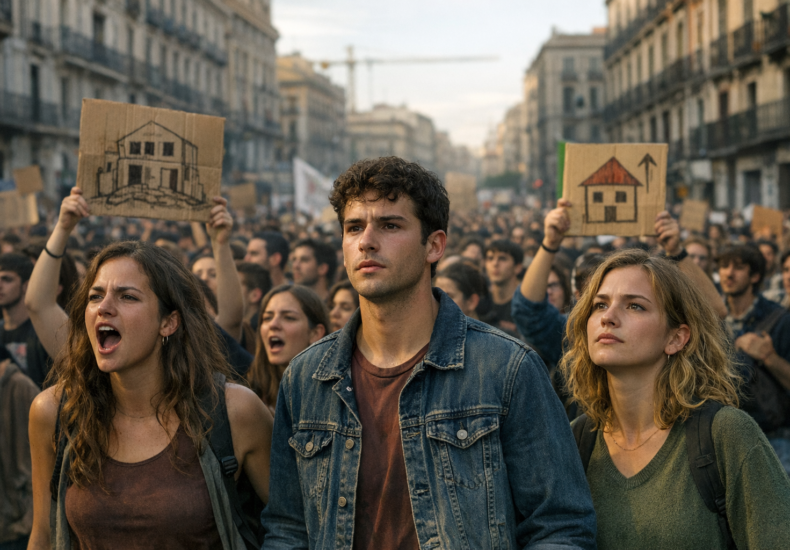
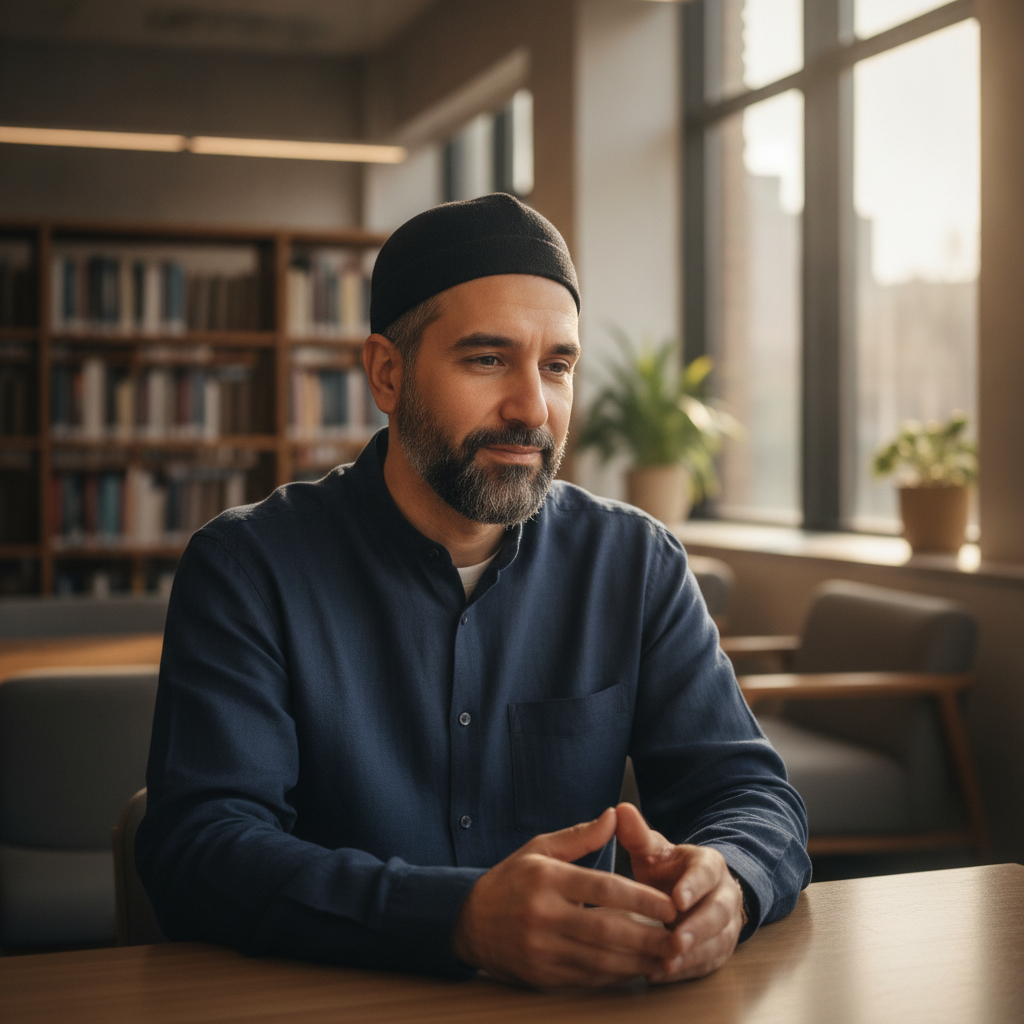
In both France and Spain, ruling parties must prove they can give young protesters hope as reflected on by Imam Tariq Al-Mansoor
Every Friday, after congregational prayer at Al-Fajr, our basement hall fills with young people. They carry the quiet exhaustion of an uphill climb. Many work multiple shifts, sending remittances home, or study in underfunded classrooms. Meanwhile, their rents climb beyond reach. Reading about tens of thousands taking to the plazas in Madrid and pupils filling the streets in France, their frustration feels immediately familiar. When young people gather under banners declaring human shelter cannot be treated like speculative luxury, they voice a fundamental moral truth. Our political systems have simply chosen to forget this truth. Therefore, ruling parties must give these young protesters hope.
The Islamic ethical tradition teaches that property and wealth carry an inherent social purpose. The Qur’an repeatedly warns against economic arrangements where wealth circulates solely among the affluent. It treats life necessities as instruments of extraction, not common trusts. A home is not an abstract financial portfolio; instead, it is a sanctuary. It offers peace, family, and modest human dignity. When market forces turn roof and hearth into speculative commodities, society violates its foundational covenant of stewardship. Consequently, injustice in basic sustenance inevitably dissolves civic peace.
Giving Young Protesters Hope Through Justice
The anger of European students struggling with neglected schools, missing educators, and uncertain futures mirrors what our youth navigate daily. This happens in working-class neighborhoods like Cedar Heights. Education should be an act of communal cultivation. It honors the prophetic call to pursue knowledge as an enduring light. Instead, austerity turns schooling into a grueling obstacle course. Bureaucratic indifference manages it, or heavy policing when frustration spills outward. Demanding that the young worry about basic survival, rather than their intellectual and moral formation, reflects a failure of eldership and statecraft.
Withdrawing political consent often becomes the final recourse for those whose patience has been systematically abused. In our civic work across faith lines, we often remind one another that patience is not passive resignation to harm. True spiritual patience means steadfast perseverance in pursuing what is right. It pairs with active resistance to wrongdoing. When youths assemble peacefully to insist on their basic rights to dwell, learn, and breathe freely, they do not act out of malice. They demand accountability from a social order. This order demanded their compliance while abandoning their material needs.
Ruling authorities make a dangerous miscalculation when they respond to such despair with superficial promises or increased policing. A society cannot secure order through enforcement when it denies justice at the root. The Prophet, peace be upon him, taught that a society where the weak cannot claim their rights without fear or trembling is a society deprived of divine blessing. True leadership requires listening with humility. It must dismantle speculative cartels that hoard shelter and restore public goods. These actions allow the coming generation to flourish. Ultimately, this provides young protesters hope.
Hope is not a rhetorical commodity that governments can dispense through clever slogans. Hope must be built through tangible, structural commitments. This includes fair housing policies, well-resourced schools, and dignified living conditions. Until leaders in Paris, Madrid, and our own municipal halls recognize that human dignity precedes private profit, the cries in the streets will only grow louder. The moral health of any civilization is judged by whether it leaves its youth a foundation to stand upon or a ruin to mourn. We must give our young protesters hope.
Leave a Reply