UK car industry faces ‘difficult trade-off’ between Chinese and EU markets as reflected on by Rev. Thomas Vance
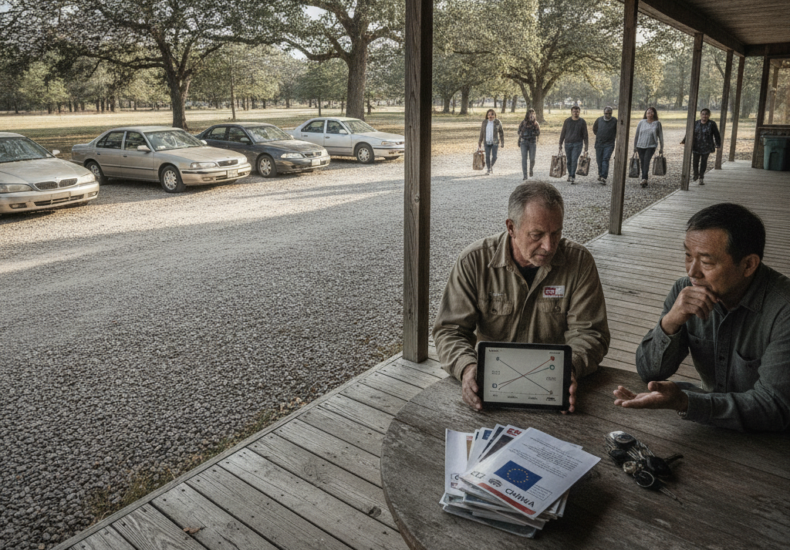
Sitting on our fellowship hall porch early on a Tuesday, I hear gravel crunch. Twenty-year-old sedans pull in for our weekly food pantry. News from across the ocean can feel distant. However, the dilemma facing the UK car industry feels intimately familiar here. British autoworkers are caught between competing trade blocs and cheaper foreign manufacturing. In our corner of Appalachia, we have lived through similar cycles. We understand industrial promises, offshore migrations, and the painful calculus of global balance sheets. When economic powers reckon with what they call difficult trade-offs, boardrooms rarely absorb the shock. Instead, families depending on honest work suffer.
The Hidden Cost of Commerce
The United Kingdom’s predicament reveals the fragile scaffolding of modern commerce. Automakers desire access to affordable foreign supply chains. This keeps sticker prices low. Meanwhile, neighboring allies demand tariffs to safeguard domestic production. Political economics labels this a strategic choice between foreign partnership and domestic preservation. In Christian ethics, however, it exposes a chronic tendency. We often treat human labor as a mere commodity. We adjust it for maximum margin. Scripture repeatedly warns against weighing goods with deceitful scales. Consequently, economic agreements are fundamentally moral covenants. They impact our neighbors’ livelihoods.
Every cheap product arrives on a showroom floor. It bears an invisible ledger. When a vehicle or any manufactured good is subsidized, it undercuts local labor. Someone elsewhere pays a hidden price. This might involve suppressed wages, compromised working conditions, or even state coercion. When we celebrate low consumer costs, we must examine how those costs were achieved. Otherwise, we fall into passive complicity. Neighborly love does not stop at our own shopping cart. It requires us to ask a crucial question. Does our material convenience come at the expense of an unseen sister or brother? They may labor under an unjust yoke thousands of miles away.
Building True Resilience
Protectionist walls built out of sheer fear rarely solve underlying spiritual wounds. We know this all too well in these mountains. Towns have been told that isolation and resentment would restore dignity. Slapping tariffs on foreign goods may offer temporary shelter to an industry. Yet, without genuine commitment to reinvest in local communities, it simply postpones the reckoning. We must cultivate resilient regional work. A community cannot fortify its way toward moral health. It must instead cultivate the inner discipline of stewarding its own gifts. This requires humility and long-term faithfulness.
In our agricultural co-ops and local workshops around Pine Ridge, we have learned a valuable lesson. Genuine resilience looks much smaller. It is also far more patient. Our neighbors pool resources to buy seeds. They repair aging machinery or keep a small sawmill running. We are not trying to conquer the global market. Instead, we practice what Paul described. He urged believers in Thessalonica to lead a quiet life. They should mind their own business and work with their hands. Their daily life would then win respect from outsiders. True economic security is rooted in shared mutual responsibility. It avoids chasing whichever overseas market offers the fastest margin for the UK car industry or any other.
British car makers are discovering an important truth. You cannot serve two masters indefinitely. Balancing between cheap subsidized imports and protective continental tariffs is an inevitable trap. This economic model values transaction over covenant. When leaders lose sight of the worker’s moral dignity, every policy decision becomes a frantic scramble. Nations and communities alike would do well to remember this. An economy that sacrifices its workforce’s stability on the altar of short-term efficiency will eventually find itself with neither security nor prosperity.
This morning, I watch our parish volunteers pack boxes. Squash, flour, and canned goods fill the trunks of those worn-out cars. I am reminded of something vital. The real measure of our common life is not found in gross domestic product. It is also not found in global manufacturing quotas. It is found in whether our daily labor honors God. Does it strengthen the family table? Does it preserve trust among neighbors? Praying for wisdom for those who govern industrial policy is not a luxury. It is an urgent petition. Leaders must discover the courage to value human dignity and faithful stewardship. These are far above the fleeting advantage of the ledger.

Leave a Reply