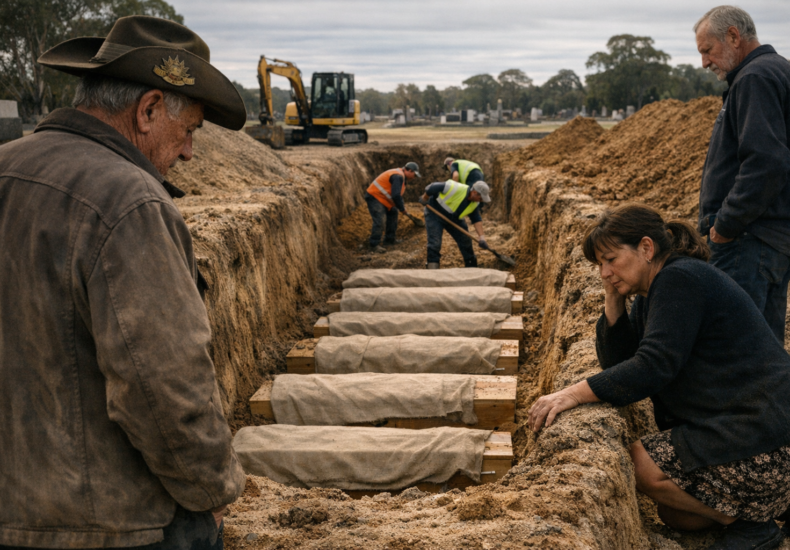
Hundreds of Australians, including war veterans, are being buried in unmarked communal graves as reflected on by Rabbi Aaron Klein
Standing in our sanctuary, at the intersection of exchange towers and the city playhouse, we constantly navigate a tension. It exists between market valuation and human worth. Trading desks measure value by capital liquidity, performance metrics, and transactional leverage. However, a recent report reveals a disturbing truth. Hundreds of citizens, including decorated veterans, are being interred in unmarked communal graves. They died simply without funds to purchase a plot. This practice exposes a spiritual sickness. Modern urban prosperity too often conceals this profound issue.
Jewish jurisprudence places immense urgency on chesed shel emet, true lovingkindness for the departed. This is the purest form of generosity. The deceased can never reciprocate, settle an invoice, or return a favor. Our ancient sages codified burial laws. They established a clear principle. Even a High Priest on Yom Kippur, entering the Holy of Holies, must defile his ritual purity if he encounters a met mitzvah. This means an abandoned corpse with no one to bury it. Thus, the sanctity of the Temple system yields entirely to the physical dignity of a forgotten human being.
The Indignity of Unmarked Communal Graves
Stacking the destitute four deep in unnamed ground is not merely a cost-saving measure. It represents a profound failure of public covenant. In halakha, kavod ha-met, the honor due to the dead, requires individual recognition. A human being is created b’tzelem Elohim, in the Divine image. That irreducible sanctity does not expire when the pulse stops. Nor does it diminish because one dies without savings. To strip an individual of their name upon burial retroactively erases their personhood. It reduces a lifetime of struggle, service, and dignity to an inconvenient municipal expense. This is especially true for veterans consigned to unmarked communal graves.
This indignity touches veterans who offered their lives in national defense. That fact makes the offense especially glaring. Yet, the moral failure remains absolute regardless of the decedent’s station. A society honors service members only when it is politically advantageous. However, it consigns them to anonymous trenches when they fall on hard times. Such a society is guilty of the worst kind of bad faith. When we consign the impoverished to collective anonymity, we declare something troubling. We declare that communal memory is a commodity. It is reserved strictly for those who can afford the invoice.
Honoring Every Soul, Regardless of Wealth
Our tradition teaches that the first major real estate transaction in Torah was Abraham purchasing the Cave of Machpelah. He bought it to bury Sarah. He insisted on paying full market price before witnesses. This established burial as an enduring civic and familial responsibility. It is rooted in public honor. Throughout centuries of diaspora life, Jewish communities prioritized the chevra kadisha. This holy burial society ensured the pauper received the exact same linen shrouds and solemn rites as the wealthiest merchant. In death, our legal framework deliberately leveled all economic hierarchies. It bore witness that every soul stands equal before the Creator.
Municipal governments sometimes plead budgetary constraints to justify unmarked mass graves. They demonstrate a bankrupt hierarchy of civic priorities. A community builds glittering civil infrastructure. Yet, it refuses to record the names of its poorest dead in the earth. Such a community has lost its moral compass. Civic dignity cannot be an amenity purchased by private wealth. It is the baseline duty a society owes to everyone. This includes all who walked its streets, labored under its laws, and carried the spark of life within its borders. Until those communal trenches are marked with individual names and given due honor, that ground stands as an indictment against the conscience of the entire commonwealth.
Leave a Reply