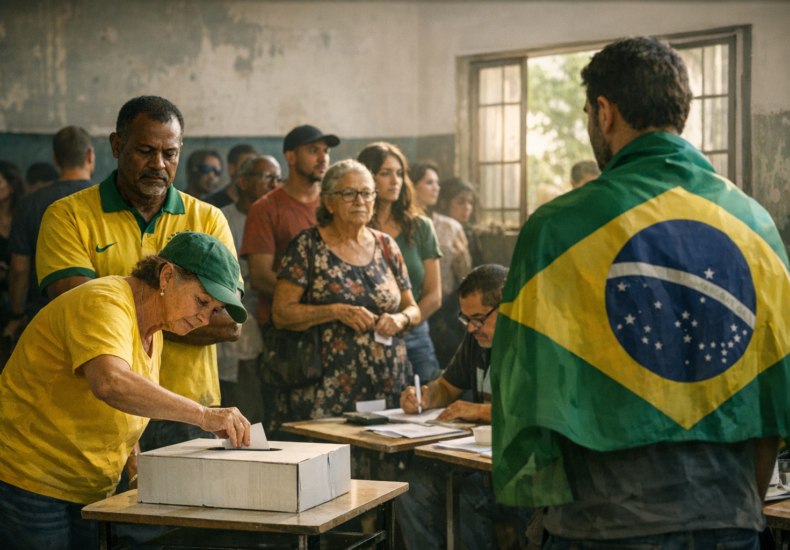
Watch: How Brazil’s dramatic election unfolded as reflected on by Rabbi Miriam Levin
Watching millions of Brazilian citizens standing patiently in winding queues outside polling stations evokes a profound sense of awe. This vivid image of Brazil’s dramatic election reminds us of what a ballot truly represents. In our suburban sanctuary at Congregation Kol Shalom, we often speak of civic duty in polite, comfortable terms. Yet these images show people braving sweltering heat, long hours, and fierce societal friction. They reveal the fragile, sacred act of collective moral agency.
Jewish tradition teaches us about covenantal partnership. The community is not merely an aggregation of private interests. Indeed, the Talmud, in Tractate Berakhot, states we must never appoint a leader without first consulting the community itself. Ancient rabbinic wisdom recognized this vital truth. Legitimate authority cannot be seized from above or imposed by fiat. It must emerge through the deliberate consent and shared vulnerability of the people who bear governance’s consequences.
The Sacred Act of Voting
Elections of this magnitude reveal deep societal divisions. In Brazil, just as in our own neighborhoods, polarized rhetoric often reduces neighbors to existential adversaries. When an election becomes total warfare, rather than a shared deliberative process, civil society frays. We risk forgetting Genesis’ foundational truth. Every single human being, regardless of political allegiance, is formed b’tselem Elohim, in the divine image. Therefore, we must honor each person’s inherent dignity.
When tension runs high, the temptation to demonize opponents becomes overwhelming. In my pastoral conversations, especially during contentious seasons, I frequently see the mental and spiritual exhaustion this polarization causes. Families sit at holiday tables with knots in their stomachs; lifelong friendships fracture over campaign slogans. However, a healthy democracy, much like a vibrant congregation, requires the stamina to hold disagreement without discarding human dignity. We are called to contend for justice passionately, yet never at the expense of our neighbor’s humanity.
After Brazil’s Dramatic Election: The Work of Reconciliation
The act of voting is truly an exercise in hope. It affirms that cynicism or despair does not preordain the future. When a person steps into a voting booth, they participate in what our tradition calls Tikkun Olam, the ongoing work of repairing a broken world. We cast our votes not out of an illusion that any single political leader can bring redemption. Instead, we vote out of an ethical conviction that human policies touch the hungry, the stranger, the sick, and the earth itself.
As the people of Brazil move into their next national journey phase, the work before them extends far beyond the ballot tally. The true spiritual test of any democracy begins after the votes are counted. It involves the quiet, arduous labor of reconciliation. Leaders must learn to govern with humility. Citizens must commit to living alongside those whose visions they contested. Rebuilding social trust is slow, holy work, demanding both personal restraint and civic courage. May all those who made their voices heard find the strength to uphold the common good in the days ahead. When we honor our neighbors’ moral agency and commit ourselves to righteous stewardship, we bring a measure of divine peace into an anxious and fractured world.
Leave a Reply