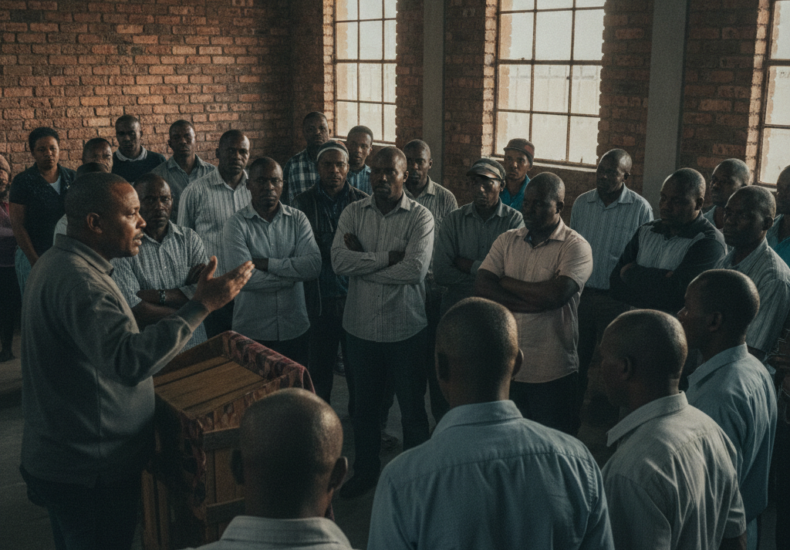
South African leader urges men to speak up on gender-based violence after series of killings as reflected on by Imam Tariq Al-Mansoor
A powerful call echoed across South Africa this week. It demands a response in every neighborhood, including our own streets in Cedar Heights. President Cyril Ramaphosa addressed the nation on the unrelenting scourge of **gender-based violence**. He did not merely outline administrative timelines. Instead, he laid the moral burden squarely where it belongs: upon the shoulders of men. In our community, like others globally, we often look first to the state. We expect it to shield the vulnerable. However, the state can only count the wounds after they occur. It cannot replace the conscience that prevents them.
Confronting Silence and Complicity
The Islamic ethical tradition roots moral responsibility in public witness and collective duty. Our Prophet, peace be upon him, taught us a clear directive. Whoever among us sees a wrong must strive to change it with his hand. If he cannot, then with his tongue. If he still cannot, then with his heart, which is the weakest station of faith. For too long, an unholy culture of silence has festered. It allows violence against women to remain an open secret. Men gather on corners, in tea houses, and in social clubs. They know full well which brother or neighbor harbors contempt, intimidation, or violence at home. To look away in those moments is not neutrality. In fact, it is complicity.
Cedar Heights is a working-class neighborhood. Life here is rarely easy. Families endure long hours, rising rents, and the quiet strain of keeping food on the table. But hardship must never become a pretext for brutality. All too often, domestic tyranny disguises itself. It pretends to be cultural traditionalism or masculine authority. Our faith speaks of qawwamun, an ethical stewardship. This requires men to stand as humble protectors, servants, and financial providers. It demands that strength be expended entirely in self-sacrifice, patience, and sheltering others. It must never be used for coercion or fear. When power becomes a weapon to subjugate those entrusted to our care, it is a catastrophic betrayal of sacred trust.
Building a Culture of Accountability
The South African president acknowledged institutional failure. He cited backlogs in forensic labs, unsolved dockets, and an enforcement system that has failed to offer swift justice. Here in our city, we see parallel failures. Women who muster immense courage to report threats are frequently dismissed. They get bounced between under-resourced precinct desks. Often, they return to dangerous homes with empty assurances. Therefore, we must demand systemic competence and accountability from civic authorities. However, institutional reform without communal repentance offers a hollow promise. Police files cannot heal a culture that treats the lives of daughters and mothers as disposable.
Real change begins in everyday spaces where men converse without pretense. It means correcting a crude remark. It means confronting predatory locker-room humor. More importantly, it means stepping directly between a violent temper and its intended victim. In our youth mentorship programs at the center, we constantly challenge young men. We urge them to unlearn the toxic myth that dignity is measured by dominance. True dignity, in the prophetic model, reflects gentleness, restraint, and courage. It means holding one another accountable, even when it risks a friendship. Ultimately, we must end **gender-based violence**.
The measure of any society lies in how it protects its most vulnerable. South Africa’s reckoning offers an urgent reminder. Silence is an active choice, one that leaves blood on the floor. As people of faith and conscience, our prayers must accompany unyielding civic resolve. We must build neighborhoods where no woman walks her street or sits in her living room in terror. Furthermore, men must finally find the moral courage to speak, intervene, and guard the sanctity of life.
Leave a Reply