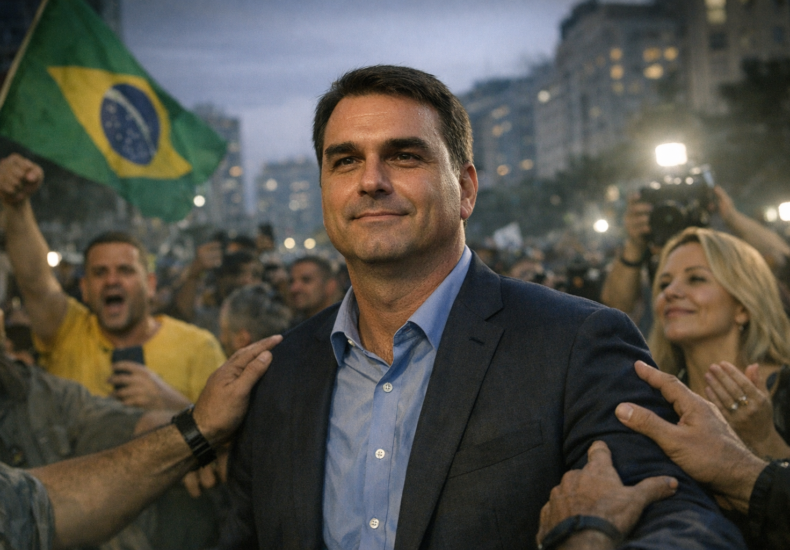
Right-wing Flávio Bolsonaro wins first round of Brazil election as reflected on by Rabbi Miriam Levin
This morning after minyan, the news broke at Congregation Kol Shalom. Flávio Bolsonaro leads the first round of voting in Brazil. This forces a tense runoff election later this month. Many Highland Woods congregants might feel distant from South American news. However, several families in our community have deep personal ties to Latin America. Furthermore, almost everyone recognizes the anxious rhythm of a divided electorate. This shared experience shapes our Brazil election reflections.
A runoff election offers more than a constitutional mechanism. It becomes a cultural suspension. An entire nation must stare directly into its own divisions. Jewish tradition never treats communal discernment as a winner-take-all sport. For instance, the Talmud records in Tractate Sanhedrin that even deeply divided courts debated with profound reverence. They always prioritized human dignity and the welfare of the vulnerable. When power becomes an end in itself, society frays at its moral seams. True leadership serves as a sacred covenant to protect the public good.
Navigating Political Divisions in Brazil
In our suburban synagogue life, political anxiety often seeps into family relationships. It also affects neighborhood councils and multi-faith spaces. When elections become existential battles, we lose spiritual discipline. We must see our fellow citizens as beings created in the divine image, b’tselem Elohim. Right-wing populist surges, whether in Brazil or closer to home, often draw energy from genuine public frustration. Economic despair and institutional fatigue also contribute. Acknowledging that pain is essential. However, yielding to rhetoric that demonizes others or weakens democratic safeguards poses a grave danger to civil society.
Our ancient sages taught that leaders are not kings entitled to absolute deference. In Deuteronomy, even a monarch is commanded to keep a copy of the Torah near him always. This reminds him that he stands under the law, not above it. The measure of any political leader, regardless of party or ideology, remains consistent. We assess them by how they treat the stranger, the worker, the impoverished, and the natural world. In Brazil, issues of poverty, environmental stewardship of the Amazon, and indigenous rights stand at the forefront. Therefore, the stakes of governance extend far beyond national borders.
Embodying Civic Virtues and Tikkun Olam
Brazilian citizens will face intense pressure, rhetoric, and polarizing appeals during the weeks ahead. The spiritual challenge during such a season is to refuse cynicism. In Pirkei Avot, the Ethics of the Fathers, we are taught to pray for the peace and integrity of the governing authorities. Without justice and order, people would devour one another alive. Good governance is not an abstract luxury. It provides a fundamental safeguard against the cruelty human beings can inflict when civil order breaks down.
As we watch these events unfold from our corner of the world, our task is not merely to observe. We are called to embody civic virtues in our local neighborhoods. Every healthy democracy requires patience, careful listening across ideological divides, and an unshakeable commitment to human rights. When we insist on truthfulness in public speech and defend democratic institutions, we participate in the ongoing work of tikkun olam. We actively repair a fractured world. May peace, civic calm, and an uncompromising dedication to truth mark the weeks ahead in Brazil.
Leave a Reply