Row erupts over Cairo mural depicting Tutankhamun and Nefertiti with dark skin as reflected on by Rabbi Miriam Levin
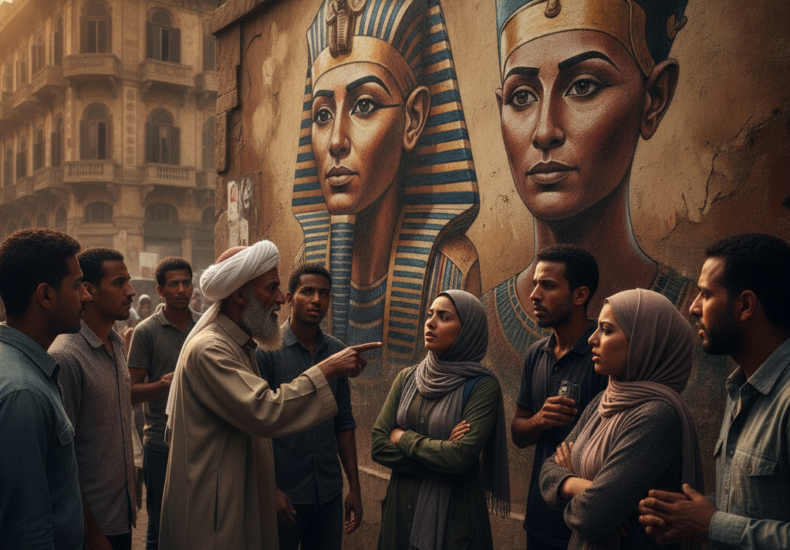
Memory is rarely an inert record in our tradition. Instead, it actively wrestles with who we believe ourselves to be. News reached our Highland Woods study group about the controversial Cairo mural. Young Egyptian artists had depicted Pharaoh Tutankhamun and Queen Nefertiti with dark skin. This sparked a fierce public outcry over ethnic heritage and historical legitimacy. Authorities quickly painted over the mural before a visiting head of state could see it. A coat of neutral paint erased the image in hours, but it could not erase the insecurity demanding its removal.
The Impulse to Control the Past
The impulse to control the past is as old as human society. However, it always signals a spiritual fragility in the present. A community feels compelled to whitewash a wall. This happens when an artistic depiction challenges its preferred narrative of antiquity. Such an act reveals how heavily modern national pride leans upon ancient ghosts. Ancient Egypt, with its monumental architecture and imperial reach, continues to serve as an anchor of prestige. Modern citizens feel their ownership of that grandeur threatened. This occurs when another group seeks dignity in the very same soil. Panic then replaces curiosity. The reaction demonstrates how easily historical reverence curdles into defensive possessiveness.
Jewish memory holds a complicated relationship with the Nile. The Book of Exodus calls Egypt “Mitzrayim,” a narrow place of enslavement and state cruelty. Yet, it also provided shelter, keeping Jacob’s family alive during famine. The Torah demands that we remember our vulnerability there thirty-six times. It commands us never to oppress the stranger because we truly know the soul of the outsider. Crucially, our tradition warns against idolizing the pharaohs’ monuments. The sages of the Talmud observed that those who build identity entirely on dynastic power end up trapped. Granite obelisks and unyielding self-aggrandizement become their own creations. When heritage becomes an idol, any smudge on its surface feels like an existential threat.
Lessons from the Cairo Mural for Highland Woods
We see subtle versions of this same anxiety in our suburban congregation. This occurs whenever identity boundaries are tested. We live in an era where communities everywhere fear erasure or dilution. Parents worry whether their children will inherit the tradition intact. Meanwhile, our civic neighbors worry about shifting demographics and changing cultural definitions. Too often, our instinct is protective closure. We want to decree exactly who belongs. We also want to decide who has the right to claim a legacy. Furthermore, we determine which shades of human experience are permissible within our communal frame. Yet, true covenantal strength does not come from defensive gatekeeping. It comes instead from deep internal grounding.
The tragedy of the erased Cairo mural in Tahrir Square lies not merely in lost paint. It also represents a lost opportunity for encounter. The young volunteers of Rasmet Basma were trying to beautify their city. They offered a creative vision that bridged continents and artistic interpretations. Authorities silenced their work to maintain an official aesthetic. They chose fear over dialogue. In Jewish ethics, particularly in the work of Tikkun Olam, the repair of the world begins by recognizing the divine image, the Tzelem Elohim. This means seeing the full diversity of human expression. We should expect to find complexity and cross-pollination when we look into the distant past. We should not expect a uniform mirror flattering our present desires.
A mature community does not need antiquity to be pristine. It already knows its own worth today. Real dignity is forged in the present through justice, compassion, and the courage to welcome difficult conversations across lines of difference. We will spend our lives nervously repainting walls if we anchor our self-worth entirely in the bloodlines and thrones of thousands of years ago. However, we can look upon any mural with quiet confidence if we root our pride in how we treat the living. This confidence comes from people who are not afraid of what the truth might look like.
Leave a Reply