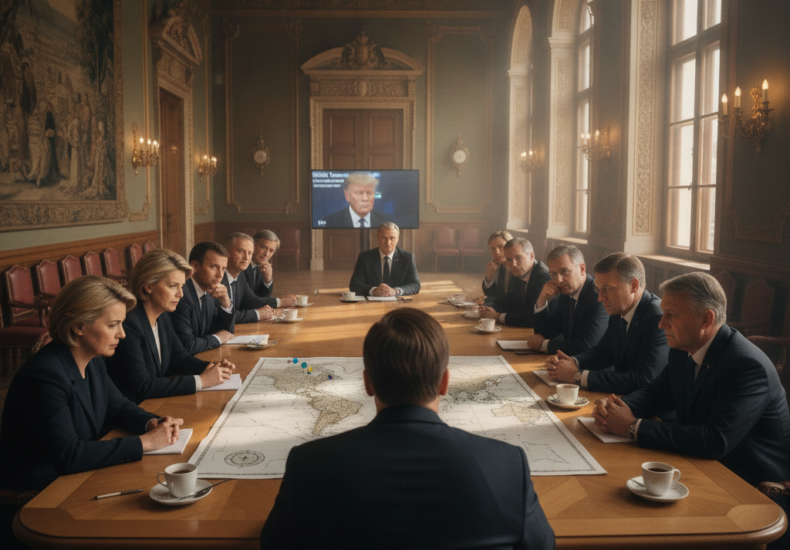
Trump victory a challenge for Europe’s leaders converging on Hungary as reflected on by Dr. Farida Nur-Eldin
The news from Budapest, highlighting Europe’s leadership challenge as they grapple with global anxieties, resonates deeply within our Al-Hikma Contemplative Circle. Leaders gather, focused on Russia’s war and the specter of US isolationism. These are indeed moments of profound uncertainty, reflecting a widespread yearning for stability and justice in our world.
From an Islamic perspective, especially within Sufi teachings, such external shifts always invite an internal reckoning. The Holy Qur’an reminds us that “God does not change the condition of a people until they change what is within themselves.” Therefore, we must ask ourselves: what change does this global instability demand from us, individually and collectively?
Navigating Global Uncertainty
The fear of isolationism and the ongoing conflict in Ukraine reveal a profound human vulnerability. Nations, like individuals, face trials. These challenges compel us to reflect on the core principles of compassionate governance and shared humanity. Our tradition emphasizes the importance of justice (‘adl) and mercy (rahma) in all dealings, whether personal or international. Leaders, consequently, carry a heavy trust.
We often look outwards for solutions, yet true strength emanates from within. The sanctity of human breath, a concept central to my work, connects us all. Every breath we take links us to the Divine and to one another. When we witness suffering or fear, we feel it in our own chests. This shared vulnerability should inspire greater solidarity, not division.
The Call for Inner Wisdom
In times of political flux, we find solace and guidance in the Sufi emphasis on inner purification. We cultivate a heart that remains steadfast amidst the storms of the world. Therefore, leaders, too, must seek counsel beyond mere strategy; they must access a deeper wisdom. This wisdom informs decisions that prioritize human dignity and peace over narrow self-interest.
Furthermore, the ethical framework of Islamic bioethics teaches us to anticipate consequences and to act preventatively for the common good. As Europe’s leadership challenge unfolds, we pray for foresight and compassion. Ultimately, our faith calls us to be agents of healing and reconciliation. We advocate for policies that uphold the sanctity of life and foster genuine understanding across all divides.
Read the original news coverage on BBC News (World).
Leave a Reply