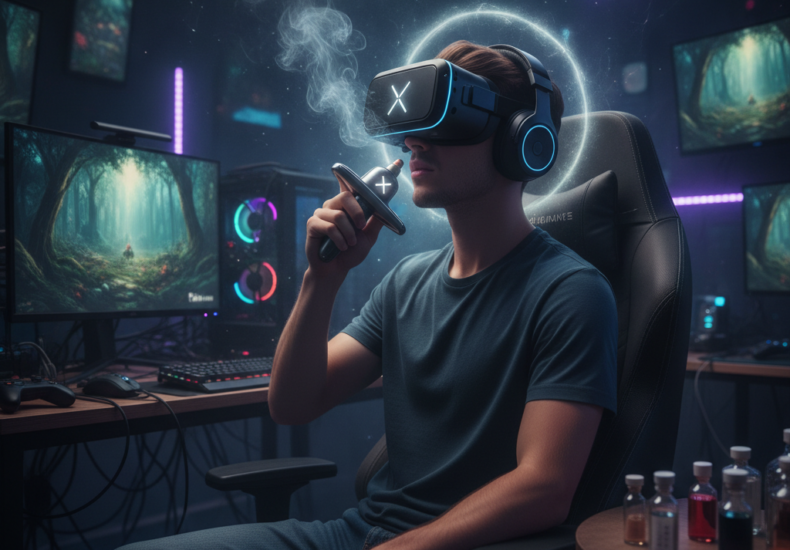
Press X to sniff: Can smelling a game make it more immersive? as reflected on by Acharya Jinendra Muni
The BBC Technology report on developers exploring the sense of smell to make games more immersive highlights a significant trend. We now see an accelerating drive to expand our sensory engagement with virtual worlds. This quest for enhanced realism, allowing players to experience smelling a game, raises profound questions for us at the Mahavira Center.
Our tradition teaches that true immersion comes from within, not from external stimulation. Therefore, we must ask if further stimulating the senses truly serves our well-being. Furthermore, we observe that excessive focus on sensory pleasure can foster greater attachment. This attachment, known as *moha*, binds us to the cycle of transient experiences, both real and virtual.
The Quest for Sensory Immersion
Humanity constantly seeks new ways to engage its senses. Developers now aim to incorporate smell into virtual environments. However, this pursuit often leads to deeper entanglement with the material world. Jainism advocates *Aparigraha*, non-possessiveness, which extends beyond physical goods to our experiences and desires. Consequently, we should critically examine whether this constant pursuit of novel sensory input aligns with spiritual progress.
Consider the resources and energy required to develop and deploy such technologies. We also practice *Ahimsa*, non-violence, which includes mindful consumption. We ask: does this innovation truly contribute to a more peaceful or ethical existence? Ultimately, we believe individuals should prioritize inner tranquility over external sensory bombardment. This path offers lasting contentment.
Beyond Virtual Realism
Our focus should remain on cultivating inner awareness and control over our senses, not on inventing new ways to stimulate them. True liberation, *moksha*, arises from transcending sensory desires, not from fulfilling them. Likewise, ethical consumerism guides us to choose products and experiences that uplift, rather than merely distract. The ability for players to experience smelling a game might seem harmless. Nevertheless, it represents a further step into digital escapism.
We encourage everyone to reflect on their relationship with technology. Does it serve self-realization, or does it merely amplify fleeting desires? Anekantavada, our principle of multi-faceted reality, reminds us that numerous perspectives exist. Ultimately, we advocate for corporate minimalism and conscious living. We urge designers and consumers alike to consider the deeper implications of hyper-sensory virtual worlds. True richness resides in self-mastery, not in augmented reality.
Read the original news coverage on BBC Technology.

Leave a Reply