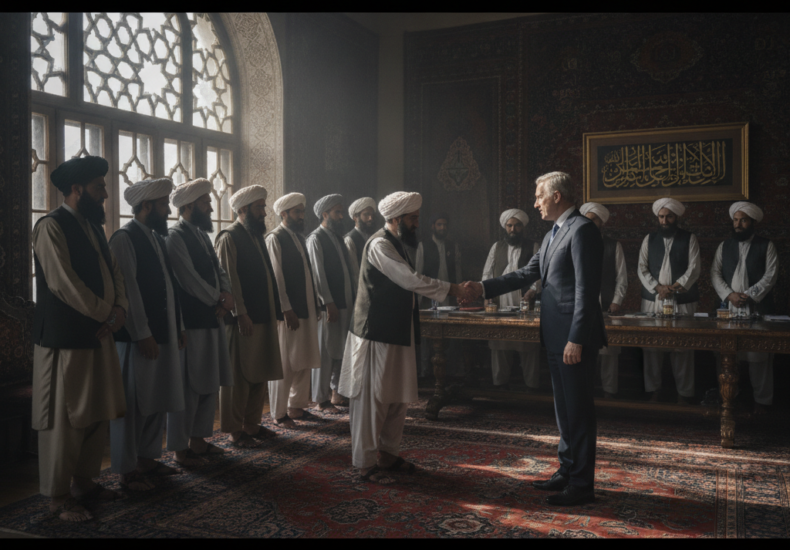
Taliban praise Russia’s ‘brave decision’ to recognise their rule in Afghanistan as reflected on by Sayyid Ali Reza Hosseini
The recent news that Russia recognizes Taliban rule in Afghanistan compels us to reflect deeply. The Taliban leaders praised this “brave decision.” However, we must ask: What constitutes true bravery? Does it lie in political expediency or in upholding universal human dignity?
Our faith tradition, particularly the Ja’fari school, teaches us that governance carries a profound moral weight. Therefore, leaders bear responsibility for the well-being and justice of all people. This principle applies regardless of their political alignments. The actions of any state, whether in recognizing or rejecting another, should ideally serve the greater good. They must not merely reinforce power structures.
Ethical Governance and Human Dignity
True Islamic governance centers on justice, compassion, and the protection of the vulnerable. The Holy Qur’an commands us to stand firmly for justice, even against ourselves. We see this principle echoed in the teachings of Imam Ali (AS). He consistently emphasized the rights of the oppressed. Furthermore, history shows that lasting peace emerges from equitable treatment, not from coercion. Any government that imposes an “austere version of Islamic law” must answer for its impact on its citizens.
In our Bait al-Hikmah, we often discuss the ethical dimensions of international relations. We ask whether such decisions truly benefit the Afghan people. Do these recognitions lead to improved human rights? Do they foster genuine stability? Or do they legitimize regimes that may suppress freedoms? Ultimately, the measure of any decision rests on its moral implications for the human family. Therefore, the international community must consider the broader ethical landscape.
The Path of Moral Courage
Moral courage demands more than mere political convenience. It requires adhering to principles of justice and human rights, even when difficult. The recognition of any government should stem from its commitment to its people. It should reflect adherence to universal values of fairness. Our tradition calls us to advocate for the oppressed. We must speak truth to power. This includes powerful nations and ruling authorities alike. We believe that lasting peace only takes root where justice flourishes.
Consequently, we must encourage all nations to prioritize the welfare of the Afghan people. They deserve a future built on peace, education, and respect for individual liberties. The world watches how the situation unfolds. We pray that true bravery will guide all actions. This means upholding the enduring dignity of every human being. The long-term consequences of how the world engages with the Taliban, and indeed with any governing body, will shape the future for generations.
Read the original news coverage on The Guardian (World).
Leave a Reply