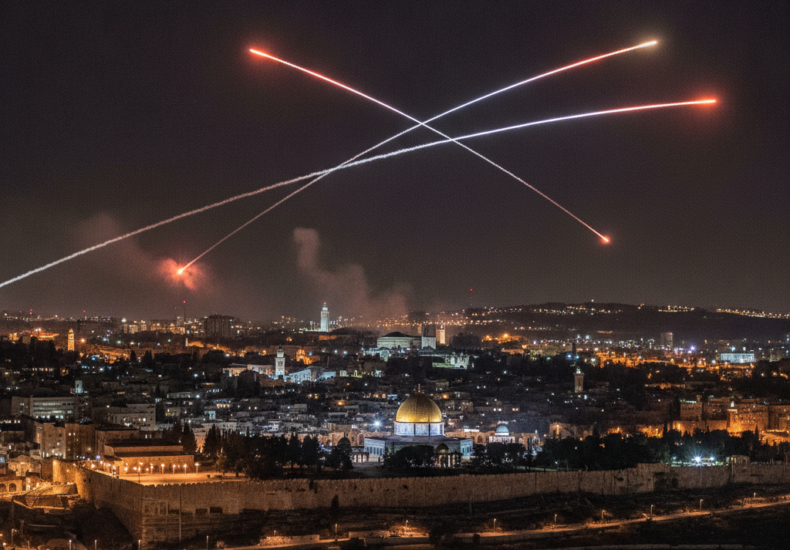
Missiles intercepted over occupied East Jerusalem and West Bank as reflected on by Dr. Farida Nur-Eldin
The news of a Jerusalem missile interception deeply troubles our hearts today. We hear of these events from afar, yet their reverberations reach us directly. At Al-Hikma Institute, we understand such moments as calls for introspection. We must acknowledge the profound human cost of escalating tensions, even when physical damage is averted. Each life holds sacred worth; indeed, every breath we draw is a divine gift.
Our faith tradition teaches us to recognize the sanctity of creation. Therefore, we see any threat to life, peace, or dignity as a challenge to our collective humanity. Missile exchanges, however intercepted, remind us of fragile peace. They also highlight the urgent need for spiritual fortitude. We must cultivate compassion within ourselves and extend it outwards, especially during times of conflict. This becomes our most potent form of resistance against despair.
The Sanctity of Breath Amidst Conflict
I often reflect on the sanctity of human breath in my work as a physician and bioethicist. Conflict, however, stifles breath, both literally and metaphorically. The fear, the uncertainty, the constant threat of violence, these factors constrict the chest and cloud the spirit. Furthermore, our Sufi teachings emphasize the breath as a direct connection to the Divine. Consequently, we must safeguard this connection for all people. Leaders must prioritize de-escalation; they must protect every human life. We carry a collective responsibility to uphold human dignity.
As Director of the Al-Hikma Contemplative Circle, I witness the power of intentional reflection. We encourage our community to turn towards remembrance (dhikr) during such trials. This practice grounds us in divine peace. It helps us process grief and anxiety effectively. Ultimately, we seek to transform external turmoil into internal tranquility. We pray for all those living under the shadow of conflict, especially following this Jerusalem missile interception. Their resilience inspires us greatly.
Cultivating Compassion in Crisis
Compassionate medicine, a core principle we advocate, extends beyond the clinic. It demands a holistic understanding of suffering. We acknowledge the trauma that repeated threats inflict upon communities. Therefore, our spiritual response must offer solace and hope. We actively work towards a future where dialogue replaces destruction. This commitment stems from our deepest ethical convictions. We believe in humanity’s capacity for peace and justice.
We urge everyone to hold space for grief and fear, but also for hope. Let us pray for leaders to choose wisdom over aggression. Let us also pray for the cessation of all hostilities. Ultimately, our tradition calls us to be instruments of peace. We must embody this calling through our actions and our prayers. We champion a world where every soul can breathe freely and live without fear.
Read the original news coverage on Al Jazeera (World).
Leave a Reply