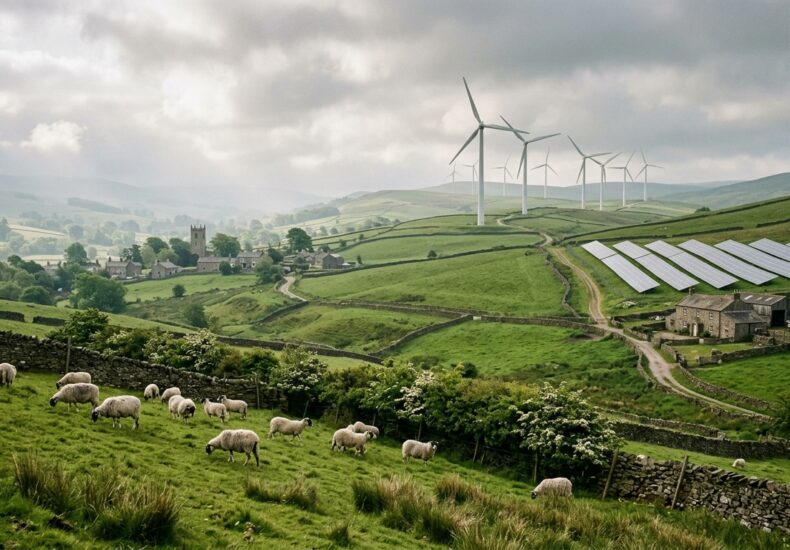
There is a way to look after people, the planet – and Britain’s growth. It’s what we call the ‘wellbeing economy’ | Jamie Driscoll as reflected on by Giani Harpreet Singh
At four in the morning, Gurdwara Sahib Dasvandh is already bustling. Heavy freight trucks hum outside our junction. Furthermore, steam rises from giant cauldrons in our Langar hall. This logistics corridor reveals the country’s true engine. However, we also witness human dignity grinding down. Young lorry loaders and van couriers sit on our floor before sunrise. Their eyes show worry over zero-hour shifts. They question if earnings will cover rent. Jamie Driscoll speaks of brilliant minds trapped in low-wage jobs. He also highlights young people unable to reach work due to poor public transport. He describes a reality our community feeds daily. Indeed, a true wellbeing economy must address these challenges.
Sikh Principles and the Wellbeing Economy
Sikhi offers a three-pillar foundation for an honest life: Kirat Karo, Naam Japo, and Vand Chhako. Kirat Karo means earning one’s bread through diligent, honest, and productive labor. Honest labor requires an ecosystem that respects the worker. Yet, an entire generation faces barriers to purposeful work. Financial markets often prefer quick speculative gains over public infrastructure. This violates the moral covenant of work itself. Labor is not merely a tool for extracting financial capital. It is a sacred exertion of human energy. It sustains life and builds community. Therefore, our economic system must honor this.
Our Gurus established Langar, the free communal kitchen. This was not just charity. It was a revolutionary assertion of radical equality and mutual sustenance. Every person, from emperor to laborer, sits side by side. They receive the same warm meal. The premise remains simple: the earth’s bounty belongs to everyone. Human wellbeing must always precede pride and profit. A true economy, what Driscoll calls a wellbeing economy, must mirror this fundamental truth. A society cannot claim prosperity. Not when young people remain stranded, feeling like failures. The economic system has failed them, not the other way around.
Caring for People, Planet, and Prosperity
The call for green housing, reliable public transit, and patient stewardship aligns deeply with our spiritual duty. Guru Nanak reminded us: air is the Guru, water is the father, and the great earth is our mother. An economic architecture often degrades the earth. Simultaneously, it neglects the youth who must inhabit it. This practices reckless shortsightedness. We cannot separate our care for the planet from our care for human beings. Building clean buses, insulated homes, and regional hubs is more than green policy. It is the practical embodiment of Sarbat da Bhala. This means working and praying for the welfare of all living beings without exception.
Too often, political leadership offers hollow slogans and warm sentiments. Structural backing is missing. In our tradition, faith never divorces from action. During floods, snowstorms, or supply chain paralysis, our volunteers act. We do not deliver speeches to stranded drivers. Instead, we load hot dal and tea into four-wheel drives. We head out onto the bypass. Real compassion demands operational discipline and dedicated investment. Our society must value its youth as its greatest resource. This conviction must reflect in our collective wealth direction. We must build roads, trains, and affordable homes. We must not abandon towns to economic neglect. Ultimately, this builds a stronger society.
Enduring hardship without losing heart requires Chardi Kala. This is the spirit of eternal optimism, courage, and spiritual sovereignty. It is not passive resignation. Chardi Kala insists that justice and renewal are possible. This holds true even when surroundings feel bleak. The young physics graduate behind a counter has not lost dignity. The lad in Blyth unable to afford travel to his job also retains dignity. They deserve an economic order that honors their potential. We must transition from an economy measuring success by quarterly balance sheets. We must build one that measures wealth by its people’s flourishing. We must also measure it by the health of the soil under our feet. This is the essence of a true wellbeing economy.
Leave a Reply