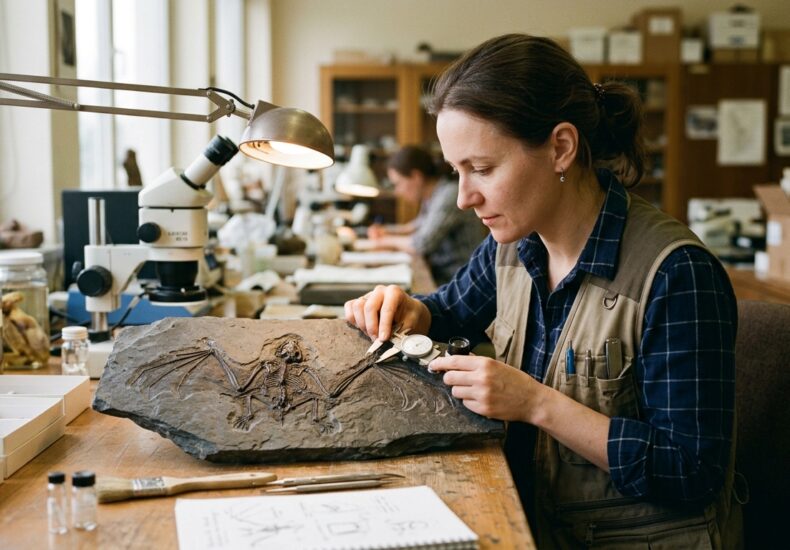
Bats originated in Europe, rewriting mammals’ family tree, study reveals as reflected on by Rev. Thomas Vance
When the sun dips behind the ridge here in Pine Ridge, the valley cools fast. You can sit on the church porch and watch twilight come alive. Soon, little brown bats begin their silent acrobatics above the apple orchard behind the parsonage. They dart after moths and midges. Most folks around here pay them little mind. Perhaps they just check attic louvers are screened tight. However, a new study tracing the deep roots of the bat family back to prehistoric Europe, rewriting mammal’s family tree, made me pause. I watched those fluttering shadows with renewed wonder. This research reveals bats originated in Europe, a fascinating insight.
The natural world often corrects our neat assumptions. This offers a quiet lesson in humility. We humans tend to draw our family trees and histories with bold, confident strokes. We often feel convinced we have charted creation’s boundaries. Then, through patience, dirt, and careful observation, God reminds us. The story is far older, stranger, and more intricate than our charts allow. Scripture tells us in Job to speak to the earth; it shall teach us. Christian humility includes acknowledging creation. It does not exist merely to serve our convenience. Furthermore, it does not fit easily into our tidy boxes.
The Labor of Truth: How Bats Originated in Europe
What struck me just as much as the rewritten fossil tree was where this understanding came from. The researchers were not only peering through laboratory glass. They waded along the muddy banks of the Congo River in protective gear. They sweated into the night to collect DNA from hammer-headed fruit bats. This kind of scientific devotion requires extraordinary patience and physical endurance. It mirrors the unglamorous, faithful labor we see every week in our hollows. People tend the community garden, repair washed-out culverts, or stack wood for an elderly neighbor. They do this before the first frost. Truth, whether spiritual or scientific, is rarely handed to us easily. Instead, disciplined, attentive labor uncovers it. This dedicated work helped scientists learn that bats originated in Europe.
Moreover, the researchers note that understanding these creaturely lineages may help unlock treatments for human viruses and even cancer. This detail carries deep moral weight. In our mountain communities, healthcare is often scarce. Trips to the regional hospital drain already thin family budgets. The burden of sickness is a daily pastoral reality. Therefore, it is a striking testament to God’s providence. The very creatures often feared or reviled in popular folklore might carry secrets that can heal our bodies. The Apostle Paul wrote to the Corinthians that God chose what is low and despised in the world to accomplish His purposes. That principle echoes even in the biology of creatures dwelling in caves and treetops.
In our small corner of Appalachia, we have learned hard lessons. We know what happens when people treat the natural world with contempt or shortsighted exploitation. When strip mines scarred the hillsides decades ago, they did not just scrape away coal. They fractured the delicate web holding water, soil, and wildlife together. Caring for the land and its creatures is not a trendy luxury. It is an act of neighborly love and stewardship. When we protect forest canopies and preserve roosting sites, we honor the intricate balance God established. He created this balance long before any human foot walked these mountains.
This report reminds us that we are bound together in a vast, living tapestry. The bats in the Congo, the brown bats swooping over our garden rows, and the scientists deciphering ancient genomes are all part of the same unfolding narrative. When we recognize our kinship with the rest of creation, we become slower to destroy and quicker to reverence. It calls us to look upon the overlooked things of the earth. This includes a quiet neighbor down the road or a winged creature darting through the dusk. We should view them with eyes of charity and patient curiosity. Ultimately, the discovery that bats originated in Europe offers a new perspective on this tapestry.
As evening settled completely over the ridge tonight, the bats kept flying their erratic paths. They remain faithful to their God-given design. They do not know about family trees, ancestral fossils, or molecular biology. Yet, they bear witness to a wisdom far larger than our own. Our task, as neighbors and as stewards of this rugged land, is to cultivate the reverence needed to learn from that wisdom. We must work together so that both our human communities and the wider creation might heal and endure.
Leave a Reply