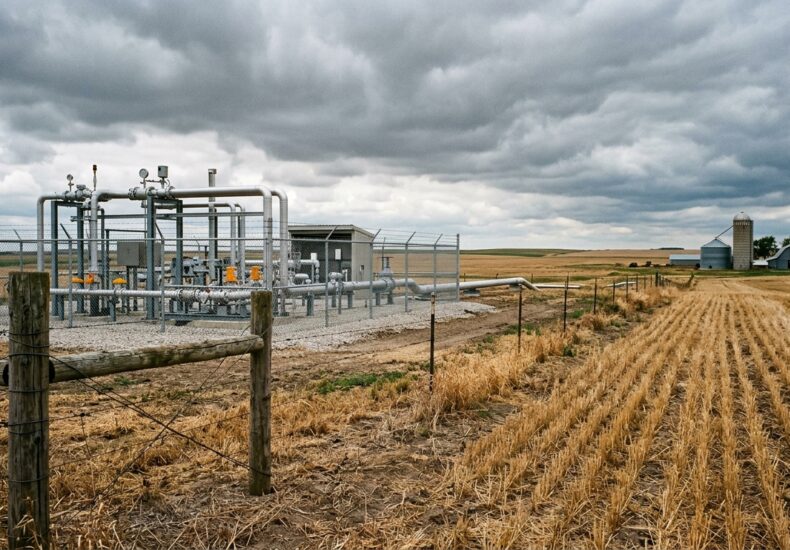
‘Huge wave’ of carbon storage projects causes alarm in small-town USA as oil firms eye billions in subsidies as reflected on by Rev. Thomas Vance
News from flatland farm country often travels slowly into our Appalachian hills. Yet, the story from Clymers, Indiana, struck a familiar chord here in Pine Ridge. Distant corporations and federal programs now want to pump millions of tons of pressurized carbon dioxide beneath family homesteads. This proposal causes more than mere stubbornness. It triggers an instinctive, defensive reflex. Our communities have seen promises of economic salvation turn into long, silent wounds in the ground. Many fear these new carbon storage projects will bring similar heartache.
Here in our hollows, we understand when outside industries treat rural geography as an expendable basin. For generations, Appalachian coal heated faraway cities. It left behind hollowed-out hillsides, orange creeks, and families who buried miners too soon. Melissa Harrison looks at Indiana soil where ancestors rest and grandchildren play. Her fear stems from ancient wisdom. When wealth is harvested elsewhere, risks are buried beneath your cellar floor. This transaction is rarely neighborly.
Ethical Stewardship and Carbon Storage Projects
Scripture reminds us in the Psalms: the earth is the Lord’s, and its fullness. We are not conquerors or disposal managers. Instead, we are stewards invited into a sacred trust. True stewardship requires humility and reverence for the land’s limits. Unfortunately, technological fixes often excuse reckless consumption elsewhere. These fixes shift unknown hazards onto quiet country lanes. Consequently, we abandon stewardship in favor of convenience. We cannot claim to heal creation if our methods sacrifice the quiet and vulnerable. We must not keep distant machines running without pause.
At the Grace Community food pantry and our agricultural co-ops, we witness fragile community health every week. It weaves from trust, clean water, and healthy topsoil. It also depends on the daily covenant neighbors make to watch over one another. A community is not just GPS coordinates. It is not an empty parcel on an industrial balance sheet. It is a living congregation of souls, memories, and shared responsibility. Telling rural towns their quiet existence must serve as a subterranean dump for corporate emissions strains the very definition of the common good.
Neighborly love, as Christ taught, demands we count the cost of our actions. We must consider more than paper profits. We must assess the impact on the flesh and blood of the least among us. Therefore, national climate initiatives need genuine moral integrity. They must begin with repentance and sacrifice. They cannot simply expel risk to places with fewer voters. Billions in public subsidies flow into high-pressure pipelines beneath family farms. Meanwhile, those living above carry anxiety about leaks and ruptures. This is an ethical failure disguised as ecological progress.
An urgent moral question arises here. It transcends partisan debate or industrial engineering. What do we owe the places that feed us? What do we owe the ground that holds our dead and teaches our children? The people of Clymers, like families here in Pine Ridge, ask for something fundamentally righteous. They seek the right to protect their home, their peace, and their descendants. We must honor that plea. We must not bury another burden beneath our feet.

Leave a Reply