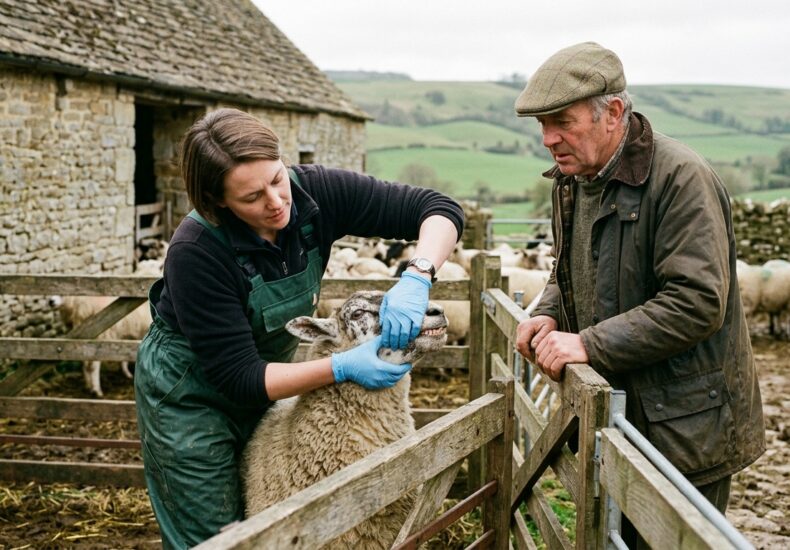
Worst ever outbreak of bluetongue hits British farms as reflected on by Sensei Michael Jinpa
Early autumn mist often clings to the water at Harborview Point. It drifts from the docks toward our sanctuary garden. In the zendo before dawn, the tide turns against the pilings. We hear the quiet rhythm of breath and water meeting. It feels easy in such peaceful pockets to imagine ourselves sheltered. However, news of the bluetongue outbreak British farms now arrives like a piercing bell. It calls us back to reality. A warming climate has carried the midge and its virus far north. Cattle and sheep are feverish, swollen, and dying in record numbers. This suffering is not a distant abstraction; instead, it manifests a wounded whole.
In Zen practice, we repeatedly return to the truth of pratityasamutpada. This concept speaks of radical interdependence. Nothing arises in isolation. Warmer autumn winds allow biting midges to survive further north. These winds are born from atmospheric currents. Industrial exhaust and global consumption patterns shape these currents. Consequently, a cow suffering on a Scottish hillside ties intimately to distant city choices. When we disrupt earth’s subtle balances, consequences do not vanish. They ripple across species. Furthermore, they land heavily upon animals who bear no responsibility for our shifting climate.
Responding to the Bluetongue Outbreak British Farms
During my years as a hospice chaplain, I sat with many bodies. They struggled through final illness stages. Physical suffering possesses a stark, undeniable presence. It strips away all pretense. Watching an animal endure torment evokes that same visceral grief. A swollen head, high fever, and lameness cause immense pain. Non-human beings experience pain with raw immediacy. They do not intellectualize distress or weave narratives to soften it. Acknowledging their pain is an essential aspect of Buddhist practice. The first precept urges us not to harm living beings. It calls us to extend our circle of care beyond human boundaries.
We often treat livestock distress through economic loss. We calculate compensation and tally agricultural disruption. Farming families’ livelihoods are indeed a genuine human concern. Yet, reducing sentient life merely to commodities blindfolds our spiritual vision. When animals suffer, our collective conscience faces a test. A culture viewing creature agony only as a supply chain inconvenience has grown numb. It has lost sight of life’s sacred value. We must cultivate courage. We must feel the sorrow of these pastures. Let our hearts break open rather than closing in indifference.
Contemplative practice asks us to face existential anxiety directly. We must not retreat into numbness or despair. Outbreaks are surpassing historical records. Naturally, we feel helpless before ecological collapse. However, despair is simply another form of avoidance. It is a quiet surrender excusing inaction. Compassion demands that we stay awake to the world as it is. It calls us to examine daily dependencies. We must question the systemic greed driving ecological disruption. Ultimately, we must advocate fiercely for policies protecting the vulnerable, both wild and domesticated.
The bell rings, closing our morning sit. The sanctuary bell resonates across the harbor. It fades into silence. That fading tone reminds us of impermanence. It also reminds us of responsibility. The health of northern pastures, the warmth of the coastal sea, and the breath in our own chests weave together. They form a single fabric. May we meet this unfolding crisis not with averted eyes. Instead, let us respond with steady presence, clear sight, and a deepened commitment. Let us commit to gentle, restorative action for all beings.

Leave a Reply