Medieval manuscripts are “biological time capsules” for deadly sheeppox virus as reflected on by Dr. Farida Nur-Eldin
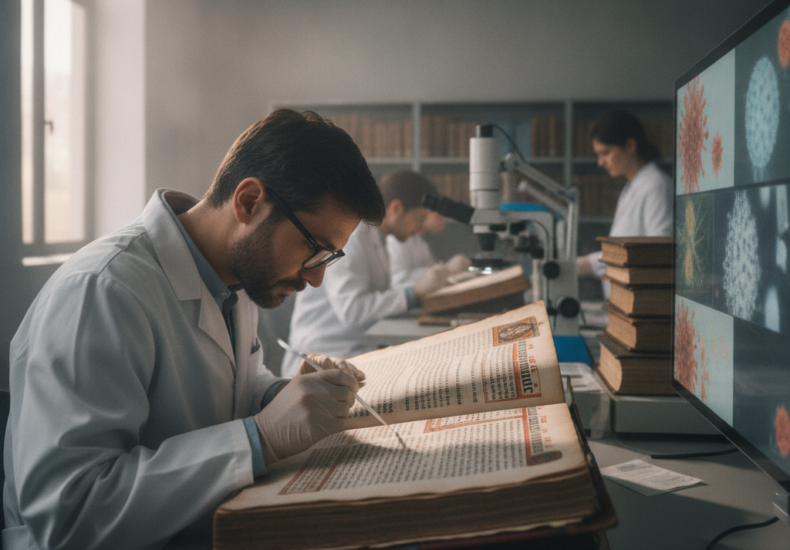
The recent discovery that medieval manuscripts function as “biological time capsules” for ancient viruses offers a profound moment for reflection. Researchers found genetic traces of deadly sheeppox virus within these historical documents. This news from Ars Technica reminds us that history is not merely a collection of stories. Rather, it lives and breathes with us, carrying echoes of past struggles and triumphs into our present moment. Furthermore, our understanding of contagion and continuity deepens when we consider these findings.
History’s Lingering Breath
At Al-Hikma Institute, we often contemplate the sanctity of human breath. This concept extends to the breath of time itself. These ancient parchments, once touched by countless hands, now reveal secrets of past epidemics. They preserve more than just words and wisdom. They also hold the very biological signatures of disease. Consequently, we must approach such knowledge with both reverence and responsibility. Our ancestors unknowingly left us a legacy, a warning perhaps, within these fragile pages. Therefore, we recognize a deep interconnectedness between all life, past and present.
The revelation of these biological time capsules compels us to consider our ethical duties. We now face questions about how we engage with history. How do we protect ourselves from ancient threats? Simultaneously, how do we honor the knowledge embedded within these artifacts? Islamic tradition teaches us a concept called amanah, or trust. We hold the earth in trust. We also hold knowledge and the well-being of future generations in trust. This discovery reinforces our role as custodians of both intellectual heritage and public health.
Custodians of Contagion and Compassion
As a physician trained in clinical genetics, I see these findings through a unique lens. The potential for other archives to contain genetic traces of past outbreaks is significant. This knowledge urges us towards compassionate medicine, extending our care not only to the living but also to understanding the historical patterns of disease. We must develop wise protocols for handling these materials. Moreover, we need to ensure their study contributes to global health security. Our spiritual path encourages us to seek knowledge wherever it may be found, even within the microscopic remnants of a virus.
Ultimately, these biological time capsules invite us to a deeper contemplation of our mortality and resilience. They highlight our shared human vulnerability across centuries. However, they also underscore our enduring capacity for learning and adaptation. We strive to integrate scientific discovery with spiritual wisdom at Al-Hikma. This integration helps us navigate complex ethical landscapes. May we use this new understanding to foster greater compassion and preparedness in our world, remembering that every breath, every life, holds sacred value.
Read the original news coverage on Ars Technica.
Leave a Reply