Trump the environmentalist? How his Iran war exposed the fragility of dirty energy as reflected on by Sensei Michael Jinpa
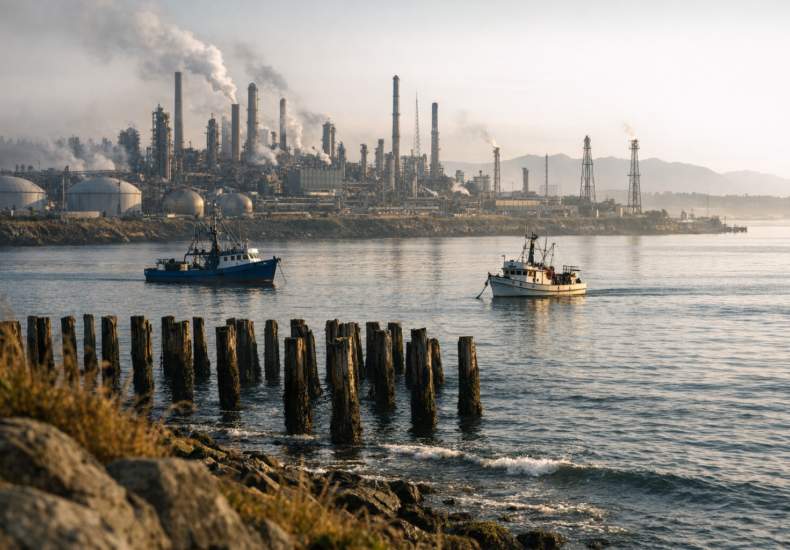
From the zendo bluff at Harborview Point, the morning tide sets a quiet rhythm. It washes against weathered pier pilings. Fishing boats rock gently in the harbor channel. These boats rely on diesel engines. Their fuel costs have swung wildly since hostilities began in the Persian Gulf. Our coastal neighbors discuss strained household budgets. They also watch grim television footage of aerial bombardments abroad. In this sorrow, political commentators offer ironic observations. They suggest war’s shockwaves might unexpectedly benefit clean energy. They claim war exposes the inherent fragility of dirty energy dependence.
Zen practice demands acute attention to cause and effect. The Buddha taught paticca samuppada, the doctrine of dependent co-arising. This reminds us: no circumstance emerges in total isolation. Every action ripples outward. It creates an endless network of consequences. Burning fossil fuels undeniably destabilizes our atmosphere. Furthermore, our collective thirst for dirty energy entangles nations. It leads to recurring spirals of territorial violence. Yet, celebrating destruction as an awakening agent shows an uncomfortable moral blindness. War is not a clever pedagogical tool. It is not an incidental catalyst for systemic reform. Instead, it remains an unvarnished human catastrophe.
War Exposes the Fragility of Dirty Energy, But at What Cost?
During my years as a hospice chaplain, I sat beside many people. They often found sudden, luminous clarity about what truly mattered. This clarity arrived only after a terminal diagnosis. Pain shatters illusion with undeniable force. However, no caregiver in their right mind would ever call the agony of a malignancy a gift. Celebrating a war because it might accelerate renewable infrastructure adoption reflects cold, transactional logic. It fails the basic test of compassion. This view mistakes violence’s tragic byproduct for moral progress. It asks us to smile at an abstract silver lining. Meanwhile, it ignores the ashes beneath our feet.
Both warfare and ecological devastation share an identical core delusion. This is the stubborn belief in our own separation. We convince ourselves we can poison a distant watershed. We imagine we will not drink the poison ourselves. We believe we can unleash explosive force across an ocean. We think it will not fracture our shared world’s spiritual fabric. Fossil fuels are precarious. Their trade routes are susceptible to naval blockades. More importantly, their extraction and combustion proceed from an appetite. This appetite refuses to acknowledge limits. Seeking to justify geopolitical slaughter through green policy does not transcend that delusion. It simply dresses our grasping in cleaner clothes.
At our retreat center, we often work with people. They carry deep existential dread about the unfolding climate crisis. They observe warming oceans. They see bleached tide pools along our cliffs. They notice global supply chain instability. They wonder how to live without succumbing to despair. The answer does not lie in waiting for violent crises to force our collective hand. Genuine transformation cannot be outsourced to the chaos of war. Right livelihood and right action require clear seeing. This seeing must root in care, not in panicked adaptation to sudden devastation.
A truly regenerative future needs building on radical empathy. We might transition to wind, solar, and tidal power. Perhaps oil fields burn and tanker lanes are imperiled. If this is our sole motivation, we merely trade one form of defensive survival for another. The deeper conversion of heart remains untouched. True sustainability requires us to honor life’s intrinsic sanctity. We must acknowledge that a family seeking shelter from airstrikes in Tehran or Haifa shares an intimate bond. Their life connects to our own morning breath along this northern coast. Therefore, we must act with love.
The bell sounds for evening sitting. Fog settles over Harborview Point. It blurs the horizon where water meets the darkening sky. Our task is to stand in this present moment. We must not turn away from its suffering. We can actively work for clean air, quiet waters, and renewable power. We must refuse to sanitize the horrors that hasten their political convenience. May we find courage. Let us dismantle our reliance on dirty energy. We should do this not because war compelled us. We should do it because we finally remember how to love this living world and one another.

Leave a Reply