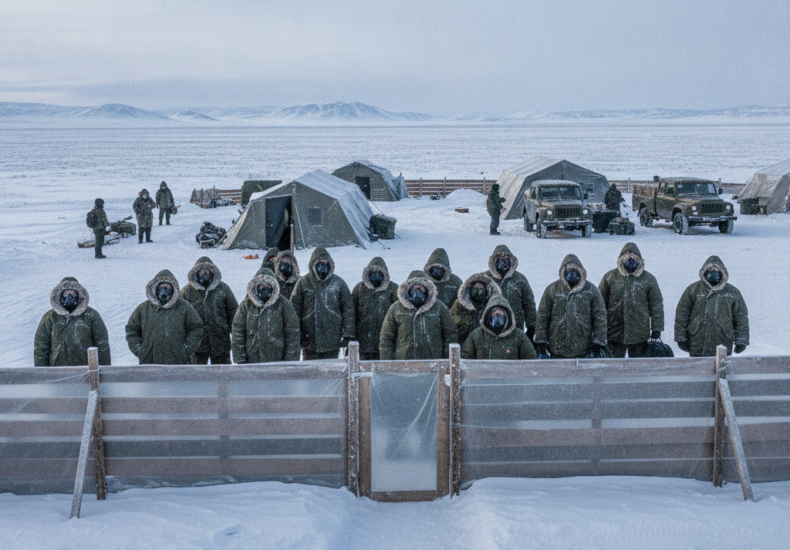
What we know about Russia’s suspected plague case as reflected on by Swamini Ananda Saraswati
Word reaches our quiet sanctuary in the Himalayan foothills about Russia’s suspected plague case. Dozens of souls now face strict isolation in Siberia. Here, in the cool quiet of dawn along the Ganga, ancient Upanishad chants remind us of unshakeable reality. Such news carries an old, solemn weight. The word “plague” immediately awakens ancient terrors. It stirs deep fear of the invisible and uncontrollable, buried in humanity’s collective memory.
In classical Advaita Vedanta, the physical world, or jagat, is not a static machine. Instead, it forms an intricate, interdependent web. Universal order, rita, governs this web. Therefore, disease is not an alien enemy invading from outside. It expresses biological vulnerability within nature’s play. The tiny bacterium, Yersinia pestis, exists as part of the material tapestry. Rodents and fleas carry it across the vast Siberian steppe. When it encounters human frailty, our modern presumption of total mastery over the earth instantly shatters.
Reflecting on Russia’s Suspected Plague Case and Maya
The quarantine imposed on those villagers sharply reminds us of maya’s nature. Maya is the cosmic illusion of separateness. We live our daily routines convinced of our independence. Our individual enclosures, nation-states, and sanitized comfort seem to keep us safe. Yet, a single microbial transmission dissolves these borders in an hour. We discover our shared existence. We breathe the same air, walk the same soil, and share the exact same biological fragility. Fear naturally arises, born from our attachment to the mortal frame. However, wisdom asks us to look past panic. It urges us to see our fundamental kinship with all embodied life.
Here in our ashram, we place sacred emphasis on ahimsa, or non-harm. This principle extends directly into responsible care for the vulnerable. True detachment never means cold indifference toward worldly suffering. When infectious distress threatens a community, the spiritual response is disciplined compassion. Quarantine itself, while physically confining, becomes an act of collective care. It offers personal convenience on the altar of the common good. Furthermore, it is a willing sacrifice of individual mobility to protect the wider circle of life, despite being emotionally taxing for those separated from loved ones.
We must also contemplate our relationship with wild creatures who share this earth. Ancient illnesses often reemerge when human disruption pushes too deeply into undisturbed ecosystems. This alters natural balances that kept pathogens quietly contained. The Vedic vision teaches that harmony, shanti, requires honoring the rightful domain of wild beasts. It also demands respect for the rhythms of the earth. When we exploit habitats without restraint, we break an unwritten moral covenant. Consequently, nature responds with severe reminders of our limits.
As the sun rises over the river, we remember the unblemished witness consciousness, the Atman. It abides beneath the turbulent surface of health and illness, life and death. The body is subject to time, change, and decay. Yet, that which knows the body remains unaffected by pestilence. Holding this truth in our hearts does not excuse us from tending to the sick. We still use modern medicines and sheltering hands. Rather, it frees us from paralyzing terror. Thus, our care may be steady and fearless.
Our prayers today travel across mountain ranges. They reach those quiet rooms in Siberia where people wait in quarantine, watching the hours pass in uncertainty. May their bodies be preserved. May medicine offer swift relief. May their minds find the quiet refuge of inner stillness. In recognizing our shared vulnerability, may humanity turn away from arrogance. May we walk the earth with greater humility, restraint, and reverence for all that lives.
Leave a Reply