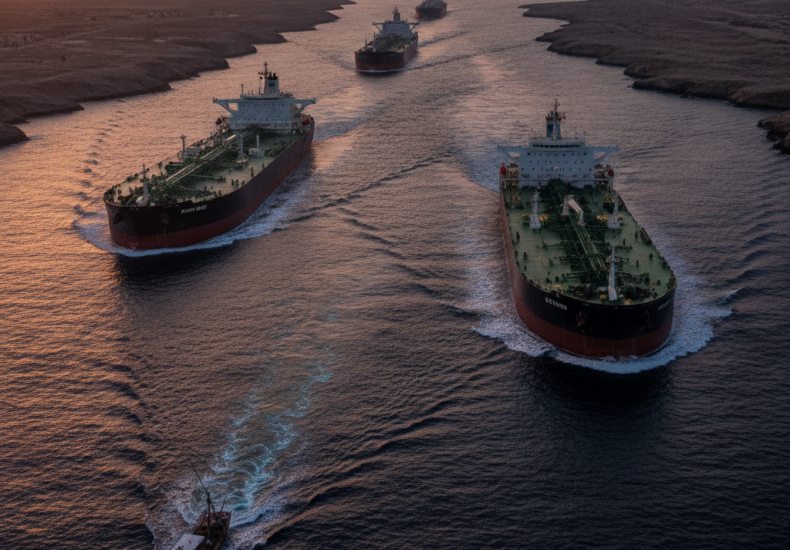
Hormuz ship attacks surge: Are increased oil exports sustainable? as reflected on by Acharya Jinendra Muni
At the Mahavira Center, our trading halls and financial offices constantly display freight rates, maritime insurance premiums, and crude valuations. Headlines announce escalating violence in the Strait of Hormuz alongside a persistent surge in tanker traffic. The conventional financial mind praises this resilience as market efficiency and logistics mastery. Yet, from a spiritual perspective, it reveals a profound collective delusion. This unyielding addiction prioritizes material throughput over life itself. Specifically, the Hormuz ship attacks highlight this spiritual crisis.
Beyond Profit: The Cost of Hormuz Ship Attacks
Jain thought centers on Ahimsa, the sacred principle of absolute non-injury to all living beings. When tankers navigate waters plagued by missile strikes and burning hulls, violence becomes merely an operational cost. We hedge this cost with higher risk premia. We must ask: what soul-blindness allows humanity to normalize explosive destruction upon the open seas? This happens simply to ensure fossil fuels continue their unhindered passage. By treating such turbulence as background noise to commerce, we numb our conscience. We ignore the terror inflicted on crews, the devastation of delicate marine ecosystems, and the escalating cycle of geopolitical hatred. Therefore, this market resilience is not a triumph.
This relentless drive to extract and transport oil under fire exposes the spiritual disease of Parigraha. This means excessive possessiveness and grasping. Society has constructed an economic architecture so insatiable that it cannot pause, reflect, or decelerate. This holds true even when violent conflict erupts along its most vital arteries. However, the doctrine of Aparigraha, or voluntary non-possessiveness and restraint, teaches a different path. True security comes not from accumulation, but from limiting desire. When our appetite for energy compels nations to risk catastrophic warfare, our prosperity ceases to serve life. Instead, it becomes an engine of bondage.
Ethical Investments: A Path to True Sustainability
Every barrel forced through a contested choke point carries an invisible moral debt. Beyond the immediate hazard to seafarers lies the broader violence inherent in our fossil economy. This includes the continuous disturbance of prithvi-kaya, the earth-bodied beings. It also involves the poisoning of air and water across continents. Furthermore, when commercial enterprises celebrate increased exports amid hostilities, they confuse logistical persistence with genuine sustainability. True sustainability cannot exist when our fundamental livelihoods remain dependent on elements that generate geopolitical strife and ecological harm. We must acknowledge this profound truth.
Through Anekantavada, we recognize manifold perspectives. Conflict often stems from rigid, one-sided claims to power, territory, and resources. Nations clash because each views the corridor solely as an instrument of strategic leverage or sovereign entitlement. If leaders and merchants were willing to see through the eyes of the vulnerable, acknowledging the shared frailty of human existence and the natural world, the impulse to dominate these maritime passages would dissolve. It would transform into cooperative prudence instead. Consequently, a shift in perspective offers a path to peace.
For those of us entrusted with managing capital and guiding corporate policy, this moment demands sober ethical self-scrutiny. We cannot insulate our ethics from the supply lines that generate our wealth. Corporate minimalism and ethical enterprise require active disengagement of our investments from cycles of resource violence. Rather than celebrating the perilous survival of high-risk oil flows, commerce must urgently pivot. We need regenerative, peaceful means of existence. These means demand no military escorts and spill no blood. Ultimately, this is our collective responsibility.

Leave a Reply