This startup pays NYC residents to run air conditioners on free batteries as reflected on by Rev. Thomas Vance
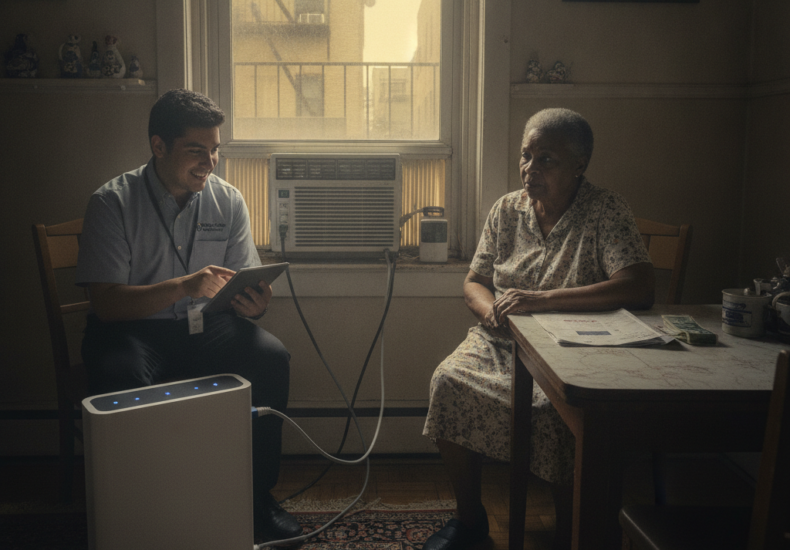
Down here in Pine Ridge, summer heat settles into our hollows like a wet wool blanket. When the mercury climbs past ninety, folks on fixed incomes face a quiet, anxious calculation. They must decide whether to switch on an aging window unit or save dollars for groceries and medicine. I read about a New York City startup placing NYC free batteries in high-rise apartments. This initiative pays residents to keep their air conditioners humming. It also relieves pressure on the municipal power grid. This news strikes me with wonder and familiar recognition. Technology often dresses old virtues in sleek metal casing, after all.
Shared Stewardship and Modern Parables
At its heart, this urban project exemplifies mutual forbearance and shared stewardship. Scripture tells us the apostle Paul spoke often of the church as a single body. He reminded us that when one part suffers, every part suffers with it. Paul described the spiritual fellowship of believers. However, modern life’s physical realities enforce a similar truth. An electrical grid offers perhaps the clearest modern emblem of our interdependence. We all draw from the same invisible current. Furthermore, when demand spikes beyond measure, a resulting blackout respects neither zip code nor wealth. Finding a way to buffer that collective burden, apartment by apartment, becomes a tangible modern parable of bearing one another’s burdens.
I smiled at a lighthearted note in the dispatch. It mentioned how household cats have taken to sleeping on top of the warm battery boxes. This humble, endearing detail points to something deeper: domestic peace. Our homes are meant to be sanctuaries from the world’s storms. They should be places where people and creatures find shelter, rest, and comfort. When infrastructure fails or becomes prohibitively expensive, that sanctuary frays. Therefore, to introduce an instrument that simultaneously cools a family room, softens the strain on neighbors, and gives a resting animal a gentle spot of warmth feels quietly faithful to Creation’s goodness.
Rural Resilience vs. Urban Innovation
Yet, viewing this through the eyes of an Appalachian hollow, I remember how unevenly these blessings distribute. In dense cities, concentrated venture capital and concentrated demand make distributed battery networks financially viable. Up here in the mountains, our power lines run along miles of rocky ridge and dense timber. When an ice storm or summer deluge brings down an oak limb, whole ridges go dark for days. We do not have high-tech battery fleets backed by distant investors. Instead, we have neighbors hauling generators on pickup trucks. They check on elderly widows and keep meat cold in church freezers. We manage without NYC free batteries or similar urban solutions.
That contrast offers an essential moral lesson. Technological ingenuity is a genuine gift. However, it must never become an excuse to abandon moral responsibility. In rural life, we understand instinctively that no machine can replace personal neighborliness. When we run our agricultural co-op or stock the pantry shelves at Grace Community Fellowship, we are not merely managing resources. We are sustaining relationships. True resilience is not found purely in kilowatt-hours or lithium cells. Instead, it rests in ordinary people’s willingness to consider the welfare of their neighbor before their own convenience.
Embracing Active Stewardship
Still, the moral impulse behind decentralizing the grid deserves our applause. For too long, modern society has encouraged passive consumption. It treats individuals as detached customers rather than active caretakers of common goods. When urban apartment dwellers agree to house a battery that serves the wider public good, they take a small step toward active stewardship. They become participants in their city’s common health. Consequently, they are not isolated consumers demanding power without regard to the cost borne by the system or the earth.
My hope is that we carry this spirit of shared responsibility far beyond New York City’s boundaries. Let us take it into every neglected corner of our country. Whether through sophisticated batteries in urban apartments or through a gallon of gas shared across a gravel road in Pine Ridge, the calling remains identical. We are called to live with humility. We must recognize our profound dependence upon one another. Ultimately, we manage this earth’s provisions so that no neighbor is left sweltering or forgotten in the dark.
Leave a Reply