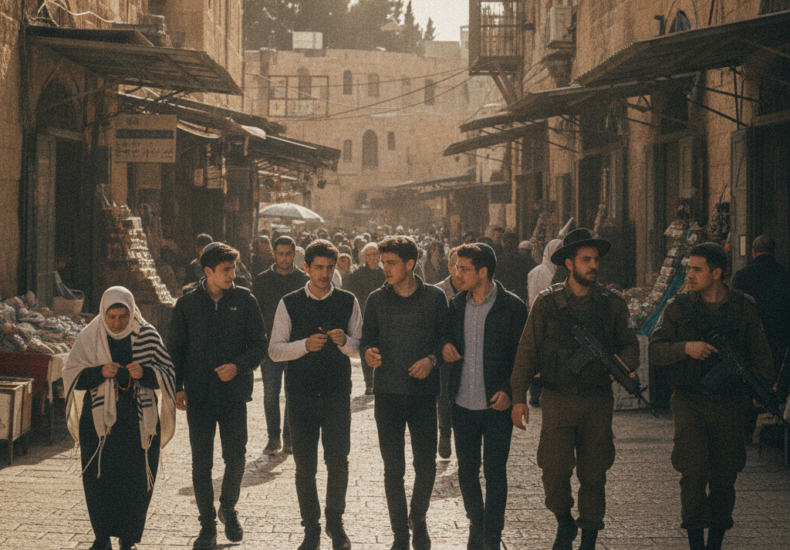
Jerusalem Daily: Tension high in Israel ahead of October 7 as reflected on by Rev. Dr. Christine Althaus
Out on the lake this morning, mist hung low and motionless before sunrise. Our small North Woods parish community experiences a sudden, biting stillness in early October. Tamaracks turn gold. Migrating waterfowl gather quietly in the bays, resting before long journeys south. However, wire reports from Jerusalem shatter that quietude. These reports describe a land coiled in apprehension, heavy with unhealed grief. High security and the persistent dread of renewed violence define the current tension in Israel.
From thousands of miles away, among cedar boughs and glacial waters, it feels tempting to view the Holy Land with detached sorrow. Some people in comfortable, quiet places make simplistic judgments. Yet, as Christians rooted in Lutheran theology, we understand human brokenness. Our neighbor’s agony is never foreign to us. The anniversary of unspeakable slaughter, hostage trauma, and catastrophic destruction lays bare a profound moral wound. Memory in that ancient, fragile soil is not a passive museum piece. Instead, it is an active, open ache demanding honest witness, not partisan platitudes.
Bearing Witness to Tension in Israel
Our theological tradition often speaks of the tension between law and gospel. This describes the balance between human vulnerability and the promise of public grace. True grace never ignores suffering. Nor does it ask traumatized communities to skip past the hard labor of lament. The people of Israel grieve lost loved ones and endure continuous peril. Likewise, devastating loss of life across Gaza and the wider region also continues. Every person caught in that crucible bears the irreducible imprint of the Creator. When terror strikes and warfare grinds on, God’s good creation suffers a tear in its sacred fabric. This reminds us that security built on fear alone proves as brittle as autumn ice.
Stewardship means more than preserving clean streams and healthy soil. The ecological degradation of war is vast and tragic. Ultimately, stewardship is about how we care for the living creatures entrusted to the earth alongside us. A watershed cannot survive if one tributary poisons the rest. Similarly, human communities cannot flourish when survival becomes a zero-sum contest. Scripture’s prophetic call insists that true peace is not merely the absence of active gunfire. It is the presence of righteous relations. Neighbors should sit beneath their own vine and fig tree without fear.
Seeking Just Peace Amidst Division
Around our fellowship tables in Minnesota, we frequently discuss how easily distrust hardens into permanent hostility. We see it in our own civic divides, thankfully without the rain of rockets and artillery. Yet, the spiritual mechanism of enmity remains the same everywhere. It tempts us to reduce whole peoples to categories. It encourages us to tally grievances. It concludes that reconciliation is an impossible fantasy. Against that fatalism, our faith calls us to communal accountability. We are held responsible for the words we speak, the alliances we bless, and the human suffering we choose to ignore.
As this somber anniversary approaches, our prayers cannot be glib requests for an easy quiet. We must pray for the protection of the vulnerable. We must pray for the return of captives. We must pray for the moral courage of leaders to break cycles of vengeance. We pray for mothers and fathers in Jerusalem, in kibbutzim, in the West Bank, and throughout Gaza. They want nothing more than to tuck their children into bed under an undisturbed sky. May God grant those who live in the cradle of faith the resilience to seek a just peace. May God grant us the humility to support them with steadfast, compassionate solidarity.
Leave a Reply