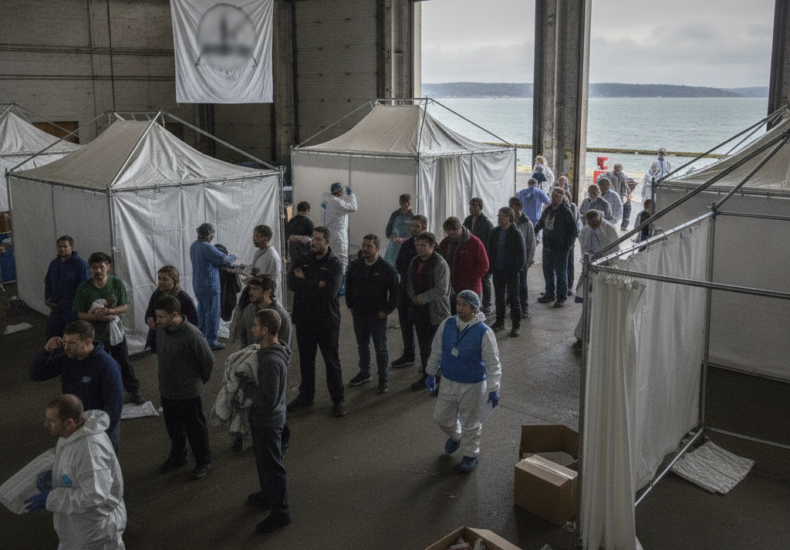
Patient-zero drill put health facilities to the test – 40% of them failed as reflected on by Sensei Michael Jinpa
Early autumn winds often carry a sharp, salt-laden chill across the docks here in Harborview Point. These winds remind us how quickly seasons turn and how fragile our shelter really is. I recently read that forty percent of clinics and emergency departments failed an unannounced patient-zero drill. Actors simulated an emerging, lethal contagion. I did not feel shock at this news. Having spent years as a hospice chaplain, I walked many quiet hospital corridors. Consequently, I recognized the weary exhaustion living behind those intake desks. Yet, the report lands with the heavy strike of a temple bell. It calls us to inspect the gap between our imagined readiness and the raw reality of suffering.
Zen practice turns relentlessly toward what is right in front of us. In our zendo at Clear Mind Sanctuary, we sit facing a blank wall. We train the mind not to turn away when boredom, ache, or sudden agitation arises. The news described an exercise. Actors staggered through waiting room doors with telltale rash and fevers. This was fundamentally a test of attention. A forty percent failure rate tells us institutional attention is fractured. Triage systems miss glaring signs of crisis. This rarely stems from a lack of technical knowledge. Instead, it often comes from cognitive overload, institutional numbness, and the quiet habit of looking away from inconvenience or fear.
The Spiritual Discipline of Collective Stewardship
In Buddhist psychology, delusion often begins when we mistake the menu for the meal. Likewise, we might mistake a binder of safety regulations for actual present-moment vigilance. It is easy to draft comprehensive emergency protocols. We file them on a digital drive, feeling a false sense of security. However, an epidemic, like illness or death itself, does not arrive with a formal invitation. It does not wait until staff shortages resolve. It walks through the door unannounced, breathing hard, sweating, and vulnerable. If our hearts and systems are not anchored in radical awareness, the mind defaults to habitual complacency. We assume today will simply mirror yesterday.
This failure also has an ethical dimension. It touches on our deep interdependence. In Zen, we speak of the Bodhisattva vow. This is a commitment to alleviate the suffering of all beings. We see ourselves not as isolated units, but as part of a single, continuous fabric. A clinic waiting room is a sacred threshold. When a potential patient-zero slips past screening protocols, the breach does not belong to that facility alone. It radiates outward to nursing homes, schools, harbor workers, and family dining tables. Genuine care requires us to understand this: shielding the stranger is identical to shielding our own kin.
Cultivating Unflinching Presence
We must be careful, however, not to direct our frustration at the nurses, receptionists, and orderlies. They were caught off guard. Working in hospice taught me how crushing administrative pressure can corrode human presence. Healthcare workers are often forced into relentless haste. They are treated like transactional cogs. Consequently, their innate capacity for intuitive care is suppressed. Compassion requires space to breathe. A society starves its caregivers of adequate rest, staffing, and support. Then it creates systemic blindness. Finally, it expresses disbelief when warning signs go unheeded.
The actors with painted lesions who walked into those seventy-three facilities offered an uncomfortable gift. In monastic life, unexpected interruptions teach us. They strip away our pretensions. This patient-zero drill revealed where our collective armor is brittle. Impermanence is not a grim theory reserved for philosophers. It is the living condition of every human body and every town. Preparing for contagion is not merely a matter of bureaucratic compliance. Rather, it is a spiritual discipline of collective stewardship.
As the fog rolls into Harborview Point tonight, it settles over the trawlers and woodsmoke. We are reminded of our shared vulnerability. We cannot predict what strange ailment or sudden storm will arrive tomorrow. What we can do, starting today, is cultivate an unflinching presence. That means funding our caregivers. It means slowing down enough to truly see the person walking across the threshold. Finally, it means building institutions capable of greeting sudden crisis not with paralysis, but with steady, compassionate lucidity.
Leave a Reply